Building Blocks
Subcategories of "Building Blocks"
- Boronic Acids & Boronic Acid Derivatives(5,781 products)
- Chiral Building Blocks(1,242 products)
- Hydrocarbon Building Blocks(6,101 products)
- Organic Building Blocks(61,033 products)
Found 205320 products of "Building Blocks"
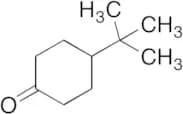
4-t-Butylcyclohexanone
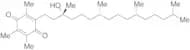
CAS:Controlled ProductFormula:C10H18OColor and Shape:NeatMolecular weight:154.25D-alpha-Tocopherol Quinone
CAS:Controlled ProductStability Light Sensitive
Applications D-α-Tocopherol Quinone is an vitamin E derivative that exhibits antioxidant properties. D-α-Tocopherol Quinone has been shown to partially restore the activity of NADH dehydrogenase and used to investigate the electron transport system in rat hepatocyte and human erythrocyte.
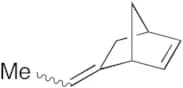
References Sun, I. L., et al.: Proc. Natl. Acad. Sci. USA 89, 11126 (1992); Hosomi, A., et al.: FEBS Lett. 409, 105 (1997)Formula:C29H50O3Color and Shape:NeatMolecular weight:446.715-Ethylidene-2-norbornene
CAS:Controlled ProductStability Volatile
Applications 5-Ethylidene-2-norbornene is a diene monomer that is used as a self healing agent for polymeric composites and also used to reinforce multiwalled carbon nanotubes. 5-Ethylidene-2-norbornene is potentially toxic to humans.
Not a dangerous good if item is equal to or less than 1g/ml and there is less than 100g/ml in the package
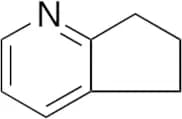
References Ballantyne, B., et al.: J. Appl. Toxicol., 17, 197 (1997); Jeong, W. & Kessler, M.: Carbon, 47, 2406 (2009); Lee, J., et al.: Macromol. Res., 12, 478 (2004)Formula:C9H12Color and Shape:NeatMolecular weight:120.19162,3-Cyclopentenopyridine
CAS:Controlled ProductApplications 2,3-Cyclopentenopyridine is used as reactant/reagent for ruthenium-mediated dual catalytic reactions of isoquinoline via C-H activation and dearomatization for isoquinolone.
References Wang, T., et al.: Adv. Synth. Catal., 358, 2751-2758 (2016)Formula:C8H9NColor and Shape:NeatMolecular weight:119.16Glutaconic Acid
CAS:Controlled ProductApplications Glutaconic Acid is used in the synthesis of dialkyltin derivatives of dicarboxylic acids which display antitumor properties. Also used in the synthesis of novel tetracyclic compounds as peripheral benzodiazepine receptor ligands with potential use for CNS illness treatments.
References Gielen, M. et al.: Hetero. Chem., 3, 449 (1992); Okubo, T. et al.: Bioorg. Med. Chem. Lett., 12, 3569 (2004);Formula:C5H6O4Color and Shape:NeatMolecular weight:130.1Bisphenol A-13C2
CAS:Controlled ProductApplications Labelled Bisphenol A (B519495). A monomer used for policarbonate and epoxy resins; exhibits estrogenic activity.
Not a dangerous good if item is equal to or less than 1g/ml and there is less than 100g/ml in the package
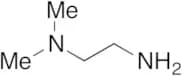
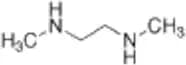
References Krishnan, A.V., et al.: Endocrinology, 132, 2279 (1993), Steinmetz, R., et al.: Trends Endocrinol. Metab., 9, 124 (1998), Petersen, H., et al.: Eur. Food Res. Technol., 216, 355 (2003),Formula:C13C2H16O2Color and Shape:NeatMolecular weight:230.27N,N'-Dimethylethanediamine
CAS:Controlled ProductApplications Has a DNA binding effect.
Not a dangerous good if item is equal to or less than 1g/ml and there is less than 100g/ml in the package
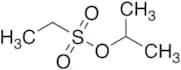
References Mikata, Y., et al.: Chem. Pharm. Bull., 48, 477 (2000),Formula:C4H12N2Color and Shape:NeatMolecular weight:88.15Propan-2-yl Ethane-1-sulfonate
CAS:Applications propan-2-yl ethane-1-sulfonate (cas# 14245-62-6) is a useful research chemical.
Formula:C5H12O3SColor and Shape:NeatMolecular weight:152.21(±)-Menthyl Acetate
CAS:Controlled ProductApplications Menthyl Acetate is a component of essential oils extracted from natural sources.
Not a dangerous good if item is equal to or less than 1g/ml and there is less than 100g/ml in the package
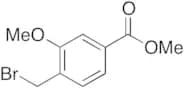
References Adaszynska, Michalina, et al.: Zywnosc, 20(2), 116-125 (2013);Hashimoto, Gabriela S., et al.: Aquaculture, 450, 182-186 (2016);Mazzucotelli, Maria, et al.: J. of Chrom. A, 1583, 124-135 (2019)Formula:C12H22O2Color and Shape:NeatMolecular weight:198.302Methyl 4-(Bromomethyl)-3-methoxybenzoate
CAS:Controlled ProductApplications Methyl 4-(Bromomethyl)-3-methoxybenzoate is an intermediate used to prepare heteroarylphenyloxoacetyl and heteroarylphenylsulfonyl benzoylpiperazine analogs of BMS 378806 as HIV entry inhibitors. It is also used to synthesize steroid 5α-reductase inhibiting acylpiperidines.
Not a dangerous good if item is equal to or less than 1g/ml and there is less than 100g/ml in the package
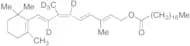
References Lu, R., et al.: J. Med. Chem., 52, 4481 (2009); Picard, F., et al.: J. Med. Chem., 45, 3406 (2002)Formula:C10H11BrO3Color and Shape:NeatMolecular weight:259.0969-cis-Retinyl Stearate-d5
CAS:Controlled ProductApplications 9-cis-Retinyl Stearate-d5, is the labeled analogue of 9-cis-Retinyl Stearate (R275600), a fatty acid ester of Retinol isomer, found mainly in the retina.
References Bridges, C.D.B., et al.: Methods Enzymol., 81, 463 (1982),Formula:C38D5H59O2Color and Shape:NeatMolecular weight:557.9441-Dodecanol Acetate
CAS:Controlled ProductApplications 1-Dodecanol Acetate can be used as a foaming agent in the purification process of quartz sand. Furthermore, it is a main component of the essential oil from the flowers of Etlingera elatior (Jack) R. M. Smith, which is found to be active against Staphylococcus aureus, Bacillus cereus, Candida albicans and Cryptococcus neoformans.
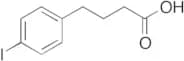
References Wang, W., et al.: Faming Zhuanli Shenqing, CN 103663469 A 20140326 (2014); Susanti, D., et al.: Journal of Essential Oil-Bearing Plants, 16, 294 (2013)Formula:C14H28O2Color and Shape:NeatMolecular weight:228.374-(p-Iodophenyl)butyric Acid
CAS:Applications 4-(p-Iodophenyl)butyric Acid is a reactant involved in the synthesis of meta- and paracyclophanes containing unsaturated amino acids and intramolecular Friedel-Crafts reactions for synthesis of 1-tetralones.
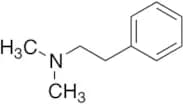
References Gibson, S., et al.: Tetrahedron, 60, 6945 (2004); Cui, D., et al.: Tetrahedron Lett., 44, 4007 (2003)Formula:C10H11IO2Color and Shape:NeatMolecular weight:290.1N,N-Dimethyl-2-phenylethanamine
CAS:Controlled ProductFormula:C10H15NColor and Shape:ColourlessMolecular weight:149.23