Building Blocks
This section contains fundamental products for the synthesis of organic and biological compounds. Building blocks are the essential starting materials used to construct complex molecules through various chemical reactions. They play a critical role in drug discovery, material science, and chemical research. At CymitQuimica, we offer a diverse range of high-quality building blocks to support your innovative research and industrial projects, ensuring you have the essential components for successful synthesis.
Subcategories of "Building Blocks"
- Boronic Acids & Boronic Acid Derivatives(5,778 products)
- Chiral Building Blocks(1,242 products)
- Hydrocarbon Building Blocks(6,098 products)
- Organic Building Blocks(61,063 products)
Found 197855 products of "Building Blocks"
Sort by
Purity (%)
0
100
|
0
|
50
|
90
|
95
|
100
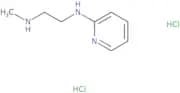
N1-Methyl-N2-(pyridin-2-yl)ethane-1,2-diamine dihydrochloride
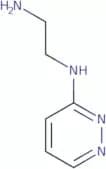
CAS:<p>Versatile small molecule scaffold</p>Formula:C8H15Cl2N3Purity:Min. 95%Molecular weight:224.13 g/molN-(2-Aminoethyl)pyridazin-3-amine
CAS:<p>Versatile small molecule scaffold</p>Formula:C6H10N4Purity:Min. 95%Molecular weight:138.17 g/mol1-[(4-Fluorophenyl)methyl]-1H-imidazol-2-amine
CAS:Versatile small molecule scaffoldFormula:C10H10FN3Purity:Min. 95%Molecular weight:191.2 g/mol1-(Imidazo[1,2-a]pyridin-2-yl)-N-methylmethanamine
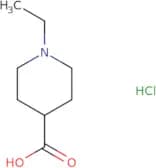
CAS:Versatile small molecule scaffoldFormula:C9H11N3Purity:Min. 95%Molecular weight:161.21 g/mol1-Ethylpiperidine-4-carboxylic acidhydrochloride
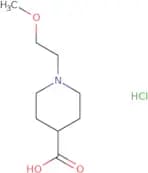
CAS:Versatile small molecule scaffoldFormula:C8H16ClNO2Purity:Min. 95%Molecular weight:193.68 g/mol1-(2-Methoxyethyl)piperidine-4-carboxylic acidhydrochloride
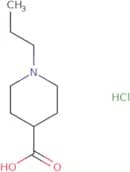
CAS:Versatile small molecule scaffoldFormula:C9H18ClNO3Purity:Min. 95%Molecular weight:223.7 g/mol1-Propylpiperidine-4-carboxylic acid hydrochloride
CAS:Versatile small molecule scaffoldFormula:C9H18ClNO2Purity:Min. 95%Molecular weight:207.7 g/mol2H,3H-Imidazo[2,1-b][1,3]thiazole-6-carboxylic acid
CAS:Versatile small molecule scaffoldFormula:C6H6N2O2SPurity:Min. 95%Molecular weight:170.19 g/mol1-[(2-Methyl-1,3-thiazol-4-yl)methyl]piperidine-4-carboxylic acid
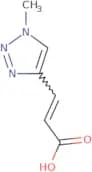
CAS:Controlled Product1-[(2-Methyl-1,3-thiazol-4-yl)methyl]piperidine-4-carboxylic acid is a research tool that activates the Ligand Receptor Cell Biology. It is used to study the functions of ion channels and their influence on cell physiology. This compound has been shown to inhibit ion channels in the central nervous system, which may be related to its analgesic properties. 1-[(2-Methyl-1,3-thiazol-4-yl)methyl]piperidine-4-carboxylic acid also inhibits protein interactions and can be used as a pharmacological tool.Formula:C11H16N2O2SPurity:Min. 95%Molecular weight:240.32 g/mol(2E)-3-(1-Methyl-1H-1,2,3-triazol-4-yl)prop-2-enoic acid
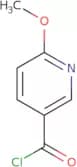
CAS:Versatile small molecule scaffoldFormula:C6H7N3O2Purity:Min. 95%Molecular weight:153.14 g/mol6-Methoxypyridine-3-carbonyl chloride
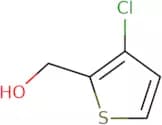
CAS:Versatile small molecule scaffoldFormula:C7H6ClNO2Purity:Min. 95%Molecular weight:171.58 g/mol3-Chlorothiophene-2-methanol
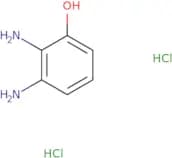
CAS:<p>Versatile small molecule scaffold</p>Formula:C5H5ClOSPurity:Min. 95%Molecular weight:148.61 g/mol2,3-Diaminophenol dihydrochloride
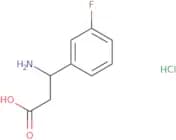
CAS:<p>2,3-Diaminophenol dihydrochloride is an organic compound that can be used as a cross-linking agent. It is prepared by reacting phosphorus pentoxide with an acidified solution of 2,3-diaminophenol. This reaction produces a white solid that will react with proteins to form crosslinks between amino groups. 2,3-Diaminophenol dihydrochloride has been used in the treatment of cachexia and in fabricating coatings for medical devices. It also has the ability to link other molecules together, making it useful for creating linkers for drug molecules or for attaching hydrophobic molecules to hydrophilic surfaces such as plastics or silicon.</p>Formula:C6H10Cl2N2OPurity:Min. 95%Molecular weight:197.06 g/mol3-Amino-3-(3-fluorophenyl)propanoic acid hydrochloride
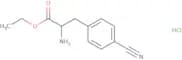
CAS:Versatile small molecule scaffoldFormula:C9H11ClFNO2Purity:Min. 95%Molecular weight:219.64 g/molEthyl 2-amino-3-(4-cyanophenyl)propanoate hydrochloride
CAS:Versatile small molecule scaffoldFormula:C12H15ClN2O2Purity:Min. 95%Molecular weight:254.71 g/molMethyl 7-azabicyclo[4.1.0]heptane-1-carboxylate
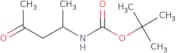
CAS:Versatile small molecule scaffoldFormula:C8H13NO2Purity:Min. 95%Molecular weight:155.19 g/moltert-Butyl N-(4-oxopentan-2-yl)carbamate
CAS:<p>Versatile small molecule scaffold</p>Formula:C10H19NO3Purity:Min. 95%Molecular weight:201.26 g/mol1-[(Benzyloxy)methyl]-1,2,3,4-tetrahydroisoquinolin-6-ol
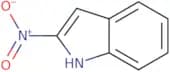
CAS:<p>Versatile small molecule scaffold</p>Formula:C17H19NO2Purity:Min. 95%Molecular weight:269.34 g/mol2-Nitro-1H-indole
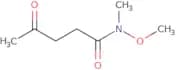
CAS:<p>2-Nitro-1H-indole is a nitro compound that has been shown to inhibit the activity of cation channels. It has been used in the synthesis of benzylamine derivatives and pro-inflammatory cytokines. 2-Nitro-1H-indole was also used to prepare a biological sample, which led to an increase in the production of pro-inflammatory cytokines. This molecule can be synthesized by nucleophilic attack on a substituted benzene ring, which leads to a stable, non-reactive molecule. 2-Nitro-1H-indole can also be used for molecular modeling or as a chemical probe for nmr spectra.</p>Formula:C8H6N2O2Purity:Min. 95%Molecular weight:162.15 g/molN-Methoxy-N-methyl-4-oxopentanamide
CAS:Versatile small molecule scaffoldFormula:C7H13NO3Purity:Min. 95%Molecular weight:159.18 g/mol

![1-[(4-Fluorophenyl)methyl]-1H-imidazol-2-amine](/_next/image/?url=https%3A%2Fstatic.cymitquimica.com%2Fproducts%2F3D%2Fthumb-webp%2FTHA48040.webp&w=3840&q=75)
![1-(Imidazo[1,2-a]pyridin-2-yl)-N-methylmethanamine](/_next/image/?url=https%3A%2Fstatic.cymitquimica.com%2Fproducts%2F3D%2Fthumb-webp%2FTHA53456.webp&w=3840&q=75)
![2H,3H-Imidazo[2,1-b][1,3]thiazole-6-carboxylic acid](/_next/image/?url=https%3A%2Fstatic.cymitquimica.com%2Fproducts%2F3D%2Fthumb-webp%2FTHA53814.webp&w=3840&q=75)
![1-[(2-Methyl-1,3-thiazol-4-yl)methyl]piperidine-4-carboxylic acid](/_next/image/?url=https%3A%2Fstatic.cymitquimica.com%2Fproducts%2F3D%2Fthumb-webp%2FTHA53832.webp&w=3840&q=75)
![Methyl 7-azabicyclo[4.1.0]heptane-1-carboxylate](/_next/image/?url=https%3A%2Fstatic.cymitquimica.com%2Fproducts%2F3D%2Fthumb-webp%2FTHA63482.webp&w=3840&q=75)
![1-[(Benzyloxy)methyl]-1,2,3,4-tetrahydroisoquinolin-6-ol](/_next/image/?url=https%3A%2Fstatic.cymitquimica.com%2Fproducts%2F3D%2Fthumb-webp%2FTHA68276.webp&w=3840&q=75)