Building Blocks
This section contains fundamental products for the synthesis of organic and biological compounds. Building blocks are the essential starting materials used to construct complex molecules through various chemical reactions. They play a critical role in drug discovery, material science, and chemical research. At CymitQuimica, we offer a diverse range of high-quality building blocks to support your innovative research and industrial projects, ensuring you have the essential components for successful synthesis.
Subcategories of "Building Blocks"
- Boronic Acids & Boronic Acid Derivatives(5,778 products)
- Chiral Building Blocks(1,242 products)
- Hydrocarbon Building Blocks(6,098 products)
- Organic Building Blocks(61,092 products)
Found 199296 products of "Building Blocks"
Sort by
Purity (%)
0
100
|
0
|
50
|
90
|
95
|
100
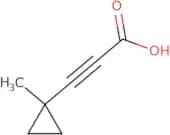
3-(1-Methylcyclopropyl)prop-2-ynoic acid
CAS:Versatile small molecule scaffoldFormula:C7H8O2Purity:Min. 95%Molecular weight:124.14 g/mol2-Methyl-2-[4-(trifluoromethyl)phenoxy]propanoic acid
CAS:Versatile small molecule scaffoldFormula:C11H11F3O3Purity:Min. 95%Molecular weight:248.2 g/mol2,6-Dimethyl-1H,2H,3H,5H,6H,7H-pyrrolo[3,4-F]isoindole-1,3,5,7-tetrone
CAS:<p>Versatile small molecule scaffold</p>Formula:C12H8N2O4Purity:Min. 95%Molecular weight:244.2 g/mol6-Methyl-2,3-dihydro-1-benzofuran-2-carboxylic acid
CAS:<p>Versatile small molecule scaffold</p>Formula:C10H10O3Purity:Min. 95%Molecular weight:178.18 g/mol7-Methoxy-2,3-dihydro-1-benzofuran-2-carboxylic acid
CAS:Versatile small molecule scaffoldFormula:C10H10O4Purity:Min. 95%Molecular weight:194.18 g/mol6-Fluorobenzofuran-2-carboxylic acid
CAS:<p>Versatile small molecule scaffold</p>Formula:C9H5FO3Purity:Min. 95%Molecular weight:180.13 g/mol6-Fluoro-2,3-dihydro-1-benzofuran-2-carboxylic acid
CAS:Versatile small molecule scaffoldFormula:C9H7FO3Purity:Min. 95%Molecular weight:182.15 g/mol2-(Benzylamino)butan-1-ol
CAS:<p>2-(Benzylamino)butan-1-ol is an organic compound that is a chiral amine. It can be used as a solvent for chemical reactions, and has been shown to be useful in the preparation of catecholamines and other biologically active compounds. The crystal structure of 2-(benzylamino)butan-1-ol has been determined using x-ray diffraction techniques. The molecule exists as a racemic mixture of two enantiomers, one with a melting point at 56°C and the other at 53°C. These enantiomers have different solubilities in nonpolar solvents such as benzene, which makes them useful as phase transfer catalysts or antisolvents to separate chiral molecules by liquid chromatography.</p>Formula:C11H17NOPurity:Min. 95%Molecular weight:179.26 g/molMethyl 2-(3-hydroxy-2,2-dimethylcyclobutyl)acetate
CAS:Versatile small molecule scaffoldFormula:C9H16O3Purity:Min. 95%Molecular weight:172.22 g/mol5-(2,4-dichlorophenyl)-4H-1,2,4-triazole-3-thiol
CAS:Versatile small molecule scaffoldFormula:C8H5Cl2N3SPurity:Min. 95%Molecular weight:246.11 g/mol4-Cyclohexyl-5-(3,4,5-trimethoxyphenyl)-4H-1,2,4-triazole-3-thiol
CAS:<p>Versatile small molecule scaffold</p>Formula:C17H23N3O3SPurity:Min. 95%Molecular weight:349.4 g/mol2,4-Dichloro-6-phenylpyrimidine
CAS:<p>2,4-Dichloro-6-phenylpyrimidine is a nucleophilic reagent that has been used to synthesize pyrimidine derivatives. It has been shown to react with cyanoacetic acid and malononitrile in the presence of an organolithium reagent to form 2,6-dichloro-2,4-dihydroxypyrimidine. This compound reacts with chlorine gas to give 2,4-dichloro-6-(chloromethyl)pyrimidine. This reaction is regioselective and does not affect the other substituents on the ring. The reaction proceeds via a nucleophilic attack on the carbon atom adjacent to the nitrogen atom.</p>Formula:C10H6Cl2N2Purity:Min. 95%Molecular weight:225.07 g/mol3-(4-Nitrophenyl)-1H-pyrazole-4-carbaldehyde
CAS:<p>Versatile small molecule scaffold</p>Formula:C10H7N3O3Purity:Min. 95%Molecular weight:217.18 g/mol9H-Pyrido[3,4-b]indole-1-carboxylic acid
CAS:<p>Versatile small molecule scaffold</p>Formula:C12H8N2O2Purity:Min. 95%Molecular weight:212.2 g/mol1-(Trifluoromethyl)isoquinoline
CAS:<p>1-(Trifluoromethyl)isoquinoline is an organic compound that is made from a photoredox reaction, which involves the use of a metal catalyst and light to produce reactive species. This chemical can be used in the synthesis of vinyl compounds, such as styrene, by regiospecifically adding an isocyanide. 1-(Trifluoromethyl)isoquinoline has been shown to be a useful reagent for experiments involving regiospecific reactions.</p>Formula:C10H6F3NPurity:Min. 95%Molecular weight:197.16 g/mol2-(2-iodophenyl)ethanol
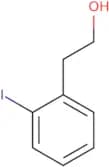
CAS:<p>2-(2-iodophenyl)ethanol is a ketone that can be made by refluxing benzene with phosphite and halides. It can also be synthesized from 2-phenylethanol, which is obtained from the reaction of acetone with sodium hydroxide. 2-(2-Iodophenyl)ethanol has been used as a precursor to other compounds in organic chemistry. This compound has been shown to react with dichlorophosphite or sulphonium to form organopalladium intermediates. Carbonylation reactions are another method for synthesizing this compound.</p>Formula:C8H9IOPurity:Min. 95%Molecular weight:248.06 g/mol2-(Thiophen-2-yl)-3,4-dihydroquinazolin-4-one
CAS:<p>Versatile small molecule scaffold</p>Formula:C12H8N2OSPurity:Min. 95%Molecular weight:228.27 g/mol3-iso-Propoxybenzyl alcohol
CAS:<p>3-iso-Propoxybenzyl alcohol is an insect repellent used to prevent insect bites. It is a screening agent that can be used as a solution in ethanol to test for the presence of insects. 3-iso-Propoxybenzyl alcohol is added to a solution and then sprayed onto plants or animals. The solution will turn yellow if it comes into contact with an insect. This product should be stored in a cool, dry place away from direct sunlight and out of reach of children.</p>Formula:C10H14O2Purity:Min. 95%Molecular weight:166.22 g/molN,2-Dihydroxy-3-methylbenzamide
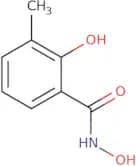
CAS:<p>Versatile small molecule scaffold</p>Formula:C8H9NO3Purity:Min. 95%Molecular weight:167.16 g/mol(2S)-2-(Carbamoylamino)-3-methylbutanoic acid
CAS:<p>(2S)-2-(Carbamoylamino)-3-methylbutanoic acid is a synthetic, racemic amino acid that has been used to study the kinetics and dynamics of protein folding. The optimum concentration of (2S)-2-(carbamoylamino) 3-methylbutanoic acid for monitoring kinetic studies is 1.0 mM in aqueous solution at pH 7.4. It can be synthesized from l-alanine using acetonitrile as the solvent and enantiomerically pure 2-chloroacetic acid as the raw material. The synthesis of (2S)-2-(carbamoylamino) 3-methylbutanoic acid is achieved through a series of steps involving chlorination, hydrolysis, and racemization using hydantoin. This compound is also characterized by its high degree of hydrophilicity, which makes it suitable for use in techniques such as liquid chromatography or gas chromatography</p>Formula:C6H12N2O3Purity:Min. 95%Molecular weight:160.17 g/mol

![2-Methyl-2-[4-(trifluoromethyl)phenoxy]propanoic acid](/_next/image/?url=https%3A%2Fstatic.cymitquimica.com%2Fproducts%2F3D%2Fthumb-webp%2FBBA00248.webp&w=3840&q=75)
![2,6-Dimethyl-1H,2H,3H,5H,6H,7H-pyrrolo[3,4-F]isoindole-1,3,5,7-tetrone](/_next/image/?url=https%3A%2Fstatic.cymitquimica.com%2Fproducts%2F3D%2Fthumb-webp%2FBBA01179.webp&w=3840&q=75)


![9H-Pyrido[3,4-b]indole-1-carboxylic acid](/_next/image/?url=https%3A%2Fstatic.cymitquimica.com%2Fproducts%2F3D%2Fthumb-webp%2FBBA05296.webp&w=3840&q=75)