Building Blocks
Subcategories of "Building Blocks"
- Boronic Acids & Boronic Acid Derivatives(5,805 products)
- Chiral Building Blocks(1,248 products)
- Hydrocarbon Building Blocks(6,122 products)
- Organic Building Blocks(61,463 products)
Found 208442 products of "Building Blocks"
1,1-Difluoro-3-phenylpropan-2-ol
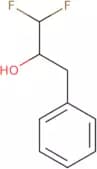
CAS:1,1-Difluoro-3-phenylpropan-2-ol is a versatile building block that can be used to produce a range of complex compounds. It is also useful as a reagent and speciality chemical in research. This chemical has been shown to be an excellent building block for the synthesis of novel compounds with high quality and utility as scaffolds for organic chemistry.
Formula:C9H10F2OPurity:Min. 90%Color and Shape:PowderMolecular weight:172.17 g/mol8-Bromoisoquinolin-6-ol
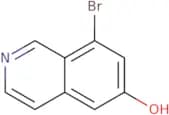
CAS:Versatile small molecule scaffoldFormula:C9H6BrNOPurity:Min. 95%Color and Shape:PowderMolecular weight:224.05 g/mol1-(Bicyclo[2.2.2]octan-2-yl)ethanone
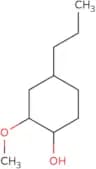
CAS:Versatile small molecule scaffoldFormula:C10H16OPurity:Min. 95%Color and Shape:PowderMolecular weight:152.23 g/mol2-Methoxy-4-propylcyclohexan-1-ol
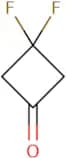
CAS:2-Methoxy-4-propylcyclohexan-1-ol is a versatile compound with various applications. It is commonly used as an anesthetic and can be found in research chemicals. This compound has been shown to have colloidal properties, making it suitable for use in the formulation of various products. Additionally, 2-Methoxy-4-propylcyclohexan-1-ol has been studied for its potential therapeutic effects on conditions such as casein-related disorders and fatty acid metabolism. Its unique structure allows it to interact with different biological pathways, including protein kinase signaling and carotenoid synthesis. Overall, this compound offers a wide range of possibilities for scientific research and product development.Formula:C10H20O2Purity:Min. 95%Color and Shape:Clear LiquidMolecular weight:172.26 g/mol3,3-Difluorocyclobutanone
CAS:Versatile small molecule scaffoldFormula:C4H4F2OPurity:Min. 95%Color and Shape:Clear LiquidMolecular weight:106.07 g/mol(R)-1-(Thiazol-2-yl)ethanamine dihydrochloride
CAS:Versatile small molecule scaffold
Formula:C5H8N2S•(HCl)2Purity:Min. 95%Color and Shape:PowderMolecular weight:200.66 g/mol2-Hydroxy-4-(pyrrolidin-1-yl)benzaldehyde
CAS:Versatile small molecule scaffoldFormula:C11H13NO2Purity:Min. 95%Molecular weight:191.23 g/mol4-Hydroxyphenylacetic acid
CAS:4-Hydroxyphenylacetic acid is a sesquiterpene lactone that is found in the essential oils of plants such as valerian, lemon balm and rosemary. It has been shown to have high antioxidant activity and can inhibit carcinoid syndrome. This compound has also been shown to have properties similar to p-hydroxybenzoic acid, which is an inhibitor of polyphenol oxidase. 4-Hydroxyphenylacetic acid inhibits some enzyme activities, such as polymerase chain reaction (PCR) and DNA synthesis. It also binds to dinucleotide phosphate and can be used for the treatment of diseases related to energy metabolism.Formula:C8H8O3Purity:(%) Min. 98.5%Color and Shape:White PowderMolecular weight:152.15 g/mol2-Bromo-4-nitrobenzonitrile
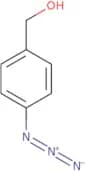
CAS:2-Bromo-4-nitrobenzonitrile is a chemical compound that can be used to study the relationship between genetic polymorphism and chromosome structure. This compound has been found to induce polyploidy in Brassica plants, which may have implications for the evolution of these species. 2-Bromo-4-nitrobenzonitrile also has been shown to be a useful marker for phylogenetic and ecological studies of Lepidium species. The compound is diploid in nature, but can be used as a matrix in tetraploid plants.Formula:C7H3BrN2O2Purity:Min. 95%Color and Shape:PowderMolecular weight:227.02 g/mol(4-Azidophenyl)methanol
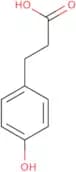
CAS:4-Azidophenylmethanol is a nucleophilic amine that can be synthesized from the reaction of an azide with a methoxide. 4-Azidophenylmethanol can be used to generate nitro groups in organic synthesis. It has also been shown to have cytotoxic activity against prostate cancer cells and malignant brain cancer. 4-Azidophenylmethanol also has the ability to react with squamous carcinoma cells, forming methides and causing cell death. This chemical is stable at low temperatures and does not react with water.Formula:C7H7N3OPurity:Min. 95%Color and Shape:PowderMolecular weight:149.15 g/mol3-(4-Hydroxyphenyl)propionic acid
CAS:Potential antioxidant; pharmaceutical intermediateFormula:C9H10O3Purity:Min. 99 Area-%Color and Shape:PowderMolecular weight:166.17 g/mol3-Cyclohexyl-1,1-dimethylurea
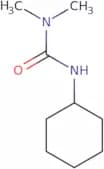
CAS:3-Cyclohexyl-1,1-dimethylurea is a chemical compound that can be used in industrial processes. It is stable and controllable, but must be handled with care as it reacts with water. The compound does not react with cariprazine or any other drugs at room temperature. 3-Cyclohexyl-1,1-dimethylurea has been shown to be an effective reagent for the synthesis of amides from carboxylic acids.
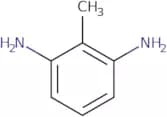
Formula:C9H18N2OPurity:Min. 95%Color and Shape:PowderMolecular weight:170.25 g/mol2,6-Diaminotoluene
CAS:2,6-Diaminotoluene (2,6-TDA), also known as o-tolidine, is a colorless to yellowish crystalline solid that is soluble in organic solvents. This compound has been shown to be genotoxic and carcinogenic in laboratory animals. 2,6-TDA binds to the receptor molecule of DNA and inhibits the repair of DNA strand breaks, leading to mutations and cancerous cells. 2,6-TDA has been shown to have toxic effects on fetal bovine kidney cells at low doses. The toxicity studies showed that 2,6-TDA inhibits cell growth and induces apoptosis in a dose dependent manner. This study also shows that 2,6-TDA inhibits protein synthesis by binding to ribosomes in the cytoplasm.Formula:C7H10N2Purity:Min. 95%Color and Shape:PowderMolecular weight:122.17 g/molHomovanillic acid
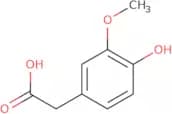
CAS:Homovanillic acid is widely used as a fluorogenic substrate of peroxidase. The reaction is however not specific and has been shown to react also with soybean lipoxygenase in the presence of hydrogen peroxide. Excitation and emission wavelengths for homovanillic acid are 312 and 420 nm, respectively.
Formula:C9H10O4Purity:Min. 97.5 Area-%Color and Shape:Red PowderMolecular weight:182.17 g/mol3,4-Dihydroxy-5-methoxybenzaldehyde
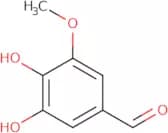
CAS:3,4-Dihydroxy-5-methoxybenzaldehyde is a synthetic compound that has shown to have inhibitory effects on the replication of DNA and RNA. It also inhibits the growth of bacteria in culture by binding to the nucleic acid. The chemical structure of 3,4-Dihydroxy-5-methoxybenzaldehyde is similar to that of bisbenzylisoquinoline alkaloids, which are found in plants such as opium poppy. This similarity may explain its ability to inhibit bacterial growth. 3,4-Dihydroxy-5-methoxybenzaldehyde may be used as a drug candidate for treating bacterial infections.Formula:C8H8O4Purity:Min. 95%Color and Shape:PowderMolecular weight:168.15 g/mol(R,R)-2,8-Diazabicyclo[4.3.0]nonane
CAS:(R,R)-2,8-Diazabicyclo[4.3.0]nonane is an antibacterial agent that is synthesized from piperazine and fluoroquinolone derivatives. It has a high yield of (R,R)-2,8-diazabicyclo[4.3.0]nonane and a low reaction time in the microwave amination reaction. This compound can be used to replace environmentally hazardous chemicals such as mercury(II) chloride in the synthesis of (R,R)-2,8-diazabicyclo[4.3.0]nonane by avoiding the use of toxic mercury compounds and reducing the cost of production by using microwave irradiation.Formula:C7H14N2Purity:Min. 95%Color and Shape:PowderMolecular weight:126.2 g/mol3-Hydroxyindole
CAS:3-Hydroxyindole is a fine chemical that can be used as a versatile building block, useful intermediate, and research chemical. It is a complex compound that can be used to make compounds with a wide variety of properties. 3-Indole has been used in the synthesis of high quality reagents and as a reaction component. 3-Indole is soluble in water and other solvents such as ethanol and acetone. Its CAS number is 480-93-3.Formula:C8H7NOMolecular weight:133.15 g/mol4-Benzylidene-2,6-di-tert-butylcyclohexa-2,5-dien-1-one
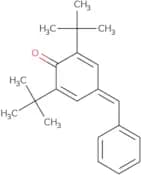
CAS:4-Benzylidene-2,6-di-tert-butylcyclohexa-2,5-dien-1-one is an efficient catalyst for the formation of annular products from aldehydes and amines. It has been found to be superior to other catalysts such as morpholine or piperidine in terms of yields and catalytic activity. 4-Benzylidene-2,6-di-tert-butylcyclohexa-2,5-dien-1-one is a base that can also serve as a catalyst for the formation of aromatic aldehydes through the Robinson annulation reaction. This product can be used at low temperature in order to improve the yield significantly.Formula:C21H26OPurity:Min. 95%Color and Shape:PowderMolecular weight:294.44 g/mol5-Hydroxyindole-3-acetic acid
CAS:5-Hydroxyindole-3-acetic acid is a versatile building block that is useful as a reagent, speciality chemical, and reaction component. It has been used in the synthesis of complex compounds with various applications. The compound can be distilled to produce high-purity 5-hydroxyindole-3-acetic acid for research purposes.Formula:C10H9NO3Purity:Min. 98.0 Area-%Molecular weight:191.19 g/mol2,3,5-Trichloro-4-methylpyridine
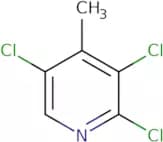
CAS:2,3,5-Trichloro-4-methylpyridine is a chemical building block that is used in the synthesis of fine chemicals. It has been shown to be a useful intermediate and building block for complex compounds. This compound is an important reagent for the production of pharmaceuticals and other specialty chemicals. 2,3,5-Trichloro-4-methylpyridine is a versatile reactant that can be used in reactions with alkynes and amines to produce useful products such as quinazolinones and 3,4-dihydroisoquinolones.
Formula:C6H4Cl3NPurity:Min. 95 Area-%Color and Shape:PowderMolecular weight:196.46 g/mol

![1-(Bicyclo[2.2.2]octan-2-yl)ethanone](/_next/image/?url=https%3A%2Fstatic.cymitquimica.com%2Fproducts%2F3D%2Fthumb-webp%2FYAA73546.webp&w=3840&q=75)


![(R,R)-2,8-Diazabicyclo[4.3.0]nonane](/_next/image/?url=https%3A%2Fstatic.cymitquimica.com%2Fproducts%2F3D%2Fthumb-webp%2FFD21506.webp&w=3840&q=75)