Building Blocks
This section contains fundamental products for the synthesis of organic and biological compounds. Building blocks are the essential starting materials used to construct complex molecules through various chemical reactions. They play a critical role in drug discovery, material science, and chemical research. At CymitQuimica, we offer a diverse range of high-quality building blocks to support your innovative research and industrial projects, ensuring you have the essential components for successful synthesis.
Subcategories of "Building Blocks"
- Boronic Acids & Boronic Acid Derivatives(5,756 products)
- Chiral Building Blocks(1,242 products)
- Hydrocarbon Building Blocks(6,093 products)
- Organic Building Blocks(60,522 products)
Found 195533 products of "Building Blocks"
Sort by
Purity (%)
0
100
|
0
|
50
|
90
|
95
|
100
1-(3-Chloroprop-1-en-2-yl)-2,4-difluorobenzene
CAS:<p>Versatile small molecule scaffold</p>Formula:C9H7ClF2Purity:Min. 95%Molecular weight:188.6 g/molN-Methoxy-N-methyl-1H-indole-2-carboxamide
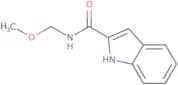
CAS:<p>Versatile small molecule scaffold</p>Formula:C11H12N2O2Purity:Min. 95%Molecular weight:204.22 g/mol(2E)-3-(4-Sulfamoylphenyl)prop-2-enoic acid
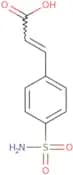
CAS:<p>Versatile small molecule scaffold</p>Formula:C9H9NO4SPurity:Min. 95%Molecular weight:227.2 g/mol1-(Cyclopentyloxy)-4-iodobenzene
CAS:<p>Versatile small molecule scaffold</p>Formula:C11H13IOPurity:Min. 95%Molecular weight:288.12 g/moltert-Butyl N-tert-butyl-N-(2-oxoethyl)carbamate
CAS:<p>Versatile small molecule scaffold</p>Formula:C11H21NO3Purity:Min. 95%Molecular weight:215.29 g/mol3-Thia-6-azabicyclo[3.2.1]octan-7-one
CAS:<p>Versatile small molecule scaffold</p>Formula:C6H9NOSPurity:Min. 95%Molecular weight:143.2 g/mol(1S)-1-(2-Methoxy-5-methylphenyl)ethan-1-ol
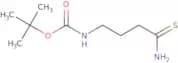
CAS:<p>Versatile small molecule scaffold</p>Formula:C10H14O2Purity:Min. 95%Molecular weight:166.22 g/moltert-Butyl N-(3-carbamothioylpropyl)carbamate
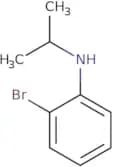
CAS:<p>Versatile small molecule scaffold</p>Formula:C9H18N2O2SPurity:Min. 95%Molecular weight:218.32 g/mol2-bromo-N-(propan-2-yl)aniline
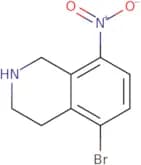
CAS:<p>Versatile small molecule scaffold</p>Formula:C9H12BrNPurity:Min. 95%Molecular weight:214.1 g/mol5-Bromo-8-nitro-1,2,3,4-tetrahydroisoquinoline
CAS:<p>Versatile small molecule scaffold</p>Formula:C9H9BrN2O2Purity:Min. 95%Molecular weight:257.08 g/molN-(1,2,3,4-Tetrahydroquinolin-5-yl)acetamide
CAS:<p>Versatile small molecule scaffold</p>Formula:C11H14N2OPurity:Min. 95%Molecular weight:190.24 g/mol(1S)-1-(2,5-Dimethoxyphenyl)ethan-1-ol
CAS:<p>Versatile small molecule scaffold</p>Formula:C10H14O3Purity:Min. 95%Molecular weight:182.22 g/mol7,7-Dimethyl-6,8-dioxa-2-azaspiro[3.5]nonane
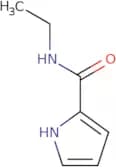
CAS:<p>Versatile small molecule scaffold</p>Formula:C8H15NO2Purity:Min. 95%Molecular weight:157.21 g/molN-Ethyl-1H-pyrrole-2-carboxamide
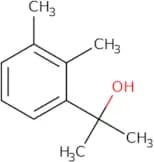
CAS:<p>N-Ethyl-1H-pyrrole-2-carboxamide is a tricyclic compound that is efficient in the transition from medicinally to biologically active compounds. This compound can be used to study the pharmacological effects and mechanisms of action of drugs. The methodology for the synthesis of this compound has been described in a recent paper, which provides an efficient method for synthesizing this compound.</p>Formula:C7H10N2OPurity:Min. 95%Molecular weight:138.17 g/mol2-(2,3-Dimethylphenyl)propan-2-ol
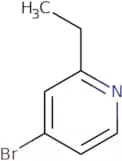
CAS:<p>Versatile small molecule scaffold</p>Formula:C11H16OPurity:Min. 95%Molecular weight:164.24 g/mol4-Bromo-2-(ethyl-d3)pyridine
CAS:<p>4-Bromo-2-(ethyl-d3)pyridine is a pyridine compound that contains a bromine atom in the 2 position and an ethyl group in the 3 position. The chemical formula is C6H5BrN2, with a molecular mass of 169.07 g/mol. This compound has a melting point of 61 °C and boiling point of 143 °C. 4-Bromo-2-(ethyl-d3)pyridine is used as an intermediate to synthesize other compounds. It can also be used as a solvent for dyes, paints, lacquers, and other organic materials.</p>Formula:C7H5D3BrNPurity:Min. 95%Molecular weight:189.07 g/mol2-Phenylcyclopent-1-ene-1-carboxylic acid
CAS:<p>Versatile small molecule scaffold</p>Formula:C12H12O2Purity:Min. 95%Molecular weight:188.22 g/mol(2E)-3-(6-Nitro-1,3-dioxaindan-5-yl)prop-2-enoic acid
CAS:<p>(2E)-3-(6-Nitro-1,3-dioxaindan-5-yl)prop-2-enoic acid is a high yield modification of the natural product taxol. It has been shown to enhance the anticancer activity of taxol in vitro and in vivo with modifications to the drug structure. This compound inhibits proliferation by binding to cell cycle regulators, such as cyclin D1 and CDK4, which are required for cell growth. (2E)-3-(6-Nitro-1,3-dioxaindan-5-yl)prop-2-enoic acid also inhibits the production of phenylpropanoid compounds and enhances the production of taxanes, two classes of plant cell growth regulators that have been shown to induce plant cell growth.</p>Formula:C10H7NO6Purity:Min. 95%Molecular weight:237.17 g/mol2-Methoxy-5-(1,3-thiazolidin-2-yl)phenol
CAS:<p>Versatile small molecule scaffold</p>Formula:C10H13NO2SPurity:Min. 95%Molecular weight:211.3 g/molMethyl 2,2,2-trifluoroethyl carbonate
CAS:<p>Methyl 2,2,2-trifluoroethyl carbonate is a chemical substance that has a constant boiling point. It has the ability to stabilize organic substances by forming coordination complexes with them. Methyl 2,2,2-trifluoroethyl carbonate also has an optical rotation of +10° to +20° and can be used as a supplement in ethylene glycol. This chemical compound can be synthesized by using the following steps: (1) adding 1,1-difluoroethane and methyl bromide to form methyl trifluoromethyl carbonate; (2) adding methanol and sodium methoxide to form methyl 2,2,2-trifluoroethyl carbonate; and (3) reacting methyl 2,2,2-trifluoroethyl carbonate with water to form methyl 2,2-difluoroethyl carbonate.</p>Formula:C4H5F3O3Purity:Min. 95%Color and Shape:Clear LiquidMolecular weight:158.08 g/mol




![3-Thia-6-azabicyclo[3.2.1]octan-7-one](/_next/image/?url=https%3A%2Fstatic.cymitquimica.com%2Fproducts%2F3D%2Fthumb-webp%2FGGA59684.webp&w=3840&q=75)



![7,7-Dimethyl-6,8-dioxa-2-azaspiro[3.5]nonane](/_next/image/?url=https%3A%2Fstatic.cymitquimica.com%2Fproducts%2F3D%2Fthumb-webp%2FGGA72075.webp&w=3840&q=75)