Building Blocks
This section contains fundamental products for the synthesis of organic and biological compounds. Building blocks are the essential starting materials used to construct complex molecules through various chemical reactions. They play a critical role in drug discovery, material science, and chemical research. At CymitQuimica, we offer a diverse range of high-quality building blocks to support your innovative research and industrial projects, ensuring you have the essential components for successful synthesis.
Subcategories of "Building Blocks"
- Boronic Acids & Boronic Acid Derivatives(5,778 products)
- Chiral Building Blocks(1,242 products)
- Hydrocarbon Building Blocks(6,098 products)
- Organic Building Blocks(61,059 products)
Found 199579 products of "Building Blocks"
Sort by
Purity (%)
0
100
|
0
|
50
|
90
|
95
|
100
2-Amino-4-chloro-1,3-thiazole-5-carboxylic acid
CAS:Versatile small molecule scaffoldFormula:C4H3ClN2O2SPurity:Min. 95%Molecular weight:178.6 g/molMethyl 3-amino-5-methyl-1H-pyrrole-2-carboxylate
CAS:Versatile small molecule scaffoldFormula:C7H10N2O2Purity:Min. 95%Molecular weight:154.17 g/mol2-(4-Ethylpiperazin-1-yl)-6H,7H-[1,3]thiazolo[4,5-d]pyrimidin-7-one
CAS:Versatile small molecule scaffoldFormula:C11H15N5OSPurity:Min. 95%Molecular weight:265.34 g/mol2-Phenylpyrazolo[1,5-a]pyrazin-4(5H)-one
CAS:<p>Versatile small molecule scaffold</p>Formula:C12H9N3OPurity:Min. 95%Molecular weight:211.22 g/molMethyl 4-amino-2-(dimethylamino)-1,3-thiazole-5-carboxylate
CAS:<p>Versatile small molecule scaffold</p>Formula:C7H11N3O2SPurity:Min. 95%Molecular weight:201.25 g/mol1-Benzyl-N'-hydroxy-1H-1,2,3-triazole-4-carboximidamide
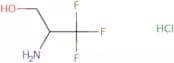
CAS:Versatile small molecule scaffoldFormula:C10H11N5OPurity:Min. 95%Molecular weight:217.23 g/mol(2S)-2-Amino-3,3,3-trifluoropropan-1-ol HCl
CAS:Versatile small molecule scaffoldFormula:C3H7ClF3NOPurity:Min. 95%Molecular weight:165.74 g/mol6'-Bromo-2',3'-dihydrospiro[imidazolidine-4,1'-indene]-2,5-dione
CAS:<p>Versatile small molecule scaffold</p>Formula:C11H9BrN2O2Purity:Min. 95%Molecular weight:281.1 g/mol6,6-Dimethyl-4,5,6,7-tetrahydro-1,3-benzothiazole
CAS:<p>Versatile small molecule scaffold</p>Formula:C9H13NSPurity:Min. 95%Molecular weight:167.27 g/mol1-[(3-Bromopyridin-2-yl)methyl]cyclopropane-1-carbonitrile
CAS:Versatile small molecule scaffoldFormula:C10H9BrN2Purity:Min. 95%Molecular weight:237.1 g/molSodium 4,4,4-trifluorobutane-1-sulfinate
CAS:<p>Versatile small molecule scaffold</p>Formula:C4H6F3NaO2SPurity:Min. 95%Molecular weight:198.14 g/molEthyl 2-(5,5-dimethyl-4-oxooxolan-3-yl)-2-oxoacetate
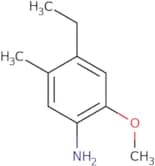
CAS:<p>Versatile small molecule scaffold</p>Formula:C10H14O5Purity:Min. 95%Molecular weight:214.21 g/mol4-Ethyl-2-methoxy-5-methylaniline
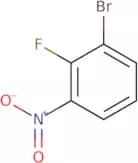
CAS:<p>Versatile small molecule scaffold</p>Formula:C10H15NOPurity:Min. 95%Molecular weight:165.23 g/mol1-Bromo-2-fluoro-3-nitrobenzene
CAS:1-Bromo-2-fluoro-3-nitrobenzene is a synthetic chemical that is used as an intermediate in the synthesis of various dyes. It can be obtained by the diazotization of acetyl nitrite and acetonitrile, followed by acetylation with acetic anhydride and hydrolysis with sodium hydroxide. The bromoaniline formed after this reaction is then converted to 1-bromo-2-fluoro-3-nitrobenzene by refluxing it with nitric acid. This chemical can also be synthesized from bromines and chloride in the presence of a diazo salt. It reacts with fluoride or halogens to produce fluorobenzene derivatives, which are used as intermediates for other organic compounds.Formula:C6H3BrFNO2Purity:Min. 95%Color and Shape:Yellow PowderMolecular weight:220 g/mol3-(Chlorosulfonyl)benzoic acid
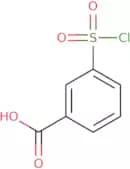
CAS:<p>3-(Chlorosulfonyl)benzoic acid is a synthetic compound that inhibits histone lysine methylation. It has been shown to protect against neuronal injury and cognitive impairment. 3-(Chlorosulfonyl)benzoic acid also has an inhibitory effect on the activation of Sirt2, which is an enzyme involved in cellular processes such as cancer, diabetes, inflammation, and aging. 3-(Chlorosulfonyl)benzoic acid has low potency and is not very soluble in water. It can be used to treat metabolic disorders by increasing the amount of insulin released from the pancreas and lowering blood glucose levels.</p>Formula:C7H5ClO4SPurity:Min. 95%Molecular weight:220.63 g/mol6-Chloro-3,4-dihydro-3-(a-methylbenzyl)-2H-1,2,4-benzothiadiazine-7-sulfonamide 1,1-dioxide
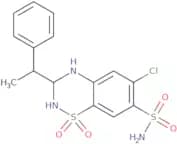
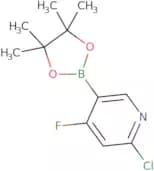
CAS:6-Chloro-3,4-dihydro-3-(a-methylbenzyl)-2H-1,2,4-benzothiadiazine-7-sulfonamide 1,1-dioxide is an active metabolite of the drug benzbromarone. It is primarily administered as a diuretic to treat high blood pressure and congestive heart failure. The pharmacodynamics of this drug are related to its ability to inhibit the activity of sodium channels in vascular smooth muscle cells and thereby reduce the force of contraction and relax the vessel wall. 6CBDMTD has shown an increase in glomerular filtration rate in patients with congestive heart failure. This drug also decreases the plasma concentration of fatty acids by inhibiting the formation of lipoprotein particles. 6CBDMTD has been shown to be effective at lowering diastolic and systolic blood pressure levels in patients with hypertension.Formula:C15H16ClN3O4S2Purity:Min. 95%Molecular weight:401.89 g/mol2-Chloro-4-fluoropyridine-5-boronic acid, pinacol ester
CAS:Please enquire for more information about 2-Chloro-4-fluoropyridine-5-boronic acid, pinacol ester including the price, delivery time and more detailed product information at the technical inquiry form on this pageFormula:C11H14BClFNO2Purity:Min. 95%Molecular weight:257.5 g/molCreatine phosphate di(tris) salt
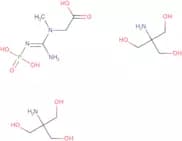
CAS:<p>Creatine phosphate di(tris) salt is a cyclase and rectifier of potassium ion channels. It is a potent activator of calcium ion channels, expressed in the cells of the ng108-15 mouse neuroblastoma line. Creatine phosphate di(tris) salt also potently activates guanylate cyclase and l-type calcium ion channels. This drug has been shown to stimulate prostaglandin synthesis and inhibit the production of prostaglandin E1 in biological chemistry studies. Creatine phosphate di(tris) salt is a cyclase and rectifier of potassium ion channels. It is a potent activator of calcium ion channels, expressed in the cells of the ng108-15 mouse neuroblastoma line. Creatine phosphate di(tris) salt also potently activates guanylate cyclase and l-type calcium ion channels. This drug has been shown to stimulate prostaglandin synthesis and inhibit the production of prostaglandin E1 in</p>Formula:C12H32N5O11PPurity:Min. 95%Molecular weight:453.38 g/mol1,4-Dichloro-2-butyne
CAS:<p>1,4-Dichloro-2-butyne is a colorless liquid with a sweet odor. It is used as an intermediate in organic synthesis. 1,4-Dichloro-2-butyne can be prepared by the reaction of ethylene diamine and benzyl chloride in the presence of xylenes to form the corresponding ethyl diazoacetate. The ethyl diazoacetate is then reacted with chlorosulfonic acid to produce 1,4-dichlorobutane. This compound can be converted into other compounds such as amides, ethers, and esters using ethyl diazoacetate.</p>Formula:C4H4Cl2Purity:Min. 95%Color and Shape:Colorless Clear LiquidMolecular weight:122.98 g/mol2,3-Diaminobenzoic acid
CAS:<p>2,3-Diaminobenzoic acid is a benzimidazole derivative that is used in the treatment of microbial infections. It has been shown to inhibit the growth of bacteria by binding to their ribosomes and inhibiting protein synthesis. The reaction solution of 2,3-diaminobenzoic acid has fluorescence properties that can be used to detect contaminating substances. The conjugates formed with p-hydroxyphenylacetic acid are more soluble than those formed with hydroxybenzoic acid. 2,3-Diaminobenzoic acid is not very toxic and does not cause any detectable changes in enzyme activities or other biochemical parameters in short term exposure. It can be easily decomposed by sodium chloride into chlorine gas and hydrochloric acid, which are both highly reactive with water.</p>Formula:C7H8N2O2Purity:Min. 95%Color and Shape:PowderMolecular weight:152.15 g/mol


![2-(4-Ethylpiperazin-1-yl)-6H,7H-[1,3]thiazolo[4,5-d]pyrimidin-7-one](/_next/image/?url=https%3A%2Fstatic.cymitquimica.com%2Fproducts%2F3D%2Fthumb-webp%2FFAC78347.webp&w=3840&q=75)
![2-Phenylpyrazolo[1,5-a]pyrazin-4(5H)-one](/_next/image/?url=https%3A%2Fstatic.cymitquimica.com%2Fproducts%2F3D%2Fthumb-webp%2FFAC78404.webp&w=3840&q=75)


![6'-Bromo-2',3'-dihydrospiro[imidazolidine-4,1'-indene]-2,5-dione](/_next/image/?url=https%3A%2Fstatic.cymitquimica.com%2Fproducts%2F3D%2Fthumb-webp%2FFAD20567.webp&w=3840&q=75)

![1-[(3-Bromopyridin-2-yl)methyl]cyclopropane-1-carbonitrile](/_next/image/?url=https%3A%2Fstatic.cymitquimica.com%2Fproducts%2F3D%2Fthumb-webp%2FFAD69996.webp&w=3840&q=75)