Building Blocks
This section contains fundamental products for the synthesis of organic and biological compounds. Building blocks are the essential starting materials used to construct complex molecules through various chemical reactions. They play a critical role in drug discovery, material science, and chemical research. At CymitQuimica, we offer a diverse range of high-quality building blocks to support your innovative research and industrial projects, ensuring you have the essential components for successful synthesis.
Subcategories of "Building Blocks"
- Boronic Acids & Boronic Acid Derivatives(5,778 products)
- Chiral Building Blocks(1,242 products)
- Hydrocarbon Building Blocks(6,098 products)
- Organic Building Blocks(61,063 products)
Found 197855 products of "Building Blocks"
Sort by
Purity (%)
0
100
|
0
|
50
|
90
|
95
|
100
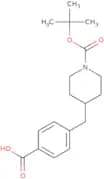
4-(4-Carboxy-benzyl)-piperidine-1-carboxylic acid tert-butyl ester
CAS:<p>Versatile small molecule scaffold</p>Formula:C18H25NO4Purity:Min. 95%Molecular weight:319.4 g/mol4-(Difluoromethoxy)benzamide
CAS:<p>4-(Difluoromethoxy)benzamide is an intermediate in the synthesis of roflumilast, which is a drug used to treat asthma. This intermediate is produced by condensation of methoxybenzoic acid with benzaldehyde and hydrochloric acid. The product can be purified by recrystallization or by conversion to its n-oxide, which has advantages over the chloride form because it is easier to handle and has less impurities. 4-(Difluoromethoxy)benzamide can be used in the industrial production of roflumilast, as it reacts quickly and easily with other chemicals.</p>Formula:C8H7F2NO2Purity:Min. 95%Molecular weight:187.14 g/molPropan-2-yl 2,5-dihydroxybenzoate
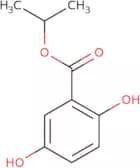
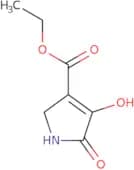
CAS:<p>Versatile small molecule scaffold</p>Formula:C10H12O4Purity:Min. 95%Molecular weight:196.2 g/molEthyl 4-hydroxy-5-oxo-2,5-dihydro-1H-pyrrole-3-carboxylate
CAS:<p>Versatile small molecule scaffold</p>Formula:C7H9NO4Purity:Min. 95%Molecular weight:171.15 g/mol[Dibromo(fluoro)methyl]benzene
CAS:<p>Versatile small molecule scaffold</p>Formula:C7H5Br2FPurity:Min. 95%Molecular weight:267.92 g/molMethyl 2-[(4-chloro-3-nitrophenyl)formamido]propanoate
CAS:<p>Versatile small molecule scaffold</p>Formula:C11H11ClN2O5Purity:Min. 95%Molecular weight:286.67 g/mol2-[3-(1H-1,2,4-Triazol-1-yl)propanamido]propanoic acid
CAS:<p>Versatile small molecule scaffold</p>Formula:C8H12N4O3Purity:Min. 95%Molecular weight:212.21 g/mol2-[(3-Methylphenyl)formamido]propanoic acid
CAS:<p>Versatile small molecule scaffold</p>Formula:C11H13NO3Purity:Min. 95%Molecular weight:207.23 g/mol2-[(Furan-3-yl)formamido]propanoic acid
CAS:Versatile small molecule scaffoldFormula:C8H9NO4Purity:Min. 95%Molecular weight:183.16 g/mol4-Methyl-2-[(2-methylphenyl)formamido]pentanoic acid
CAS:<p>4-Methyl-2-[(2-methylphenyl)formamido]pentanoic acid is a synthetic compound that inhibits the growth of certain types of bacteria, fungi, and viruses. It is thought to work by disrupting the synthesis of DNA and RNA. 4-Methyl-2-[(2-methylphenyl)formamido]pentanoic acid has not been studied for use in humans. However, it has shown effectiveness against microorganisms such as Escherichia coli, Staphylococcus aureus, Salmonella typhimurium, Listeria monocytogenes, Candida albicans, Trichophyton mentagrophytes, and Saccharomyces cerevisiae.</p>Formula:C14H19NO3Purity:Min. 95%Molecular weight:249.3 g/mol2-(Adamantan-1-ylformamido)-3-phenylpropanoic acid
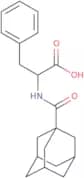
CAS:Versatile small molecule scaffoldFormula:C20H25NO3Purity:Min. 95%Molecular weight:327.4 g/mol2-[(2-Ethoxyphenyl)formamido]-3-methylbutanoic acid
CAS:<p>Versatile small molecule scaffold</p>Formula:C14H19NO4Purity:Min. 95%Molecular weight:265.3 g/mol2-(2-Cyclopentylacetamido)propanoic acid
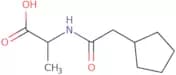
CAS:<p>Versatile small molecule scaffold</p>Formula:C10H17NO3Purity:Min. 95%Molecular weight:199.25 g/mol2-[(1,1-Dioxo-1,2-benzothiazol-3-yl)amino]-4-methylpentanoic acid
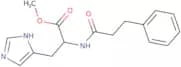
CAS:Controlled Product<p>2-[(1,1-Dioxo-1,2-benzothiazol-3-yl)amino]-4-methylpentanoic acid (PDB code: 2WZH) is a peptide that has been shown to activate the ion channel TRPV4. It has also been shown to be an inhibitor of protein interactions and receptor binding. PDB codes for 2-[(1,1-Dioxo-1,2-benzothiazol-3-yl)amino]-4-methylpentanoic acid are 2WZH and 1J0E.</p>Formula:C13H16N2O4SPurity:Min. 95%Molecular weight:296.34 g/molMethyl 3-(1H-imidazol-4-yl)-2-(3-phenylpropanamido)propanoate
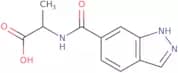
CAS:Versatile small molecule scaffoldFormula:C16H19N3O3Purity:Min. 95%Molecular weight:301.34 g/mol2-(1H-Indazol-6-ylformamido)propanoic acid
CAS:<p>Versatile small molecule scaffold</p>Formula:C11H11N3O3Purity:Min. 95%Molecular weight:233.22 g/mol2-[(2-Bromophenyl)formamido]-3-methylbutanoic acid
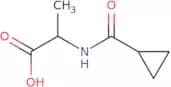
CAS:<p>Versatile small molecule scaffold</p>Formula:C12H14BrNO3Purity:Min. 95%Molecular weight:300.15 g/mol2-(Cyclopropylformamido)propanoic acid
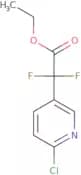
CAS:Versatile small molecule scaffoldFormula:C7H11NO3Purity:Min. 95%Molecular weight:157.17 g/molEthyl 2-(6-chloropyridin-3-yl)-2,2-difluoroacetate
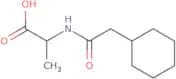
CAS:<p>Versatile small molecule scaffold</p>Formula:C9H8ClF2NO2Purity:Min. 95%Molecular weight:235.61 g/mol2-(2-Cyclohexylacetamido)propanoic acid
CAS:<p>Versatile small molecule scaffold</p>Formula:C11H19NO3Purity:Min. 95%Molecular weight:213.27 g/mol


![[Dibromo(fluoro)methyl]benzene](/_next/image/?url=https%3A%2Fstatic.cymitquimica.com%2Fproducts%2F3D%2Fthumb-webp%2FXFB33979.webp&w=3840&q=75)
![Methyl 2-[(4-chloro-3-nitrophenyl)formamido]propanoate](/_next/image/?url=https%3A%2Fstatic.cymitquimica.com%2Fproducts%2F3D%2Fthumb-webp%2FXFC00009.webp&w=3840&q=75)
![2-[3-(1H-1,2,4-Triazol-1-yl)propanamido]propanoic acid](/_next/image/?url=https%3A%2Fstatic.cymitquimica.com%2Fproducts%2F3D%2Fthumb-webp%2FXFC00106.webp&w=3840&q=75)
![2-[(3-Methylphenyl)formamido]propanoic acid](/_next/image/?url=https%3A%2Fstatic.cymitquimica.com%2Fproducts%2F3D%2Fthumb-webp%2FXFC00197.webp&w=3840&q=75)
![2-[(Furan-3-yl)formamido]propanoic acid](/_next/image/?url=https%3A%2Fstatic.cymitquimica.com%2Fproducts%2F3D%2Fthumb-webp%2FXFC00201.webp&w=3840&q=75)
![4-Methyl-2-[(2-methylphenyl)formamido]pentanoic acid](/_next/image/?url=https%3A%2Fstatic.cymitquimica.com%2Fproducts%2F3D%2Fthumb-webp%2FXFC00290.webp&w=3840&q=75)
![2-[(2-Ethoxyphenyl)formamido]-3-methylbutanoic acid](/_next/image/?url=https%3A%2Fstatic.cymitquimica.com%2Fproducts%2F3D%2Fthumb-webp%2FXFC00337.webp&w=3840&q=75)
![2-[(1,1-Dioxo-1,2-benzothiazol-3-yl)amino]-4-methylpentanoic acid](/_next/image/?url=https%3A%2Fstatic.cymitquimica.com%2Fproducts%2F3D%2Fthumb-webp%2FXFC00477.webp&w=3840&q=75)
![2-[(2-Bromophenyl)formamido]-3-methylbutanoic acid](/_next/image/?url=https%3A%2Fstatic.cymitquimica.com%2Fproducts%2F3D%2Fthumb-webp%2FXFC00738.webp&w=3840&q=75)