Building Blocks
This section contains fundamental products for the synthesis of organic and biological compounds. Building blocks are the essential starting materials used to construct complex molecules through various chemical reactions. They play a critical role in drug discovery, material science, and chemical research. At CymitQuimica, we offer a diverse range of high-quality building blocks to support your innovative research and industrial projects, ensuring you have the essential components for successful synthesis.
Subcategories of "Building Blocks"
- Boronic Acids & Boronic Acid Derivatives(5,780 products)
- Chiral Building Blocks(1,241 products)
- Hydrocarbon Building Blocks(6,100 products)
- Organic Building Blocks(61,023 products)
Found 205289 products of "Building Blocks"
Sort by
Purity (%)
0
100
|
0
|
50
|
90
|
95
|
100
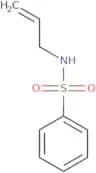
N-(Prop-2-en-1-yl)benzenesulfonamide
CAS:Versatile small molecule scaffoldFormula:C9H11NO2SPurity:Min. 95%Molecular weight:197.26 g/molN-Allyl-p-toluenesulfonamide
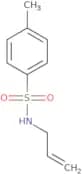
CAS:N-Allyl-p-toluenesulfonamide is a nucleophilic, centrosymmetric molecule that is used as an intermediate in organic synthesis. It can be prepared by refluxing allylstannane with azide and triflic acid. N-Allyl-p-toluenesulfonamide is useful for the preparation of azides and azidoformates because it reacts with alkyl halides to form cyclic products. The chloride group on this molecule makes it a good nucleophile for reactions with other nucleophiles, such as chloride ion or azide ion.Formula:C10H13NO2SPurity:Min. 95%Molecular weight:211.28 g/mol1-Methoxynaphthalene-2-carboxaldehyde
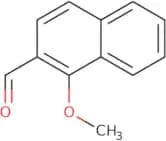
CAS:1-Methoxynaphthalene-2-carboxaldehyde is an organic compound with the formula C11H14O. It is the simplest member of a family of compounds called naphthalenesulfonates, which consists of two fused benzene rings with a sulfonic acid group at each end. 1-Methoxynaphthalene-2-carboxaldehyde has been synthesised by reacting aluminium chloride with zinc chloride in anhydrous conditions. The product can be purified by distillation or recrystallisation from water and ethanol.Formula:C12H10O2Purity:Min. 95%Molecular weight:186.21 g/mol4-Amino-N-ethyl-N-phenylbenzenesulfonamide
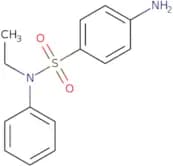
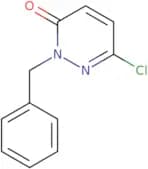
CAS:Versatile small molecule scaffoldFormula:C14H16N2O2SPurity:Min. 95%Molecular weight:276.36 g/mol2-Benzyl-6-chloro-2,3-dihydropyridazin-3-one
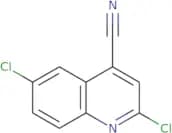
CAS:2-Benzyl-6-chloro-2,3-dihydropyridazin-3-one is a Grignard reagent that reacts with electrophiles to form organometallic compounds. It is used in organic chemistry as a nucleophilic agent in the formation of carbon–carbon bonds and other types of reactions. 2-Benzyl-6-chloro-2,3-dihydropyridazin-3-one can also be used to produce alkyl magnesium bromides from alcohols and chlorides. The transformation of 2,2'-bipyridine into 2,2'-bipyrimidine is one example of this reaction.Formula:C11H9ClN2OPurity:Min. 95%Molecular weight:220.65 g/mol2,6-Dichloroquinoline-4-carbonitrile
CAS:Versatile small molecule scaffoldFormula:C10H4Cl2N2Purity:Min. 95%Molecular weight:223.05 g/mol2-{[(Benzyloxy)carbonyl]amino}-4-carbamoylbutanoic acid
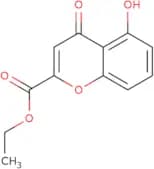
CAS:2-{[(Benzyloxy)carbonyl]amino}-4-carbamoylbutanoic acid is a peptidomimetic that inhibits β-catenin signaling, leading to decreased cell proliferation. This compound has been shown to inhibit the growth of cancer cells and to be effective in preventing an outbreak of corynebacterium. 2-{[(Benzyloxy)carbonyl]amino}-4-carbamoylbutanoic acid was also shown to reduce the production of fatty acids and viral life. This compound is synthetic and can be made by microbial biotransformation or protein–protein interaction. It has been shown that this peptidomimetic binds with high affinity to coronaviruses, which may lead to new treatments for coronavirus infections.Formula:C13H16N2O5Purity:Min. 95%Molecular weight:280.28 g/molEthyl 5-hydroxy-4-oxo-4H-chromene-2-carboxylate
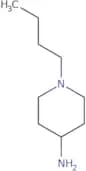
CAS:Ethyl 5-hydroxy-4-oxo-4H-chromene-2-carboxylate is a chromone that is used in the synthesis of other compounds.Formula:C12H10O5Purity:Min. 95%Molecular weight:234.2 g/mol1-Butylpiperidin-4-amine
CAS:Versatile small molecule scaffold
Formula:C9H20N2Purity:Min. 95%Molecular weight:156.27 g/mol4,5-Dimethyl-1H-indole-2-carboxylic acid
CAS:Versatile small molecule scaffoldFormula:C11H11NO2Purity:Min. 95%Molecular weight:189.21 g/mol5-bromo-4-methyl-1H-indole-2-carboxylic acid
CAS:Versatile small molecule scaffoldFormula:C10H8BrNO2Purity:Min. 95%Molecular weight:254.1 g/mol5-Chloro-4-methyl-1H-indole-2-carboxylic acid
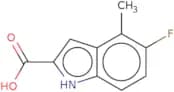
CAS:Versatile small molecule scaffoldFormula:C10H8ClNO2Purity:Min. 95%Molecular weight:209.63 g/mol5-Fluoro-4-methyl-1H-indole-2-carboxylic acid
CAS:Versatile small molecule scaffold
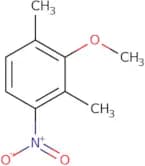
Formula:C10H8FNO2Purity:Min. 95%Molecular weight:193.2 g/mol2-Methoxy-1,3-dimethyl-4-nitrobenzene
CAS:Versatile small molecule scaffold
Formula:C9H11NO3Purity:Min. 95%Molecular weight:181.19 g/mol3-(6-Methylpyridin-3-yl)propan-1-ol
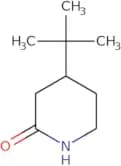
CAS:Versatile small molecule scaffoldFormula:C9H13NOPurity:Min. 95%Molecular weight:151.21 g/mol4-tert-Butylpiperidin-2-one
CAS:Versatile small molecule scaffold
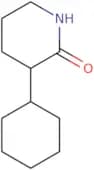
Formula:C9H17NOPurity:Min. 95%Molecular weight:155.24 g/mol3-Cyclohexylpiperidin-2-one
CAS:Versatile small molecule scaffold
Formula:C11H19NOPurity:Min. 95%Molecular weight:181.27 g/mol5-(Trifluoromethyl)piperidin-2-one
CAS:Versatile small molecule scaffold
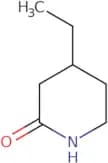
Formula:C6H8F3NOPurity:Min. 95%Molecular weight:167.13 g/mol4-Ethylpiperidin-2-one
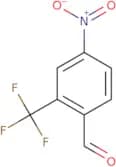
CAS:4-Ethylpiperidin-2-one is a receptor tyrosine kinase inhibitor that binds to the ATP binding site of the enzyme, thereby inhibiting its activity. 4-Ethylpiperidin-2-one has been shown to inhibit the growth of xenograft tumor cells in mice by blocking tyrosine kinases, which are involved in cellular proliferation and differentiation. This drug has also been shown to have anti-inflammatory effects in rats due to its ability to inhibit prostaglandin synthesis. 4-Ethylpiperidin-2-one is metabolized by CYP3A4 and CYP2D6. It is also an organometallic compound that can bind to metal ions such as iron or copper with high affinity. The chemical structure of 4-ethylpiperidin-2-one consists of a piperidine ring connected at one end to an aldehyde group and at the other end to an oxindFormula:C7H13NOPurity:Min. 95%Molecular weight:127.18 g/mol4-Nitro-2-(trifluoromethyl)benzaldehyde
CAS:Versatile small molecule scaffoldFormula:C8H4F3NO3Purity:Min. 95%Molecular weight:219.12 g/mol

![2-{[(Benzyloxy)carbonyl]amino}-4-carbamoylbutanoic acid](/_next/image/?url=https%3A%2Fstatic.cymitquimica.com%2Fproducts%2F3D%2Fthumb-webp%2FACA51614.webp&w=3840&q=75)