Building Blocks
This section contains fundamental products for the synthesis of organic and biological compounds. Building blocks are the essential starting materials used to construct complex molecules through various chemical reactions. They play a critical role in drug discovery, material science, and chemical research. At CymitQuimica, we offer a diverse range of high-quality building blocks to support your innovative research and industrial projects, ensuring you have the essential components for successful synthesis.
Subcategories of "Building Blocks"
- Boronic Acids & Boronic Acid Derivatives(5,756 products)
- Chiral Building Blocks(1,242 products)
- Hydrocarbon Building Blocks(6,095 products)
- Organic Building Blocks(61,051 products)
Found 199813 products of "Building Blocks"
Sort by
Purity (%)
0
100
|
0
|
50
|
90
|
95
|
100
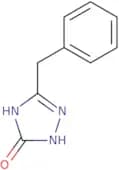
3-benzyl-4,5-dihydro-1H-1,2,4-triazol-5-one
CAS:<p>Versatile small molecule scaffold</p>Formula:C9H9N3OPurity:Min. 95%Molecular weight:175.19 g/mol3-Azaspiro[5.6]dodecane-2,4-dione
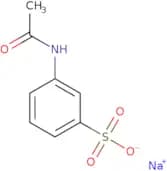
CAS:<p>Versatile small molecule scaffold</p>Formula:C11H17NO2Purity:Min. 95%Molecular weight:195.26 g/molSodium 3-acetamidobenzene-1-sulfonate
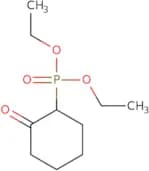
CAS:<p>Versatile small molecule scaffold</p>Formula:C8H8NNaO4SPurity:Min. 95%Molecular weight:237.21 g/molDiethyl (2-oxocyclohexyl)phosphonate
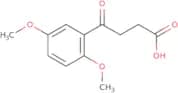
CAS:<p>Versatile small molecule scaffold</p>Formula:C10H19O4PPurity:Min. 95%Molecular weight:234.23 g/mol3-(2′,5′-Dimethoxybenzoyl)propionic acid
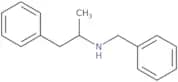
CAS:Versatile small molecule scaffoldFormula:C12H14O5Purity:Min. 95%Molecular weight:238.24 g/molBenzyl(1-phenylpropan-2-yl)amine
CAS:Controlled Product<p>Benzyl(1-phenylpropan-2-yl)amine is a piperidine derivative that acts as an inhibitor of cytochrome P450 enzymes. It binds to the CYP2D6 enzyme and has been shown to have an inhibitory effect on the activity of this enzyme in rat liver microsomes. The binding constants for benzyl(1-phenylpropan-2-yl)amine with the CYP2D6 enzyme were determined by competitive inhibition studies and it was found that this compound has a high binding affinity with the CYP2D6 enzyme. Studies also demonstrated that benzyl(1-phenylpropan-2-yl)amine inhibits the activity of CYP3A4 and CYP3A5 enzymes. This drug may be useful in treating some individuals who are taking drugs metabolized by these two enzymes, but will not be effective in people who are not taking any drugs metabolized by these two enzymes.</p>Formula:C16H19NPurity:Min. 95%Molecular weight:225.33 g/mol(2S)-3-Carbamoyl-2-[5-(dimethylamino)naphthalene-1-sulfonamido]propanoic acid
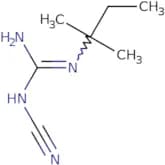
CAS:<p>(2S)-3-Carbamoyl-2-[5-(dimethylamino)naphthalene-1-sulfonamido]propanoic acid is a fluorescent probe that binds to human serum albumin. It has been used as an inhibitor of the enzyme α1-acid glycoprotein, which is involved in the degradation of fatty acids and glycopeptides. The binding constants have been determined by fluorescence titration and are site specific. (2S)-3-Carbamoyl-2-[5-(dimethylamino)naphthalene-1-sulfonamido]propanoic acid is a molecule that can be used for metal chelation, which has been demonstrated by its ability to inhibit the activity of enzymes such as α1-acid glycoprotein. This compound also has a role in endogenous substances such as fatty acids and tryptophan fluorescence.</p>Formula:C16H19N3O5SPurity:Min. 95%Molecular weight:365.4 g/molN-Cyano-N'-(2-methylbutan-2-yl)guanidine
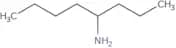
CAS:<p>N-Cyano-N'-(2-methylbutan-2-yl)guanidine is an antihypertensive drug that inhibits the activity of enzymes involved in the synthesis of fatty acids. It has been shown to be effective against cardiac hypertrophy, as it reduces the activity of phospholipase A2, which is required for the formation of arachidonic acid, a precursor to prostaglandins and thromboxanes. This drug also has a depressant effect on fatty acid metabolism and decreases the production of fatty alcohols by inhibiting their synthesis. N-Cyano-N'-(2-methylbutan-2-yl)guanidine is used as a pharmaceutical dosage for treatment of hypertension and depressive disorders.</p>Formula:C7H14N4Purity:Min. 95%Molecular weight:154.21 g/molOctan-4-amine
CAS:<p>Octan-4-amine is a metastable cation that has been used as a label for deuterium in various studies. The labeling of octan-4-amine with deuterium has been shown to produce stable, nonradioactive isotopes for use in various studies. It has also been shown to be an effective radical cations and cleavage agent. As a result, it can be used to generate molecular ions and isomers from larger molecules. Octan-4-amine is also capable of isomerizing other compounds and generating radical cations when heated. This chemical may be used as a precursor to create other compounds through the process of isomerization, such as the production of isomers by the addition of hydrogen atoms or removal of hydrogens from their molecular structure.</p>Formula:C8H19NPurity:Min. 95%Molecular weight:129.24 g/mol1,6-Dimethyl (2E,4E)-hexa-2,4-dienedioate
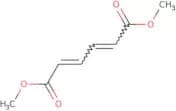
CAS:<p>1,6-Dimethyl (2E,4E)-hexa-2,4-dienedioate is a hydrocarbon that can be synthesized from ethylene. The compound is a building block for polyunsaturated compounds and can be used as a feedstock in the production of monomers or polymers. It has been shown to have radiation catalysis properties and is sustainable with low environmental impact. 1,6-Dimethyl (2E,4E)-hexa-2,4-dienedioate has been shown to produce high yields and is not toxic to humans or animals. This product also has applications in the production of cosmetics and pharmaceuticals.</p>Formula:C8H10O4Purity:Min. 95%Molecular weight:170.16 g/molNonanamide
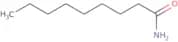
CAS:<p>Nonanamide is a glycol ester with an amide group. It has been shown to be effective against infectious diseases, such as HIV and hepatitis B. It has a pyrazole ring that interacts with the amide group, forming hydrogen bonds. Nonanamide has also been shown to inhibit the production of inflammatory cytokines in mice with autoimmune disease, which may be due to its ability to inhibit water vapor. The molecular weight of nonanamide is 134.2 g/mol and it has a melting point of -54°C. Nonanamide is soluble in water and glycol ethers but insoluble in alcohols and oils.</p>Formula:C9H19NOPurity:Min. 95%Molecular weight:157.25 g/molDi-n-octylamine
CAS:<p>Di-n-octylamine is a reactive chemical that is chemically stable in the presence of nitrogen. It is used in chemical biology as a transport agent for amines and other organic compounds. Di-n-octylamine has been shown to have optimum solubility in glycol ethers, magnesium salts, and trifluoroacetic acid. This compound reacts with fatty acids to form hydroxyl groups and can be used as an extractant for glycol ethers. The mechanism of this reaction involves intramolecular hydrogen transfer from the hydroxyl group on the fatty acid to the n-octyl amine molecule.</p>Formula:C16H35NPurity:Min. 95%Molecular weight:241.46 g/mol2-Hydroxybenzenethiol
CAS:<p>2-Hydroxybenzenethiol is an analytical reagent that reacts with oxygen to form a fluorescent complex. It is used for the detection of infectious diseases, such as tuberculosis and other bacterial infections. 2-Hydroxybenzenethiol is also used in analytical chemistry as a reaction solution to study the oxidation of organic compounds. The compound has been shown to react with nitrogen atoms in certain groups, such as p2, by forming chelate ligands. This compound can be prepared by reacting hydrochloric acid with molybdenum (Mo), which has been electrochemically coated with a hydroxyl group on one side and a hydroxy group on the other. The Mo acts as a model system for studying intramolecular hydrogen bonding between two hydroxy groups that are separated by one carbon atom.</p>Formula:C6H6OSPurity:Min. 95%Molecular weight:126.17 g/mol(1R,6S,7R)-7-Bromobicyclo[4.1.0]heptane
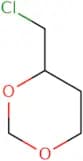
CAS:<p>Versatile small molecule scaffold</p>Formula:C7H11BrPurity:Min. 95%Molecular weight:175.07 g/mol4-(Chloromethyl)-1,3-dioxane
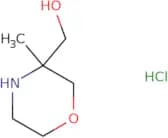
CAS:<p>Versatile small molecule scaffold</p>Formula:C5H9ClO2Purity:Min. 95%Molecular weight:136.58 g/mol(3-Methylmorpholin-3-yl)methanol hydrochloride
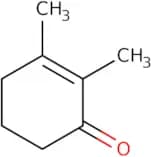
CAS:<p>Versatile small molecule scaffold</p>Formula:C6H14ClNO2Purity:Min. 95%Molecular weight:167.63 g/mol2,3-Dimethylcyclohex-2-en-1-one
CAS:<p>2,3-Dimethylcyclohex-2-en-1-one is a phenylhydrazine derivative that can be converted into aporphine alkaloids. It is also an isomer of cyclohexenones and epoxides. This compound has substituents at the 2 and 3 positions which are either methyl or hydrogen, respectively. The carbonyl group in 2,3-Dimethylcyclohex-2-en-1-one is a ketone or aldehyde, depending on the substitution pattern. The oxygen function in this molecule is an ether or ester. 2,3-Dimethylcyclohex-2-en-1-one has properties that are similar to those of diketones and spirolactones because it contains both carbonyl and oxygen functions. It can be classified as an aporphine alkaloid because it has two rings fused together with one nitrogen atom between them</p>Formula:C8H12OPurity:Min. 95%Color and Shape:Clear LiquidMolecular weight:124.18 g/mol6-Amino-3-methylpyrimidin-4(3H)-one
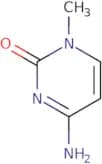
CAS:<p>Versatile small molecule scaffold</p>Formula:C5H7N3OPurity:Min. 95%Molecular weight:125.12 g/mol4-Amino-1-methylpyrimidin-2(1H)-one
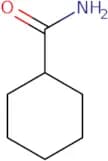
CAS:<p>4-Amino-1-methylpyrimidin-2(1H)-one is a chemical compound that belongs to the group of pyrimidine compounds. It has been shown to be an inhibitor of viral life, with its activity against HIV being most well studied. The tautomers of 4-amino-1-methylpyrimidin-2(1H)-one are protonated and stable, meaning that they do not undergo any chemical change in the body. 4-Amino-1-methylpyrimidin-2(1H)-one is also able to form stable complexes with nitrogen atoms. The xray crystal structure for this compound shows that it coordinates with group P2, which contains two nitrogen atoms and one oxygen atom. The interaction between these three atoms is called a dinucleotide phosphate. This group binds to DNA by hydrogen bonds, forming intramolecular hydrogen bonds. The groups on the other side of the molecule bind</p>Formula:C5H7N3OPurity:Min. 95%Molecular weight:125.13 g/molCyclohexanecarboxamide
CAS:<p>Cyclohexanecarboxamide is a carboxamide that has been shown to inhibit the growth of bacteria. It binds to the bacterial receptor and inhibits the activity of the enzyme carboxide, which is involved in the synthesis of monoamine neurotransmitters. Cyclohexanecarboxamide has also been shown to inhibit axonal growth in mammalian cells, which may be due to its ability to block potassium channels on nerve cells. Cyclohexanecarboxamide has been shown to have antimicrobial properties against a range of organisms including those resistant mutants.</p>Formula:C7H13NOPurity:Min. 95%Molecular weight:127.18 g/mol

![3-Azaspiro[5.6]dodecane-2,4-dione](/_next/image/?url=https%3A%2Fstatic.cymitquimica.com%2Fproducts%2F3D%2Fthumb-webp%2FBAA07889.webp&w=3840&q=75)
![(2S)-3-Carbamoyl-2-[5-(dimethylamino)naphthalene-1-sulfonamido]propanoic acid](/_next/image/?url=https%3A%2Fstatic.cymitquimica.com%2Fproducts%2F3D%2Fthumb-webp%2FBAA10023.webp&w=3840&q=75)


![(1R,6S,7R)-7-Bromobicyclo[4.1.0]heptane](/_next/image/?url=https%3A%2Fstatic.cymitquimica.com%2Fproducts%2F3D%2Fthumb-webp%2FBAA12141.webp&w=3840&q=75)