Building Blocks
This section contains fundamental products for the synthesis of organic and biological compounds. Building blocks are the essential starting materials used to construct complex molecules through various chemical reactions. They play a critical role in drug discovery, material science, and chemical research. At CymitQuimica, we offer a diverse range of high-quality building blocks to support your innovative research and industrial projects, ensuring you have the essential components for successful synthesis.
Subcategories of "Building Blocks"
- Boronic Acids & Boronic Acid Derivatives(5,781 products)
- Chiral Building Blocks(1,242 products)
- Hydrocarbon Building Blocks(6,101 products)
- Organic Building Blocks(61,033 products)
Found 205320 products of "Building Blocks"
Sort by
Purity (%)
0
100
|
0
|
50
|
90
|
95
|
100
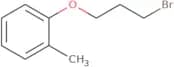
1-(3-Bromopropoxy)-2-methylbenzene
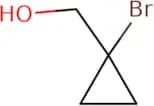
CAS:Versatile small molecule scaffoldFormula:C10H13BrOPurity:Min. 95%Molecular weight:229.11 g/mol(1-Bromocyclopropyl)methanol
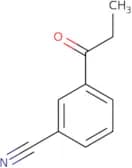
CAS:Versatile small molecule scaffoldFormula:C4H7BrOPurity:Min. 95%Molecular weight:151 g/mol3-Propanoylbenzonitrile
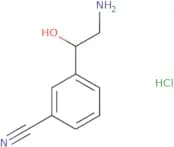
CAS:Versatile small molecule scaffoldFormula:C10H9NOPurity:Min. 95%Molecular weight:159.18 g/mol3-(2-Amino-1-hydroxyethyl)benzonitrile hydrochloride
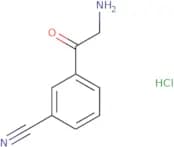
CAS:Versatile small molecule scaffoldFormula:C9H11ClN2OPurity:Min. 95%Molecular weight:198.65 g/mol3-(2-Aminoacetyl)benzonitrile hydrochloride
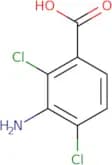
CAS:Versatile small molecule scaffoldFormula:C9H9ClN2OPurity:Min. 95%Molecular weight:196.63 g/mol3-Amino-2,4-dichlorobenzoic acid
CAS:3-Amino-2,4-dichlorobenzoic acid is a metabolite of malonate that inhibits the synthesis of fatty acids by inhibiting the activity of fatty acid synthetase. It has been shown to inhibit lipid accumulation in plants and may be used as an inhibitor in plant physiology experiments. 3-Amino-2,4-dichlorobenzoic acid can be applied to explants before or after treatment with test compounds to determine its inhibitory effect on fatty acid synthetase activity. 3-Amino-2,4-dichlorobenzoic acid is also a potent inhibitor of endogenous lipogenic enzymes.Formula:C7H5Cl2NO2Purity:Min. 95%Molecular weight:206.03 g/mol1-Chloro-3-methoxypropan-2-one
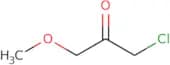
CAS:Versatile small molecule scaffoldFormula:C4H7ClO2Purity:Min. 95%Molecular weight:122.55 g/mol5-Methyl-2,3-dihydro-1H-indene-1,3-dione
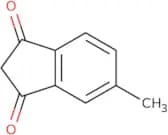
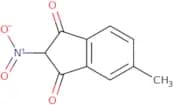
CAS:Versatile small molecule scaffoldFormula:C10H8O2Purity:Min. 95%Molecular weight:160.17 g/mol5-Methyl-2-nitro-2,3-dihydro-1H-indene-1,3-dione
CAS:Versatile small molecule scaffoldFormula:C10H7NO4Purity:Min. 95%Molecular weight:205.17 g/mol5-Methyl-1-(propan-2-yl)-1H-pyrazole-3-carboxylic acid
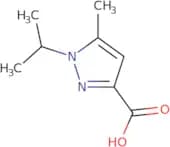
CAS:Versatile small molecule scaffoldFormula:C8H12N2O2Purity:Min. 95%Molecular weight:168.19 g/mol1-(4-Methoxyphenyl)cyclobutane-1-carboxylic acid
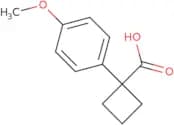
CAS:Versatile small molecule scaffoldFormula:C12H14O3Purity:Min. 95%Molecular weight:206.24 g/mol1-(4-Methylphenyl)cyclobutanecarboxylic acid
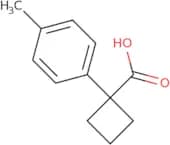
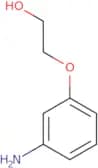
CAS:Versatile small molecule scaffoldFormula:C12H14O2Purity:Min. 95%Molecular weight:190.24 g/mol2-(3-Aminophenoxy)ethan-1-ol
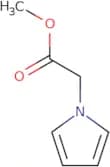
CAS:2-(3-Aminophenoxy)ethan-1-ol is a nitro compound that has been synthesized from 3-aminophenol and ethyl chloroformate. The synthesis of this compound involves the use of a copper catalyst to form the nitro group. This chemical is an intermediate in the production of other nitro compounds, such as 2,4-dinitrophenol, which are used in explosives and dyes. 2-(3-Aminophenoxy)ethan-1-ol can be used as a stabilizing agent for nanoparticles because it contains amines that can bind to metal ions. It also has optical properties that can be exploited for various purposes, such as catalyzed reactions or optical studies. 2-(3-Aminophenoxy)ethan-1-ol is also useful when analyzing nitroarenes by using techniques such as chemoselective oxidation and hydrolysis.Formula:C8H11NO2Purity:Min. 95%Molecular weight:153.18 g/molMethyl 2-(1H-pyrrol-1-yl)acetate
CAS:Versatile small molecule scaffoldFormula:C7H9NO2Purity:Min. 95%Molecular weight:139.15 g/mol1-Methyl-2-{[(2-nitrophenyl)methyl]sulfanyl}-1H-imidazole
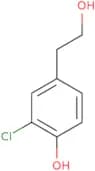
CAS:Versatile small molecule scaffoldFormula:C11H11N3O2SPurity:Min. 95%Molecular weight:249.29 g/mol2-Chloro-4-(2-hydroxyethyl)phenol
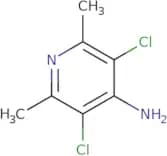
CAS:Versatile small molecule scaffoldFormula:C8H9ClO2Purity:Min. 95%Molecular weight:172.61 g/mol3,5-dichloro-2,6-dimethylpyridin-4-amine
CAS:3,5-Dichloro-2,6-dimethylpyridin-4-amine is a phytotoxic compound that belongs to the group of heterocyclic compounds. It has been used in hydroponic cultures as a carboxyl herbicide and for the control of clopidol-resistant weeds. The symptoms induced by 3,5-dichloro-2,6-dimethylpyridin-4-amine are similar to those observed in plants treated with picolinic acid. Ingestion of this substance can lead to symptoms such as vomiting and diarrhea. The chemical is toxic and ingestion can result in death.Formula:C7H8N2Cl2Purity:Min. 95%Molecular weight:191.05 g/mol1-Bromo-3-(2-ethoxyethoxy)propane
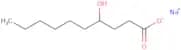
CAS:Versatile small molecule scaffoldFormula:C7H15BrO2Purity:Min. 95%Molecular weight:211.1 g/molSodium 4-hydroxydecanoate
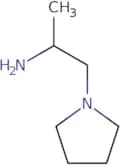
CAS:Versatile small molecule scaffoldFormula:C10H19NaO3Purity:Min. 95%Molecular weight:210.25 g/mol1-Methyl-2-pyrrolidin-1-yl-ethylamine
CAS:Versatile small molecule scaffoldFormula:C7H16N2Purity:Min. 95%Molecular weight:128.22 g/mol

![1-Methyl-2-{[(2-nitrophenyl)methyl]sulfanyl}-1H-imidazole](/_next/image/?url=https%3A%2Fstatic.cymitquimica.com%2Fproducts%2F3D%2Fthumb-webp%2FACA96881.webp&w=3840&q=75)