Building Blocks
This section contains fundamental products for the synthesis of organic and biological compounds. Building blocks are the essential starting materials used to construct complex molecules through various chemical reactions. They play a critical role in drug discovery, material science, and chemical research. At CymitQuimica, we offer a diverse range of high-quality building blocks to support your innovative research and industrial projects, ensuring you have the essential components for successful synthesis.
Subcategories of "Building Blocks"
- Boronic Acids & Boronic Acid Derivatives(5,780 products)
- Chiral Building Blocks(1,241 products)
- Hydrocarbon Building Blocks(6,100 products)
- Organic Building Blocks(61,023 products)
Found 205289 products of "Building Blocks"
Sort by
Purity (%)
0
100
|
0
|
50
|
90
|
95
|
100
3-[(2,4-Difluorophenyl)sulfanyl]piperidine
CAS:Versatile small molecule scaffoldFormula:C11H13F2NSPurity:Min. 95%Molecular weight:229.29 g/mol2-Methyl-2-(prop-2-ynoylamino)propanoic acid
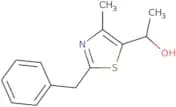
CAS:Versatile small molecule scaffoldFormula:C7H9NO3Purity:Min. 95%Molecular weight:155.15 g/mol1-(2-Benzyl-4-methyl-1,3-thiazol-5-yl)ethan-1-ol
CAS:Versatile small molecule scaffoldFormula:C13H15NOSPurity:Min. 95%Molecular weight:233.33 g/mol2-(2-Fluorophenyl)-2-methylcyclopropane-1-carboxylic acid
CAS:Versatile small molecule scaffold
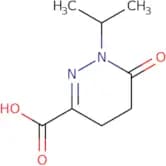
Formula:C11H11FO2Purity:Min. 95%Molecular weight:194.2 g/mol6-Oxo-1-(propan-2-yl)-1,4,5,6-tetrahydropyridazine-3-carboxylic acid
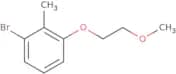
CAS:Versatile small molecule scaffoldFormula:C8H12N2O3Purity:Min. 95%Molecular weight:184.19 g/mol1-Bromo-3-(2-methoxyethoxy)methylbenzene
CAS:Versatile small molecule scaffoldFormula:C10H13BrO2Purity:Min. 95%Molecular weight:245.12 g/mol2-(4-Fluoro-3-methoxyphenyl)morpholine
CAS:Versatile small molecule scaffoldFormula:C11H14FNO2Purity:Min. 95%Molecular weight:211.23 g/mol2-[(2-Methoxyphenyl)methyl]cyclopentan-1-ol
CAS:Versatile small molecule scaffoldFormula:C13H18O2Purity:Min. 95%Molecular weight:206.28 g/mol3-{[Methyl(1,3-thiazol-4-ylmethyl)amino]methyl}aniline
CAS:Versatile small molecule scaffoldFormula:C12H15N3SPurity:Min. 95%Molecular weight:233.33 g/mol1-Ethyl-2-(4-iodobenzoyl)-1H-imidazole
CAS:Controlled ProductVersatile small molecule scaffold
Formula:C12H11IN2OPurity:Min. 95%Molecular weight:326.13 g/molN-(2-Azidoethyl)-2-methylpropanamide
CAS:Versatile small molecule scaffoldFormula:C6H12N4OPurity:Min. 95%Molecular weight:156.19 g/mol3-(3-Bromo-4-fluorophenyl)-2-methylpropanoic acid
CAS:Versatile small molecule scaffoldFormula:C10H10BrFO2Purity:Min. 95%Molecular weight:261.09 g/mol(2-Propylphenyl)thiourea
CAS:Versatile small molecule scaffoldFormula:C10H14N2SPurity:Min. 95%Molecular weight:194.3 g/molMethyl 5-cyanopicolinate
CAS:Methyl 5-cyanopicolinate is a medicinal compound that is used in the treatment of various diseases. It has been shown to block the activation of plasminogen by plasmin, which prevents the breakdown of fibrin and other proteins. Methyl 5-cyanopicolinate has also been found to be an inhibitor of acetylcholinesterase, which leads to increased acetylcholine levels in the brain and can be used for the treatment of Alzheimer's disease. The synthesis and chemical studies of this substance are still ongoing.Formula:C8H6N2O2Purity:Min. 95%Molecular weight:162.15 g/mol4-(Dipropylcarbamoyl)butanoic acid
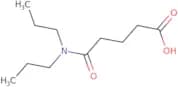
CAS:Versatile small molecule scaffoldFormula:C11H21NO3Purity:Min. 95%Molecular weight:215.29 g/moltert-Butyl N-(3-isocyanatopropyl)carbamate
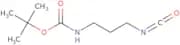
CAS:Versatile small molecule scaffoldFormula:C9H16N2O3Purity:Min. 95%Molecular weight:200.2 g/moltert-Butyl 4-isocyanatobutanoate
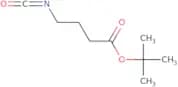
CAS:Versatile small molecule scaffoldFormula:C9H15NO3Purity:Min. 95%Molecular weight:185.22 g/molBoc-3-exo-aminobicyclo[2.2.1]-heptane-2-exo-carboxylic acid
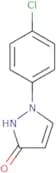
CAS:Versatile small molecule scaffoldFormula:C13H21NO4Purity:Min. 95%Molecular weight:255.32 g/mol1-(4-Chlorophenyl)-1,2-dihydro-3H-pyrazol-3-one
CAS:1-(4-Chlorophenyl)-1,2-dihydro-3H-pyrazol-3-one is a synthetic oxidant that reacts with hydrogen peroxide and nitric acid to produce an intermediate which can be used as a pesticide. This compound has also been used in the production of acrylics, as well as in the synthesis of organic compounds. The reaction time for this compound is optimal at room temperature and produces the best results when using an organic solvent. 1-(4-Chlorophenyl)-1,2-dihydro-3H-pyrazol-3-one should be stored under a nitrogen atmosphere to avoid oxidation.Formula:C9H7ClN2OPurity:Min. 95%Molecular weight:194.62 g/mol3-(Bromomethyl)-1,1-dimethylcyclobutane
CAS:Versatile small molecule scaffold
Formula:C7H13BrPurity:Min. 95%Molecular weight:177.09 g/mol
![3-[(2,4-Difluorophenyl)sulfanyl]piperidine](/_next/image/?url=https%3A%2Fstatic.cymitquimica.com%2Fproducts%2F3D%2Fthumb-webp%2FBAC14450.webp&w=3840&q=75)




![2-[(2-Methoxyphenyl)methyl]cyclopentan-1-ol](/_next/image/?url=https%3A%2Fstatic.cymitquimica.com%2Fproducts%2F3D%2Fthumb-webp%2FBAC19992.webp&w=3840&q=75)
![3-{[Methyl(1,3-thiazol-4-ylmethyl)amino]methyl}aniline](/_next/image/?url=https%3A%2Fstatic.cymitquimica.com%2Fproducts%2F3D%2Fthumb-webp%2FBAC20006.webp&w=3840&q=75)


![Boc-3-exo-aminobicyclo[2.2.1]-heptane-2-exo-carboxylic acid](/_next/image/?url=https%3A%2Fstatic.cymitquimica.com%2Fproducts%2F3D%2Fthumb-webp%2FBDA19837.webp&w=3840&q=75)