Building Blocks
This section contains fundamental products for the synthesis of organic and biological compounds. Building blocks are the essential starting materials used to construct complex molecules through various chemical reactions. They play a critical role in drug discovery, material science, and chemical research. At CymitQuimica, we offer a diverse range of high-quality building blocks to support your innovative research and industrial projects, ensuring you have the essential components for successful synthesis.
Subcategories of "Building Blocks"
- Boronic Acids & Boronic Acid Derivatives(5,778 products)
- Chiral Building Blocks(1,242 products)
- Hydrocarbon Building Blocks(6,098 products)
- Organic Building Blocks(61,059 products)
Found 199580 products of "Building Blocks"
Sort by
Purity (%)
0
100
|
0
|
50
|
90
|
95
|
100
Quinoclamine
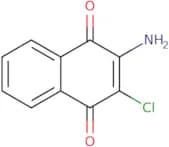
CAS:<p>Quinoclamine is a redox-active film-forming polymer that has been shown to be effective against bacterial strains such as S. aureus, E. coli and B. subtilis. Quinoclamine inhibits the growth of bacteria by targeting their respiratory electron transport chain and reducing its activity. This leads to an accumulation of reactive oxygen species (ROS) in the cells which can cause oxidative stress, leading to cell death. Quinoclamine has also been shown to have antibacterial efficacy against Hl-60 cells and prevents the formation of carbonyl groups in mitochondria, which are toxic to cells. Quinoclamine is metabolized by cytochrome P450 enzymes into quinolinic acid, which is then converted into nicotinamide adenine dinucleotide phosphate (NADP+).</p>Formula:C10H6ClNO2Purity:Min. 95%Molecular weight:207.61 g/mol3-Chloropropyl isothiocyanate
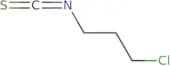
CAS:<p>3-Chloropropyl isothiocyanate (3CPITC) is a chemical compound that is used in research to produce an artificial reflux and to study the effects of acid on esterase activity. This compound is synthesized by reacting 2-chloroethyl chloride with triethylamine in the presence of methanol, followed by hydrolysis of the resulting 3-chloropropyl isothiocyanate. 3CPITC has been shown to have a neutral effect on esterase activity.</p>Formula:C4H6ClNSPurity:Min. 95%Molecular weight:135.61 g/mol3-Bromopropyl isothiocyanate
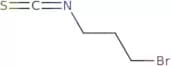
CAS:<p>3-Bromopropyl isothiocyanate (3BPITC) is a bifunctional molecule that has been used for radiolabeling and bifunctional labeling strategies. 3BPITC can be used to label amino acids, peptides, proteins, carbohydrates, and lipids with the same specificity as biotin. 3BPITC has been shown to be an effective radiolabeling agent for imaging of tumors in mice. The stereoisomers of 3BPITC can be separated by column chromatography or thin-layer chromatography. This compound can also be detected at the low picomolar level using nuclear magnetic resonance spectroscopy (NMR).</p>Formula:C4H6BrNSPurity:Min. 95%Molecular weight:180.07 g/mol1,3-Thiazinan-2-imine hydrochloride
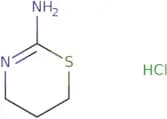
CAS:<p>Versatile small molecule scaffold</p>Formula:C4H9ClN2SPurity:Min. 95%Molecular weight:152.65 g/mol5,6-Dihydro-4H-1,3-thiazin-2-amine hydrobromide
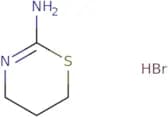
CAS:5,6-Dihydro-4H-1,3-thiazin-2-amine hydrobromide is a chemical that is used in the diagnosis of diseases of the cardiovascular system. It has been shown to cause damage to the intestinal mucosa and also has effects on parameters such as blood pressure and ionizing radiation. 5,6-Dihydro-4H-1,3-thiazin-2-amine hydrobromide damages the intestinal tissue by reacting with reactive oxygen species (ROS) or reactive nitrogen species (RNS), which are generated from ionizing radiation. These ROS/RNS are generated in response to endotoxin exposure and can lead to cell death.Formula:C4H9BrN2SPurity:Min. 95%Molecular weight:197.1 g/molSodium (quinolin-8-yl)sulfanide
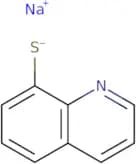
CAS:<p>Sodium (quinolin-8-yl)sulfanide is a sulfonamide compound that is structurally related to the quinoline derivatives. It has been shown to have high cytotoxicity against hepatoma and mouse melanoma cells, as well as good activity against human colon cancer. The preparation of this compound is difficult because it undergoes rapid dehydration to form anhydrous sodium sulfoxide. Sodium (quinolin-8-yl)sulfanide forms two polymorphs, one of which is hydrated and one of which is anhydrous. The hydrated polymorph has a lower solubility in water, but has higher solubilities in organic solvents and methanol. The anhydrous polymorph has higher solubilities in water and methanol, but lower solubilities in organic solvents like chloroform or dichloromethane.<br>!--</p>Formula:C9H6NNaSPurity:Min. 95%Molecular weight:183.21 g/molMethyl 5-chloro-4-oxohexanoate
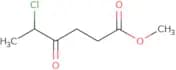
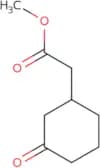
CAS:<p>Versatile small molecule scaffold</p>Formula:C7H11ClO3Purity:Min. 95%Molecular weight:178.61 g/molMethyl 2-(3-oxocyclohexyl)acetate
CAS:Versatile small molecule scaffoldFormula:C9H14O3Purity:Min. 95%Molecular weight:170.21 g/mol[Hydroxy(phenyl)phosphonomethyl]phosphonic acid
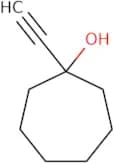
CAS:Versatile small molecule scaffoldFormula:C7H10O7P2Purity:Min. 95%Molecular weight:268.1 g/mol1-Ethynylcycloheptan-1-ol
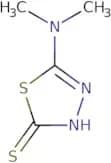
CAS:<p>1-Ethynylcycloheptan-1-ol is a synthetic drug that inhibits protease activity. It has been shown to have an inhibitory effect on the adenosine receptor and protonation of the skeleton. The 1-ethynylcycloheptan-1-ol molecule can be synthesised in two steps from phenylacetone. It has been shown to have hypoglycemic activity, which may be due to its ability to inhibit pancreatic alpha amylase. This drug also has a nucleophilic character, which is essential for its mechanism of action as it binds reversibly to the active site of the enzyme.</p>Formula:C9H14OPurity:Min. 95%Molecular weight:138.21 g/mol5-(Dimethylamino)-1,3,4-thiadiazole-2-thiol
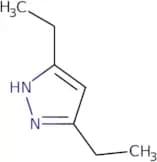
CAS:Versatile small molecule scaffoldFormula:C4H7N3S2Purity:Min. 95%Molecular weight:161.3 g/mol3,5-Diethyl-1H-pyrazole
CAS:<p>Versatile small molecule scaffold</p>Formula:C7H12N2Purity:Min. 95%Molecular weight:124.18 g/mol2-Oxo-1-oxaspiro[4.5]decane-4-carboxylic acid
CAS:2-Oxo-1-oxaspiro[4.5]decane-4-carboxylic acid is a nitrile that can be synthesized by decarboxylation of 4-chloro-2,6-dimethylaniline with nitrous acid and sulfuric acid. The intramolecular cyclization of methyl 2-(nitrobenzyl)malonate to the thiazole ring is catalyzed by a mixture of acetic anhydride and pyridine. The reaction is carried out at refluxing temperatures in a homogeneous solvent such as toluene or chloroform. This product can also be obtained from the reaction of 2,6-dimethylaniline with hydroxylamine hydrochloride in the presence of sodium hydroxide.Formula:C10H14O4Purity:Min. 95%Molecular weight:198.22 g/mol2-{[4-(Dimethylamino)phenyl]methylidene}propanedinitrile
CAS:2-{[4-(Dimethylamino)phenyl]methylidene}propanedinitrile (DMPPD) is a chromophore that absorbs light in the ultraviolet region. It has an activation energy of 69.5 kcal/mol and can be used as a solvent in organic reactions. DMPPD also interacts with crystal surfaces, which can be useful for crystal x-ray diffraction experiments. Kinetic studies have shown that DMPPD undergoes both reversible and irreversible reactions depending on the temperature, but it is thermodynamically stable. DMPPD crystallizes in the orthorhombic system and has a dipole moment of 2.3 debye. It is soluble in acetonitrile but insoluble in water and is an acceptor of hydrogen bonds from donor molecules such as phenols, alcohols, and amines.Formula:C12H11N3Purity:Min. 95%Molecular weight:197.24 g/mol(3-(2-Aminoethyl)-1-methylindole) dihydrochloride
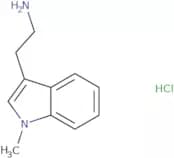
CAS:Controlled Product<p>(3-(2-Aminoethyl)-1-methylindole) dihydrochloride is a drug that has been used to study serotonin receptors in the brain. It has been shown to bind to 5-HT1A, 5-HT2 and 5-HT6 receptors. This drug also binds to amine receptors in the cerebral cortex of rats. The drug is a phenylalkylamine with a ring system and homologs.</p>Formula:C11H16Cl2N2Purity:Min. 95%Molecular weight:247.16 g/molN2,N4,N6-Trimethyl-1,3,5-triazine-2,4,6-triamine
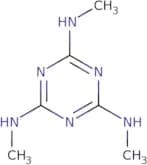
CAS:Trimetazidine is a drug that belongs to the group of anti-cancer drugs, and it has been shown to inhibit tumor growth in xenografts. It inhibits lipid kinase, which is involved in the phospholipid metabolic pathway, and blocks the synthesis of phosphatidylinositol 3-phosphate hydrolysis. Trimetazidine has also been shown to have potent anti-inflammatory properties.Formula:C6H12N6Purity:Min. 95%Molecular weight:168.2 g/mol8-Aminonaphthalen-1-ol
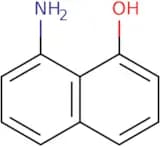
CAS:<p>8-Aminonaphthalen-1-ol is a synthetic product that is used in the production of nitrobenzene. It is made by reacting sodium carbonate, hydrogen chloride and sodium hydroxide in a liquid chromatograph. The reaction system is heated to 100°C and then cooled to 0°C with the addition of nitric acid. This product has been used for wastewater treatment as it has shown to be effective in removing chlorine from wastewater (chlorides). 8-Aminonaphthalen-1-ol also reduces the concentration of magnesium ions in water when added as a salt.</p>Formula:C10H9NOPurity:Min. 95%Molecular weight:159.18 g/mol2-Methyl-5-phenylbenzoic acid
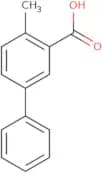
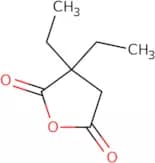
CAS:<p>Versatile small molecule scaffold</p>Formula:C14H12O2Purity:Min. 95%Molecular weight:212.24 g/mol3,3-Diethyloxolane-2,5-dione
CAS:Versatile small molecule scaffoldFormula:C8H12O3Purity:Min. 95%Molecular weight:156.18 g/mol5-Methoxy-4,4-dimethyl-5-oxopentanoic Acid
CAS:<p>Versatile small molecule scaffold</p>Formula:C8H14O4Purity:Min. 95%Molecular weight:174.19 g/mol

![[Hydroxy(phenyl)phosphonomethyl]phosphonic acid](/_next/image/?url=https%3A%2Fstatic.cymitquimica.com%2Fproducts%2F3D%2Fthumb-webp%2FCAA80926.webp&w=3840&q=75)
![2-Oxo-1-oxaspiro[4.5]decane-4-carboxylic acid](/_next/image/?url=https%3A%2Fstatic.cymitquimica.com%2Fproducts%2F3D%2Fthumb-webp%2FCAA81956.webp&w=3840&q=75)
![2-{[4-(Dimethylamino)phenyl]methylidene}propanedinitrile](/_next/image/?url=https%3A%2Fstatic.cymitquimica.com%2Fproducts%2F3D%2Fthumb-webp%2FCAA82628.webp&w=3840&q=75)