Building Blocks
This section contains fundamental products for the synthesis of organic and biological compounds. Building blocks are the essential starting materials used to construct complex molecules through various chemical reactions. They play a critical role in drug discovery, material science, and chemical research. At CymitQuimica, we offer a diverse range of high-quality building blocks to support your innovative research and industrial projects, ensuring you have the essential components for successful synthesis.
Subcategories of "Building Blocks"
- Boronic Acids & Boronic Acid Derivatives(5,778 products)
- Chiral Building Blocks(1,242 products)
- Hydrocarbon Building Blocks(6,098 products)
- Organic Building Blocks(61,069 products)
Found 197521 products of "Building Blocks"
Sort by
Purity (%)
0
100
|
0
|
50
|
90
|
95
|
100
2-Chloro-3-phenyl-3,4-dihydroquinazolin-4-one
CAS:Controlled ProductVersatile small molecule scaffoldFormula:C14H9ClN2OPurity:Min. 95%Molecular weight:256.68 g/mol2,6-di(tert-butyl)-4-Nitrobenzenol
CAS:<p>2,6-di(tert-butyl)-4-Nitrobenzenol is a chemical that is used as a reference standard for the gravimetric determination of sodium. It has been shown to have low toxicity in animals and environmental monitoring studies, but can be hazardous if ingested by humans. The LD50 (lethal dose) for 2,6-di(tert-butyl)-4-nitrobenzenol in Sprague Dawley rats is greater than 10 g/kg body weight. This chemical also has the potential to react with pyrimidine nucleosides and organic chemicals such as methylene chloride or urea nitrogen.</p>Formula:C14H21NO3Purity:Min. 95%Molecular weight:251.32 g/mol2-(4-Ethyl-2,5-dioxo-4-phenylimidazolidin-1-yl)acetic acid
CAS:<p>Versatile small molecule scaffold</p>Formula:C13H14N2O4Purity:Min. 95%Molecular weight:262.26 g/mol4-[1-(4-Fluorophenyl)-1-(4-hydroxyphenyl)ethyl]phenol
CAS:Versatile small molecule scaffoldFormula:C20H17FO2Purity:Min. 95%Molecular weight:308.3 g/mol2-(2,2,3,3,3-Pentafluoropropoxy)ethan-1-ol
CAS:<p>Versatile small molecule scaffold</p>Formula:C5H7F5O2Purity:Min. 95%Molecular weight:194.1 g/mol2-Mercaptoacetamide
CAS:Versatile small molecule scaffoldFormula:C2H5NOSPurity:Min. 95%Molecular weight:91.13 g/mol3,4-Dichloro-1-butene
CAS:<p>3,4-Dichloro-1-butene (3,4-DCB) is an industrial chemical that is used in the production of a variety of chemicals and plastics. It has been shown to be toxic to the liver and kidneys following chronic exposure, which may be due to its ability to form reactive quaternary ammonium salts. 3,4-DCB reacts with copper salt to produce hydrogen chloride gas, which can then react with water vapor in the air to produce hydrochloric acid. Hydrochloric acid is highly corrosive and can cause severe burns on contact with skin. 3,4-DCB also has the ability to isomerize into 1,2-dichloroethane (1,2-DCA), a known human carcinogen.</p>Formula:C4H6Cl2Purity:Min. 95%Molecular weight:124.99 g/mol1,3-Difluoropropan-2-amine hydrochloride
CAS:Versatile small molecule scaffoldFormula:C3H8ClF2NPurity:Min. 95%Molecular weight:131.55 g/mol2-Cyano-4-methylpent-2-enoic acid
CAS:<p>Versatile small molecule scaffold</p>Formula:C7H9NO2Purity:Min. 95%Molecular weight:139.15 g/mol1,5-dimethyl 2-bromopentanedioate
CAS:<p>1,5-Dimethyl 2-bromopentanedioate is an organic compound that is a colorless solid. It is used as a synthetic intermediate for cyclen and other compounds. 1,5-Dimethyl 2-bromopentanedioate undergoes a shift reaction to form dippinine. This reaction can be catalyzed by lanthanide metals or nitroethane. The efficiency of this conversion has been studied with magnetic preparative strategies.</p>Formula:C7H11BrO4Purity:Min. 95%Molecular weight:239.07 g/molPropane-1-sulfonyl fluoride
CAS:<p>Versatile small molecule scaffold</p>Formula:C3H7FO2SPurity:Min. 95%Molecular weight:126.15 g/mol2-Chloroethanesulfonyl fluoride
CAS:<p>2-Chloroethanesulfonyl fluoride is a synthetic compound that belongs to the class of aliphatic chlorofluorocarbons. It is a highly reactive and useful reagent in organic synthesis, as well as in chemical biology. The chloride ion is a common functional group that can be introduced using 2-chloroethanesulfonyl fluoride. Aliphatic chlorofluorocarbons are versatile molecules with many possible applications in chemistry due to their modularity and scalability. They have been used for the synthesis of new compounds by introducing various substituents, as well as for highlighting specific chemical features such as fluorine atoms or magnesium ions, which are often difficult to detect using other analytical techniques.<br>2-Chloroethanesulfonyl fluoride has been used in x-ray crystallographic studies to investigate the structure and reactivity of magnesium oxide and magnesium chloride complexes. These studies highlight the importance of magnesium ions in chemical biology.</p>Formula:C2H4ClFO2SPurity:Min. 95%Molecular weight:146.57 g/molEthyl 3-Ethoxypropionate
CAS:<p>Ethyl 3-ethoxypropionate is a cycloaddition product of ethyl 3-ethoxypropanoate. It has been shown to be more chemically stable than the reactants and has an increased uptake in the reaction solution. <br>Ethyl 3-ethoxypropionate is able to undergo a cycloaddition process with diethyl succinate under conditions of high temperature and pressure, leading to the formation of methyl ethyl malonic acid. This chemical reaction takes place via an intermolecular hydrogen bonding interaction between the ethoxy group on one molecule and the ester group on the other molecule. The cyclohexane ring on each molecule also forms a hydrogen bonding interaction with its corresponding methyl or ethyl groups. Ethyl 3-ethoxypropionate is not reactive in its pure form but can undergo reactions when exposed to chemicals such as potassium hydroxide, which leads to its degradation into propionic acid and ethanol.</p>Formula:C7H14O3Purity:Min. 95%Molecular weight:146.19 g/mol2,2,2-Trichloroethyl Chlorosulfate
CAS:<p>2,2,2-Trichloroethyl chlorosulfate is an organic compound that has a hydroxyl group and a chlorine in its structure. It is cytotoxic to cells and causes health effects in humans. This compound binds to the p-coumaric acid in the cell and inhibits the enzyme activity of the demethylase, which is responsible for the oxidation of p-coumaric acid to ferulic acid. This prevents p-coumaric acid from being converted into other metabolites such as dihydroferulic acid and dihydrocaffeic acid. 2,2,2-Trichloroethyl chlorosulfate also inhibits enzymes involved in the synthesis of cholesterol by competitively inhibiting HMG CoA reductase.</p>Formula:C2H2Cl4O3SPurity:Min. 95%Molecular weight:247.91 g/mol5-Fluoro-1-pentyne
CAS:<p>Versatile small molecule scaffold</p>Formula:C5H7FPurity:Min. 95%Molecular weight:86.11 g/mol(E)-Pent-3-en-1-ol
CAS:<p>Versatile small molecule scaffold</p>Formula:C5H10OPurity:Min. 95%Molecular weight:86.13 g/mol6,6,6-Trifluorohexanoic acid
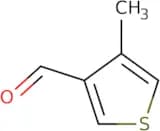
CAS:<p>Versatile small molecule scaffold</p>Formula:C6H9F3O2Purity:Min. 95%Molecular weight:170.13 g/mol4-methylthiophene-3-carbaldehyde
CAS:<p>Versatile small molecule scaffold</p>Formula:C6H6OSPurity:Min. 95%Molecular weight:126.17 g/mol2-Cyclopentylethanol
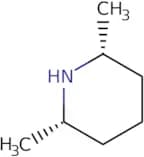
CAS:<p>2-Cyclopentylethanol is a type of organic compound that belongs to the class of ethyl esters. It has been shown to have receptor activity, which may be related to its ability to reduce plasma glucose levels in type 2 diabetes patients. The mechanism by which 2-cyclopentylethanol affects glucose metabolism is not clear, but it has been found to inhibit serine protease and sulfonic acid-induced platelet aggregation. It has also been found to have anti-inflammatory effects and can inhibit the production of inflammatory mediators such as prostaglandin E2 (PGE2). 2-Cyclopentylethanol also inhibits the activity of certain types of enzymes, including pyrimidine hydroxylases and acylureas.</p>Formula:C7H14OPurity:Min. 95%Molecular weight:114.19 g/molCis-2,6-dimethylpiperidine
CAS:<p>Cis-2,6-dimethylpiperidine is an organic chemical compound that belongs to the group of amines. It is a colorless solid that is soluble in organic solvents such as chloroform and methanol. Cis-2,6-dimethylpiperidine reacts with zinc powder in the presence of a solvent to form cis-2,6-dimethylpiperidinium zinc (II) chloride. This reaction can be used to synthesize other compounds such as morpholine and piperidine. This compound also has a supramolecular interaction with electron deficient palladium catalysts for cross-coupling reactions. Cross coupling reactions are a type of chemical reaction where two or more organic molecules are combined to form new compounds by using organometallic reagents like Grignard reagents or trisubstituted phosphine ligands.</p>Formula:C7H15NPurity:Min. 95%Molecular weight:113.2 g/mol


![4-[1-(4-Fluorophenyl)-1-(4-hydroxyphenyl)ethyl]phenol](/_next/image/?url=https%3A%2Fstatic.cymitquimica.com%2Fproducts%2F3D%2Fthumb-webp%2FAAA74135.webp&w=3840&q=75)