Building Blocks
Subcategories of "Building Blocks"
- Boronic Acids & Boronic Acid Derivatives(5,780 products)
- Chiral Building Blocks(1,241 products)
- Hydrocarbon Building Blocks(6,100 products)
- Organic Building Blocks(61,024 products)
Found 205297 products of "Building Blocks"
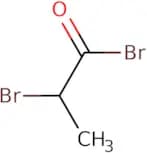
2-Bromopropionyl bromide
CAS:2-Bromopropionyl Bromide is a brominating agent that can be used as a chemical intermediate for the synthesis of polymeric materials. The bromine atom on the propionic acid group reacts with hydroxyl groups to form esters, amides, and phenols. It has minimal toxicity in cell culture and is not cytotoxic at concentrations up to 10%. 2-Bromopropionyl Bromide is an effective macroinitiator for cationic polymerization reactions. The acylation reaction with 3-chloroperoxybenzoic acid yields a diazonium salt which reacts further with tetronic acid or other cross-linking agents to form a polymer film. This product can be used for fluorescence techniques because it emits light when excited by ultraviolet radiation.
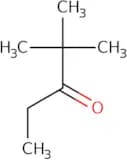
Formula:C3H4Br2OPurity:Min. 95%Color and Shape:Clear LiquidMolecular weight:215.87 g/mol2,2-Dimethylpentan-3-one
CAS:2,2-Dimethylpentan-3-one is an enolate that is used as a synthetic intermediate in the synthesis of aldehydes. The optical and stereoselective properties of 2,2-dimethylpentan-3-one are due to its chiral center, which can be either R or S depending on the substituent effects. In this compound, the substituents are chloride and methoxy groups. These substituents have opposite effects on the reactivity in the molecule's enolate form. When chloride is present, it occupies an axial position with respect to the carbonyl group and therefore has a stabilizing effect on the molecule; this leads to lower reactivity. Methoxy groups occupy equatorial positions and have a destabilizing effect on the molecule by withdrawing electron density from its carbonyl group; this leads to higher reactivity.Formula:C7H14OPurity:Min. 95%Molecular weight:114.19 g/mol4-(4-Fluorophenyl)-4-methylpentan-2-one
CAS:Versatile small molecule scaffold
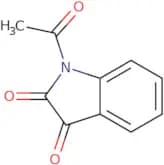
Formula:C12H15FOPurity:Min. 95%Molecular weight:194.24 g/mol1-Acetylisatin
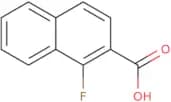
CAS:1-Acetylisatin is an amine that has been shown to have antiinflammatory activity. The hydroxyl group on the 1-position reacts with malonic acid, yielding a diazonium salt. This reaction releases nitrogen gas and gives a carbostyril bound form. The carbostyril binds to inhibitor molecules, such as fatty acids, ethylene diamine and nitrogen atoms, which prevents them from reacting with each other.Formula:C10H7NO3Purity:Min. 95%Molecular weight:189.17 g/mol1-Fluoronaphthalene-2-carboxylic acid
CAS:1-Fluoronaphthalene-2-carboxylic acid is an organic compound with the formula CHFO. It is a white solid that is soluble in organic solvents. The methoxy group makes this compound reactive, meaning it can react with other compounds to form new compounds. 1-Fluoronaphthalene-2-carboxylic acid can be synthesized by reacting 2 equivalents of Grignard reagents with naphthalene, followed by hydrolysis of the ester group. This reaction yields a carboxylic acid with a fluorine atom attached to a carbon adjacent to the carboxyl group. 1-Fluoronaphthalene-2-carboxylic acid has been used as both an imidoester and nucleophilic reagent in organic chemistry.
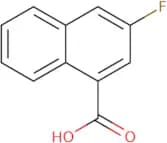
Formula:C11H7FO2Purity:Min. 95%Molecular weight:190.17 g/mol3-Fluoronaphthalene-1-carboxylic acid
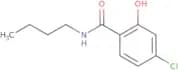
CAS:Versatile small molecule scaffoldFormula:C11H7FO2Purity:Min. 95%Molecular weight:190.17 g/molN-Butyl-4-chloro-2-hydroxybenzamide
CAS:N-Butyl-4-chloro-2-hydroxybenzamide is a hydroxyl analog of the drug clobetasol. It has been used to treat bowel disease, and as an implanting agent in biological studies. It also has anti-inflammatory properties, which may be due to its inhibition of prostaglandin synthesis. N-Butyl-4-chloro-2-hydroxybenzamide can be used for the treatment of microbial infections such as infectious diseases caused by Mycobacterium tuberculosis or Escherichia coli. The drug has also been shown to have antiocclusive effects on the intestines and to reduce intestinal secretions. N-Butyl-4-chloro-2 hydroxybenzamide is taken orally and it is metabolized in the liver by CYP3A4 enzymes.Formula:C11H14ClNO2Purity:Min. 95%Molecular weight:227.69 g/mol2,4,6-Trichlorophenoxyacetic acid
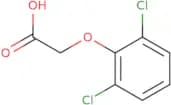
CAS:2,4,6-Trichlorophenoxyacetic acid (2,4,6-T) is an alkanoic acid that has been shown to have allelopathic activity. It inhibits the transport of substances across cell membranes and also disrupts the function of lipid bilayers. 2,4,6-T has been shown to be toxic to animals in large quantities and can cause death after oral ingestion. This chemical undergoes biotransformation through a number of metabolic reactions including decarboxylation, glucuronidation conjugation with glucuronic acid or sulfate conjugation with sulfuric acid and amino acids. These metabolites are excreted through urine, bile or feces. 2,4,6-T also binds to proteins in the liver and kidneys where it may interfere with protein synthesis in these tissues.Formula:C8H5Cl3O3Purity:Min. 95%Molecular weight:255.48 g/mol2-(2,6-dichlorophenoxy)acetic Acid
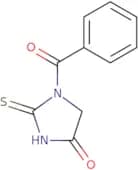
CAS:2-(2,6-Dichlorophenoxy)acetic Acid is a hydrogen peroxide generating compound that is used to synthesize acetone. This drug is also used in medicine as an antiarrythmic agent. 2-(2,6-Dichlorophenoxy)acetic Acid is synthesized by the reaction of chloroacetate with hydroxylated acetone. The drug has been shown to be effective against refluxed esophagitis and peptic ulcers, as well as in the treatment of cardiac arrhythmias. It is also used for the synthesis of a number of drugs including aminopyrine, acetaminophen and phenacetin.Formula:C8H6O3Cl2Purity:Min. 95%Molecular weight:221.03 g/mol1-Benzoyl-2-sulfanylideneimidazolidin-4-one
CAS:1-Benzoyl-2-sulfanylideneimidazolidin-4-one is a chemical.
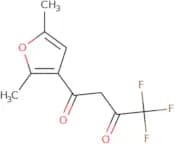
Formula:C10H8N2O2SPurity:Min. 95%Molecular weight:220.25 g/mol1-(2,5-Dimethylfuran-3-yl)-4,4,4-trifluorobutane-1,3-dione
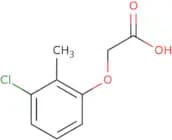
CAS:Versatile small molecule scaffoldFormula:C10H9F3O3Purity:Min. 95%Molecular weight:234.17 g/mol2-(3-Chloro-2-methylphenoxy)acetic acid
CAS:2-(3-Chloro-2-methylphenoxy)acetic acid is an alkali metal salt that is soluble in water. It has a centrosymmetric, symmetric and ligand environment. Its coordination number is 2. The crystallographic environment is anion, polymeric and dimeric. The crystal structure of 2-(3-chloro-2-methylphenoxy)acetic acid is a hydrated hydrogen bond polyhedra.
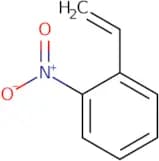
Formula:C9H9ClO3Purity:Min. 95%Molecular weight:200.62 g/mol1-Ethenyl-2-nitrobenzene
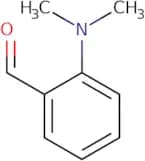
CAS:1-Ethenyl-2-nitrobenzene is a bifunctional reagent that reacts with hydroxy groups to form epoxides. It reacts with the amino group of amines to form nitro compounds and with fatty acids to form esters. The 1-ethenyl-2-nitrobenzene can be used as an oxidizing agent, which increases its utility in synthetic chemistry. In addition, 1-ethenyl-2-nitrobenzene has been shown to react synergistically with other reagents, such as indole-7-carboxylic acid and phenols, to produce a variety of products.Formula:C8H7NO2Purity:Min. 95%Molecular weight:149.15 g/mol2-(Dimethylamino)benzaldehyde
CAS:2-(Dimethylamino)benzaldehyde is a stilbene derivative. It inhibits the activity of an enzyme called tyrosine phosphatase by binding to the active site of the enzyme and blocking its catalytic function. This compound has been used in vitro studies to study autoimmune diseases and may have potential as a drug for rheumatoid arthritis. 2-(Dimethylamino)benzaldehyde also binds to influenza virus, stabilizing it and inhibiting its replication, but does not inhibit other viruses such as HIV-1 or poliovirus.2-(Dimethylamino)benzaldehyde can be prepared by reacting n-dimethylformamide with hydrochloric acid. The reaction produces hydrogen chloride gas, which is then bubbled through redox potentials (e.g., ferric chloride solution), yielding 2-(dimethylamino)benzaldehyde and hydrogen gas. 2-(Dimethylamino)benzaldehyde can be synthesized usingFormula:C9H11NOPurity:Min. 95%Molecular weight:149.19 g/mol2-(N-Phenylacetamido)acetic acid
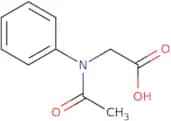
CAS:2-(N-Phenylacetamido)acetic acid is an alkyl ester that is synthesized by the reaction of acetyl chloride with toluene. This compound can be used as a pharmaceutical intermediate and a synthetic sweetener. The hydrogenation of 2-(N-phenylacetamido)acetic acid produces 2-(N-phenylacetamido)ethanoic acid, which has been shown to have antihypertensive effects. The p-toluenesulfonic acid is an acid catalyst that facilitates this reaction. The acetylation of 2-(N-phenylacetamido)acetic acid produces 2-(N-phenylacetamido)propionic acid, which has been used in the synthesis of rhodium. The reaction also results in a number of diastereoisomeric salts; these are stereoisomers that differ from each other because they are not mirror images of one another.Formula:C10H11NO3Purity:Min. 95%Molecular weight:193.2 g/mol3-Phenylphenol
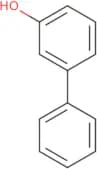
CAS:3-Phenylphenol is an organic compound with a hydroxyl group. The detection sensitivity for 3-phenylphenol has been improved by the use of proton NMR spectroscopy, which can be used to differentiate between 3-phenylphenol and other compounds that also have a hydroxyl group. 3-Phenylphenol is lipophilic in nature, and it is soluble in trifluoroacetic acid. It has been shown to have immunomodulatory effects on human liver cells in vitro. It has been found to inhibit transfer reactions of flavonols glycosides, galacturonic acid, and high salt (NaCl) induced lipoperoxidation. The structure of 3-phenylphenol can be determined using gas chromatography mass spectrometry (GCMS).Formula:C12H10OPurity:Min. 95%Molecular weight:170.21 g/mol2-Methyl-4-(4-morpholinyl)aniline
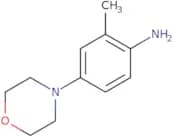
CAS:Versatile small molecule scaffoldFormula:C11H16N2OPurity:Min. 95%Molecular weight:192.26 g/molN-(Naphthalen-2-yl)acetamide
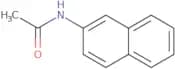
CAS:N-(Naphthalen-2-yl)acetamide is a synthetic compound that has been shown to have anti-cancer and anti-inflammatory properties. It is a prodrug of N-(naphthalen-2-yl)acetamide, the active form. The prodrug is hydrolyzed in vivo to the active form by the action of hydrochloric acid in mammalian cells. The prodrug also binds to amines and oligodeoxynucleotides and inhibits their synthesis. In addition, it inhibits calcium pantothenate, which is an essential cofactor for DNA synthesis. N-(Naphthalen-2-yl)acetamide also has been shown to inhibit tumor growth in animal models by blocking DNA synthesis and cell proliferation. The drug is metabolized into chloride ions that are toxic to cancer cells but not normal cells. The optimum pH for this reaction is 7.5.Formula:C12H11NOPurity:Min. 95%Molecular weight:185.22 g/molIsovalerophenone
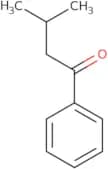
CAS:Isovalerophenone is a hydroxylated aromatic compound. It has been used in the production of microcapsules and polyvinyl chloride. This compound has shown high resistance to protease activity, with a high degree of stability in acidic solutions and radiation. Isovalerophenone can be synthesized from cyanuric acid and an alkanoic acid or methyl ethyl ketone. br> Isovalerophenone is used in the manufacturing of photoresist for the semiconductor industry, as well as a component in the manufacture of plastics and resins.br> Isovalerophenone can be found in nature as an intermediate metabolite that is produced by some strains of bacteria (e.g., Pseudomonas aeruginosa).Formula:C11H14OPurity:Min. 95%Molecular weight:162.23 g/molN-(4-Methylphenyl)benzamide
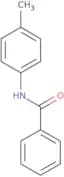
CAS:N-(4-Methylphenyl)benzamide (NMPBA) is a hydroxide ion-based reagent that can be used for the synthesis of carbonyl compounds. It has been shown to react with carbonyl compounds under mild conditions, forming an amide and a mixture of alcoholysis products. NMPBA is also capable of eliminating sulfides and thiols as well as reducing aromatic rings. The elimination reactions are optimized by irradiation and the structure-activity relationships have been investigated by organic chemistry experiments.Formula:C14H13NOPurity:Min. 95%Molecular weight:211.26 g/mol