Building Blocks
Subcategories of "Building Blocks"
- Boronic Acids & Boronic Acid Derivatives(5,781 products)
- Chiral Building Blocks(1,242 products)
- Hydrocarbon Building Blocks(6,101 products)
- Organic Building Blocks(61,033 products)
Found 205320 products of "Building Blocks"
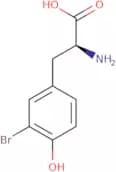
3-Bromo-L-tyrosine
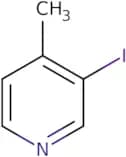
CAS:3-Bromo-L-tyrosine is a reactive eosinophilic compound that is formed in human serum during the activation process. 3-Bromo-L-tyrosine has been used as an analytical method for the measurement of eosinophil peroxidase and tissue culture cells. 3-Bromo-L-tyrosine has also been shown to be a marker for infectious diseases, such as cytomegalovirus (CMV), influenza, and parainfluenza virus infections. This compound can also be used to evaluate the efficacy of treatments for infectious diseases, such as CMV and influenza.Formula:C9H10BrNO3Purity:Min. 95%Molecular weight:260.1 g/mol3-Iodo-4-methylpyridine
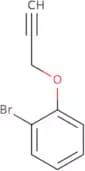
CAS:Versatile small molecule scaffoldFormula:C6H6INPurity:Min. 95%Molecular weight:219.02 g/mol1-Bromo-2-prop-2-ynoxy-benzene
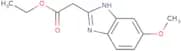
CAS:Versatile small molecule scaffoldFormula:C9H7OBrPurity:Min. 95%Molecular weight:211.06 g/molEthyl (5-methoxy-1H-benzimidazol-2-yl)acetate
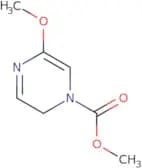
CAS:Versatile small molecule scaffoldFormula:C12H14N2O3Purity:Min. 95%Molecular weight:234.25 g/molMethyl 5-Methoxypyrazinecarboxylate
CAS:Methyl 5-methoxypyrazinecarboxylate is an organic compound that belongs to the group of triazoles. It has been used as a pesticide for the control of plant pathogenic fungi, nematodes and insects, such as dextrose, chloride, oxadiazoles and agriculturally. This product is effective against pests at low doses. Methyl 5-methoxypyrazinecarboxylate inhibits the synthesis of proteins in plants by inhibiting chitin synthase enzymes in fungi and nematodes. It also inhibits the synthesis of proteins in insects by interfering with the synthesis of proteins involved in cell division.
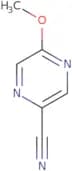
Formula:C7H8N2O3Purity:Min. 95%Molecular weight:168.15 g/mol5-Methoxypyrazine-2-carbonitrile
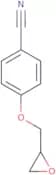
CAS:5-Methoxypyrazine-2-carbonitrile is a reactive, electron-deficient heterocycle that is used as a synthetic intermediate in organic synthesis. The reactivity of this molecule is similar to that of the cyanide ion, which can be used for the selective incorporation of carbon monoxide into organic molecules. 5-Methoxypyrazine-2-carbonitrile has been shown to react with trimethylsilyl cyanide, forming the corresponding trimethylsilyl cyanohydrin. This reaction proceeds via an anti-Markovnikov addition and produces a hemiaminal product.Formula:C6H5N3OPurity:Min. 95%Molecular weight:135.12 g/mol4-(2-Oxiranylmethoxy)benzenecarbonitrile
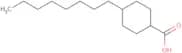
CAS:Versatile small molecule scaffoldFormula:C10H9NO2Purity:Min. 95%Molecular weight:175.18 g/mol4-Octylcyclohexane-1-carboxylic acid
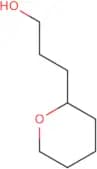
CAS:Versatile small molecule scaffoldFormula:C15H28O2Purity:Min. 95%Molecular weight:240.38 g/mol3-(Oxan-2-yl)propan-1-ol
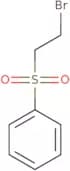
CAS:Versatile small molecule scaffoldFormula:C8H16O2Purity:Min. 95%Molecular weight:144.21 g/mol(2-Bromoethanesulfonyl)benzene
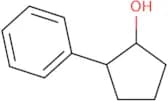
CAS:Versatile small molecule scaffoldFormula:C8H9BrO2SPurity:Min. 95%Molecular weight:249.13 g/mol(1S,2R)-2-Phenylcyclopentan-1-ol
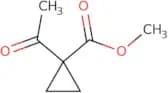
CAS:Versatile small molecule scaffoldFormula:C11H14OPurity:Min. 95%Molecular weight:162.2 g/mol1-Acetylcyclopropanecarboxylic Acid Methyl Ester
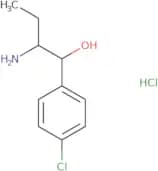
CAS:Versatile small molecule scaffoldFormula:C7H10O3Purity:Min. 95%Molecular weight:142.15 g/mol2-Amino-1-(4-chlorophenyl)butan-1-ol hydrochloride
CAS:Controlled ProductVersatile small molecule scaffoldFormula:C10H15Cl2NOPurity:Min. 95%Molecular weight:236.13 g/mol1,4-Dioxaspiro[4.4]nonane-6-carboxylic acid
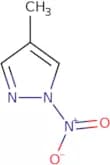
CAS:Versatile small molecule scaffoldFormula:C8H12O4Purity:Min. 95%Molecular weight:172.18 g/mol4-Methyl-1-nitro-1H-pyrazole
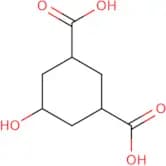
CAS:Versatile small molecule scaffoldFormula:C4H5N3O2Purity:Min. 95%Molecular weight:127.1 g/molrac-(1R,3S,5S)-5-Hydroxycyclohexane-1,3-dicarboxylic acid
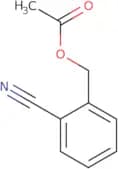
CAS:Versatile small molecule scaffoldFormula:C8H12O5Purity:Min. 95%Molecular weight:188.18 g/mol2-Cyanobenzyl acetate
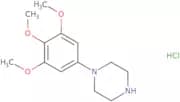
CAS:Versatile small molecule scaffoldFormula:C10H9NO2Purity:Min. 95%Molecular weight:175.19 g/mol1-(3,4,5-Trimethoxyphenyl)piperazine
CAS:Controlled ProductVersatile small molecule scaffold
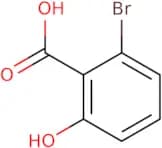
Formula:C13H20N2O3Purity:Min. 95%Molecular weight:252.31 g/mol2-Bromo-6-hydroxybenzoic acid
CAS:2-Bromo-6-hydroxybenzoic acid is a nucleophilic compound with a bromine atom at the 2 position. It is used in organic synthesis as a building block in the preparation of amides and other functional groups. This efficient preparation can be achieved by treating anilines with sodium nitrite and hydroxylamine in ethanol.
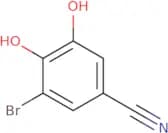
Formula:C7H5BrO3Purity:Min. 95%Molecular weight:217.02 g/mol3-Bromo-4,5-dihydroxybenzonitrile
CAS:3-Bromo-4,5-dihydroxybenzonitrile is a molecule that has been found to be effective in treating neurodegenerative diseases. It has been shown to inhibit gene transcription, leading to the inhibition of cell proliferation and apoptosis. This drug also inhibits N-acetylglucosamine glycosylase, an enzyme that is involved in the removal of the amino group from cellular glycerophospholipids. 3-Bromo-4,5-dihydroxybenzonitrile binds to the hydrophobic pocket of DNA and prevents the formation of hydrogen bonds with the nucleobases. 3-Bromo-4,5-dihydroxybenzonitrile is a cochlear toxicant as it can cause hearing loss and deafness when administered at high doses. The cochlear toxicity may be due to its ability to inhibit tyrosine kinase activity, protein phosphatase 2Formula:C7H4BrNO2Purity:Min. 95%Molecular weight:214.02 g/mol

![1,4-Dioxaspiro[4.4]nonane-6-carboxylic acid](/_next/image/?url=https%3A%2Fstatic.cymitquimica.com%2Fproducts%2F3D%2Fthumb-webp%2FNBA85385.webp&w=3840&q=75)