


Building Blocks
This section contains fundamental products for the synthesis of organic and biological compounds. Building blocks are the essential starting materials used to construct complex molecules through various chemical reactions. They play a critical role in drug discovery, material science, and chemical research. At CymitQuimica, we offer a diverse range of high-quality building blocks to support your innovative research and industrial projects, ensuring you have the essential components for successful synthesis.
Subcategories of "Building Blocks"
- Boronic Acids & Boronic Acid Derivatives(5,780 products)
- Chiral Building Blocks(1,241 products)
- Hydrocarbon Building Blocks(6,100 products)
- Organic Building Blocks(61,023 products)
Found 205289 products of "Building Blocks"
Sort by
Purity (%)
0
100
|
0
|
50
|
90
|
95
|
100
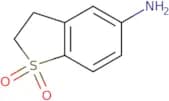
2,3-Dihydro-1-benzothiophen-5-amine 1,1-dioxide
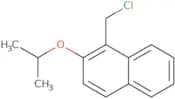
CAS:Versatile small molecule scaffoldFormula:C8H9NO2SPurity:Min. 95%Molecular weight:183.23 g/mol1-(Chloromethyl)-2-(propan-2-yloxy)naphthalene
CAS:Versatile small molecule scaffold
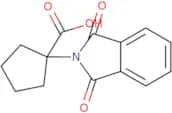
Formula:C14H15ClOPurity:Min. 95%Molecular weight:234.72 g/mol1-(1,3-Dioxo-2,3-dihydro-1H-isoindol-2-yl)cyclopentane-1-carboxylic acid
CAS:Versatile small molecule scaffoldFormula:C14H13NO4Purity:Min. 95%Molecular weight:259.26 g/mol9-Azaspiro[5.6]dodecane
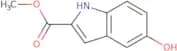
CAS:Versatile small molecule scaffoldFormula:C11H21NPurity:Min. 95%Molecular weight:167.29 g/molMethyl 5-hydroxy-1H-indole-2-carboxylate
CAS:Methyl 5-hydroxy-1H-indole-2-carboxylate is a potent drug for the treatment of cancer cells. It inhibits acetylcholinesterase activity and has been shown to have neurodegenerative properties in a number of different cell lines. Methyl 5-hydroxy-1H-indole-2-carboxylate is also a strong inhibitor of acetylcholinesterase, which may be responsible for its neuroprotective effects.Formula:C10H9NO3Purity:Min. 95%Molecular weight:191.18 g/mol9-Methyl-4-oxo-4H-pyrido[1,2-a]pyrimidine-3-carboxylic acid
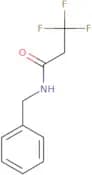
CAS:Versatile small molecule scaffoldFormula:C10H8N2O3Purity:Min. 95%Molecular weight:204.18 g/molN-Benzyl-3,3,3-trifluoropropanamide
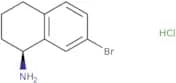
CAS:Versatile small molecule scaffoldFormula:C10H10F3NOPurity:Min. 95%Molecular weight:217.19 g/mol(S)-7-Bromo-1,2,3,4-tetrahydro-naphthalen-1-ylamine hydrochloride ee
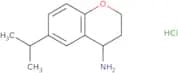
CAS:Versatile small molecule scaffoldFormula:C10H13BrClNPurity:Min. 95%Molecular weight:262.57 g/mol(R)-6-Isopropylchroman-4-amine hydrochloride
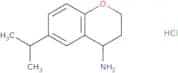
CAS:Versatile small molecule scaffoldFormula:C12H18ClNOPurity:Min. 95%Molecular weight:227.73 g/mol(4S)-6-(Propan-2-yl)-3,4-dihydro-2H-1-benzopyran-4-amine hydrochloride
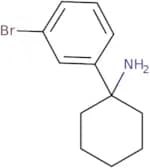
CAS:Versatile small molecule scaffoldFormula:C12H18ClNOPurity:Min. 95%Molecular weight:227.73 g/mol1-(3-bromophenyl)cyclohexan-1-amine
CAS:Controlled ProductVersatile small molecule scaffoldFormula:C12H16BrNPurity:Min. 95%Molecular weight:254.2 g/mol[1-Methyl-5-(trifluoromethyl)-1H-pyrazol-4-yl]methanol
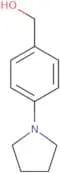
CAS:Versatile small molecule scaffoldFormula:C6H7F3N2OPurity:Min. 95%Molecular weight:180.13 g/mol(4-Pyrrolidin-1-ylphenyl)methanol
CAS:4-Pyrrolidin-1-ylphenol is a protease enzyme inhibitor that has been shown to inhibit the catalytic activity of serine proteases. It reversibly binds to the active site of these enzymes and inhibits their ability to hydrolyze peptide bonds, which are required for protein digestion. 4-Pyrrolidin-1-ylphenol has been shown to be a specific inhibitor of hepatitis C virus protease. This drug has also been used as a reagent in the synthesis of peptides and proteins, and is being investigated as a potential drug in the treatment of HIV infection. 4-Pyrrolidin-1-ylphenol is an asymmetric chiral molecule that can be synthesized using Grignard reaction with benzyl alcohol and an amino phenyl boronic acid. The stereochemistry of this molecule is determined by its molecular modeling and conformational analysis. The amino group in this molecule is orientated such that itFormula:C11H15NOPurity:Min. 95%Molecular weight:177.25 g/mol1,3-Dichloro-5-(difluoromethoxy)benzene
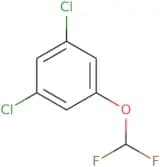
CAS:Versatile small molecule scaffoldFormula:C7H4Cl2F2OPurity:Min. 95%Molecular weight:213.01 g/mol4-(4-Hydroxypiperidin-1-yl)-4-oxobutanoic acid
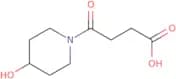
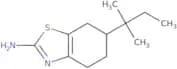
CAS:4-(4-Hydroxypiperidin-1-yl)-4-oxobutanoic acid (HOP) is a peptide that inhibits the binding of an antibody to its cognate antigen. It has been used as a research tool in cell biology, pharmacology, and life science to study protein interactions, inhibition of ion channels, and receptor functions. HOP is a competitive inhibitor of the alpha subunit of the acetylcholine receptor. HOP also binds to nicotinic acetylcholine receptors with high affinity and acts as an activator. It has been shown to have anti-inflammatory effects by inhibiting prostaglandin synthesis and reducing production of cytokines such as tumor necrosis factor alpha (TNFα).Formula:C9H15NO4Purity:Min. 95%Molecular weight:201.22 g/mol6-(2-Methylbutan-2-yl)-4,5,6,7-tetrahydro-1,3-benzothiazol-2-amine
CAS:Versatile small molecule scaffoldFormula:C12H20N2SPurity:Min. 95%Molecular weight:224.37 g/mol3-[(4-Chloro-1H-pyrazol-1-yl)methyl]benzoic acid
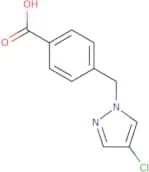
CAS:Versatile small molecule scaffoldFormula:C11H9ClN2O2Purity:Min. 95%Molecular weight:236.66 g/mol4-(4-Chloro-pyrazol-1-ylmethyl)benzoic acid
CAS:Versatile small molecule scaffoldFormula:C11H9ClN2O2Purity:Min. 95%Molecular weight:236.66 g/molMethyl 3-((tert-butoxycarbonyl)amino)bicyclo[1.1.1]pentane-1-carboxylate
CAS:Versatile small molecule scaffoldFormula:C12H19NO4Purity:Min. 95%Molecular weight:241.29 g/molmethyl 3-aminobicyclo[1.1.1]pentane-1-carboxylate hydrochloride
CAS:Versatile small molecule scaffoldFormula:C7H12ClNO2Purity:Min. 95%Molecular weight:177.63 g/mol

![9-Azaspiro[5.6]dodecane](/_next/image/?url=https%3A%2Fstatic.cymitquimica.com%2Fproducts%2F3D%2Fthumb-webp%2FBCA99109.webp&w=3840&q=75)
![9-Methyl-4-oxo-4H-pyrido[1,2-a]pyrimidine-3-carboxylic acid](/_next/image/?url=https%3A%2Fstatic.cymitquimica.com%2Fproducts%2F3D%2Fthumb-webp%2FBCA99193.webp&w=3840&q=75)
![[1-Methyl-5-(trifluoromethyl)-1H-pyrazol-4-yl]methanol](/_next/image/?url=https%3A%2Fstatic.cymitquimica.com%2Fproducts%2F3D%2Fthumb-webp%2FBCB23650.webp&w=3840&q=75)
![3-[(4-Chloro-1H-pyrazol-1-yl)methyl]benzoic acid](/_next/image/?url=https%3A%2Fstatic.cymitquimica.com%2Fproducts%2F3D%2Fthumb-webp%2FBCB34840.webp&w=3840&q=75)
![Methyl 3-((tert-butoxycarbonyl)amino)bicyclo[1.1.1]pentane-1-carboxylate](/_next/image/?url=https%3A%2Fstatic.cymitquimica.com%2Fproducts%2F3D%2Fthumb-webp%2FBCB37164.webp&w=3840&q=75)
![methyl 3-aminobicyclo[1.1.1]pentane-1-carboxylate hydrochloride](/_next/image/?url=https%3A%2Fstatic.cymitquimica.com%2Fproducts%2F3D%2Fthumb-webp%2FBCB37165.webp&w=3840&q=75)