Building Blocks
Subcategories of "Building Blocks"
- Boronic Acids & Boronic Acid Derivatives(5,780 products)
- Chiral Building Blocks(1,241 products)
- Hydrocarbon Building Blocks(6,100 products)
- Organic Building Blocks(61,023 products)
Found 205289 products of "Building Blocks"
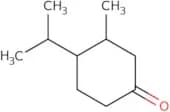
3-Methyl-4-(propan-2-yl)cyclohexan-1-one
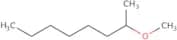
CAS:Versatile small molecule scaffoldFormula:C10H18OPurity:Min. 95%Molecular weight:154.25 g/mol2-Methoxyoctane
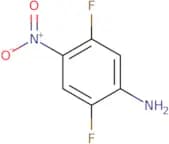
CAS:2-Methoxyoctane is a chemical compound that belongs to the group of organic compounds called primary alcohols. It can be synthesized by the oxidative demethylation of 2-methylpentane. The reaction is catalyzed by an acid and proceeds with high yield. 2-Methoxyoctane can be used as a solvent for other reactants and in photochemistry experiments. It has a viscosity, which is higher than most other solvents, but lower than water. This product also has functional groups that allow it to react with nucleophiles and polarities that make it capable of forming hydrogen bonds.Formula:C9H20OPurity:Min. 95%Molecular weight:144.25 g/mol2,5-Difluoro-4-nitroaniline
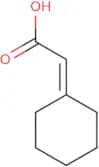
CAS:Versatile small molecule scaffoldFormula:C6H4F2N2O2Purity:Min. 95%Molecular weight:174.1 g/mol2-Cyclohexylideneacetic acid
CAS:2-Cyclohexylideneacetic acid is a pseudomonic acid that is synthesized by an asymmetric synthesis. The compound has been shown to be active against cerebral tumors in mice and can inhibit the growth of cells in culture. 2-Cyclohexylideneacetic acid is also the precursor for gabapentin, which is used as a treatment for seizures, mood disorders and pain. Gabapentin inhibits the activity of voltage-gated sodium channels, which are required for the propagation of action potentials in neurons. This drug can also be used as a solvent in pharmaceutical formulations. 2-Cyclohexylideneacetic acid binds to cell membranes and may inhibit bacterial growth through its effects on cell membrane permeability and integrity. It has been shown to have chiral properties, with one enantiomer being more active than the other. 2-Cyclohexylideneacetic acid has been shown to inhibit the growth
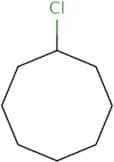
Formula:C8H12O2Purity:Min. 95%Molecular weight:140.18 g/molChlorocyclooctane
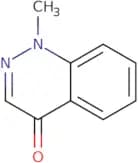
CAS:Chlorocyclooctane is an organic solvent used in the production of polyurethanes and other polymers. It is a colorless liquid that has a pleasant odor. Chlorocyclooctane can also be used as a reactive diluent, a conditioning agent, or a polymerization initiator. This chemical is an isomeric mixture of two compounds: chloromethylcyclohexane and cyclohexanone. Chlorocyclooctane reacts with proton to form the amide which is then reacted with inorganic acid to yield uv absorption. The reaction intermediates are hydrogen chloride and nucleophilic, which react with inorganic reagents to form synthetic products such as polymersFormula:C8H15ClPurity:Min. 95%Molecular weight:146.66 g/mol1-Methyl-1,4-dihydrocinnolin-4-one
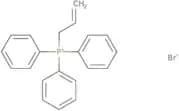
CAS:Versatile small molecule scaffoldFormula:C9H8N2OPurity:Min. 95%Molecular weight:160.17 g/molAllyltriphenylphosphonium Bromide
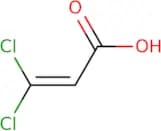
CAS:Allyltriphenylphosphonium Bromide is a white crystalline salt that is soluble in water and alcohol. It has antimicrobial properties that are related to its asymmetric synthesis, which can be achieved by mixing mixtures of hydrogen fluoride, hydrochloric acid, and cyclosporine. Allyltriphenylphosphonium Bromide has been used as a model system to study the interactions between biological molecules with organometallic compounds. This salt has been shown to inhibit the production of fatty acids and hydrogen bonds in biological systems. Allyltriphenylphosphonium Bromide can also be used as an analytical reagent for structural analysis by gas-liquid chromatography.Formula:C21H20BrPPurity:Min. 95%Molecular weight:383.27 g/mol3,3-Dichloroprop-2-enoic acid
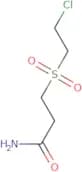
CAS:Versatile small molecule scaffoldFormula:C3H2Cl2O2Purity:Min. 95%Molecular weight:140.95 g/mol3-(2-Chloroethanesulfonyl)propanamide
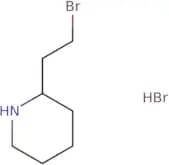
CAS:3-(2-Chloroethanesulfonyl)propanamide is a molecule that has been shown to activate cells in the muscle. Activated cells are able to divide and grow. The mechanism of activation is not known, but it may be due to the functional groups on the molecule or its benzoic acid moiety. 3-(2-Chloroethanesulfonyl)propanamide is more active in muscle than in other tissues, and it stimulates muscle growth by increasing protein synthesis. This drug is also found to have anti-inflammatory properties, which may be due to its ability to inhibit prostaglandin synthesis.END>Formula:C5H10ClNO3SPurity:Min. 95%Molecular weight:199.66 g/mol2-(2-Bromoethyl)piperidine hydrobromide
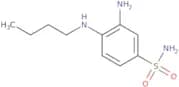
CAS:2-(2-Bromoethyl)piperidine hydrobromide (HPBA) is a hydride reagent that is used in organic synthesis. It can be prepared by the reaction of lithium aluminium hydride and diethyl ether, allowing for high yield and purity. HPBA reacts with acrylates to form acrylate, which can then be used for polymerization reactions. The use of HPBA is an efficient way to synthesize acrylates and other polymers.Formula:C7H15Br2NPurity:Min. 95%Molecular weight:273.01 g/mol3-Amino-4-(butylamino)benzene-1-sulfonamide
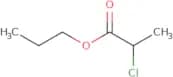
CAS:Versatile small molecule scaffoldFormula:C10H17N3O2SPurity:Min. 95%Molecular weight:243.33 g/molPropyl 2-chloropropanoate
CAS:Propyl 2-chloropropanoate is an eluted and monochlorinated short-chain alcohol. It is homologous to propanol, which has the same number of carbon atoms. The compound has been analysed using gas-liquid chromatography and found to be a mixture of several different n-alkyl chains. Propyl 2-chloropropanoate was analysed using gas chromatography and found to contain two propanoate chain lengths. This compound was also observed to elute from the column at the same time as a gas chromatographic peak with a retention time of 5 minutes and another peak with a retention time of 6 minutes.
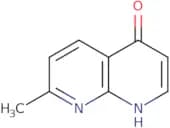
Formula:C6H11ClO2Purity:Min. 95%Molecular weight:150.6 g/mol7-Methyl-1,8-naphthyridin-4-ol
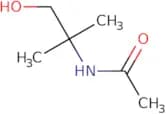
CAS:Versatile small molecule scaffoldFormula:C9H8N2OPurity:Min. 95%Molecular weight:160.17 g/molN-(1-Hydroxy-2-methylpropan-2-yl)acetamide
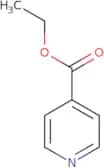
CAS:Versatile small molecule scaffoldFormula:C6H13NO2Purity:Min. 95%Molecular weight:131.17 g/mol4-Pyridinecarboxylic Acid Ethyl Ester
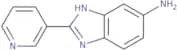
CAS:4-Pyridinecarboxylic Acid Ethyl Ester is a compound that belongs to the group of pyridinecarboxylic acids. It is a metabolite of nicotinamide, which is converted to 4-pyridinecarboxylic acid ethyl ester by esterases in the intestine. Nicotinamide is an important component of the vitamin B3 and has been shown to be effective for treating autoimmune diseases such as rheumatoid arthritis. 4-Pyridinecarboxylic Acid Ethyl Ester may have similar effects on inflammatory bowel disease and alopecia areata. The reaction mechanism of this compound has not been elucidated, but it has been shown to inhibit amyloid protein production in rat intestines. Hydroxyl groups on the side chain likely play a role in hydrogen bonding interactions with receptors in inflammatory bowel disease and alopecia areata.Formula:C8H9NO2Purity:Min. 95%Molecular weight:151.16 g/mol2-Pyridin-3-yl-1H-benzoimidazol-5-ylamine
CAS:Versatile small molecule scaffold
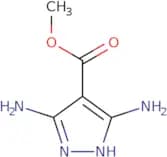
Formula:C12H10N4Purity:Min. 95%Molecular weight:210.2 g/molMethyl 3,5-diamino-1H-pyrazole-4-carboxylate
CAS:Methyl 3,5-diamino-1H-pyrazole-4-carboxylate is a chemical compound with the molecular formula CH3N2C(NH2)C(=O)OCH3. It is a condensation product of acetoacetic ester and x-ray structural analysis. The structural analysis of methyl 3,5-diamino-1H-pyrazole-4-carboxylate has shown that it is a 1:1 mixture of the two stereoisomers at the central carbon atom. The acetoacetic ester moiety of methyl 3,5-diamino-1H-pyrazole-4-carboxylate has been shown to have protective effects against acetaminophen (paracetamol)-induced hepatotoxicity in mice. Methyl 3,5 -diamino -1H -pyrazole -4 carboxylate is an intermediate in theFormula:C5H8N4O2Purity:Min. 95%Molecular weight:156.14 g/mol3,5-dibromobenzene-1,2-diamine
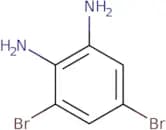
CAS:3,5-Dibromobenzene-1,2-diamine is a nonsteroidal anti-inflammatory drug (NSAID) that inhibits the activity of cyclooxygenase enzymes. It binds to the heme group in these enzymes and prevents the production of prostaglandins. 3,5-Dibromobenzene-1,2-diamine has been shown to inhibit human serum albumin and bovine liver serum albumin in vitro. In addition, it has been shown to inhibit immunohistochemical staining for markers such as divinylbenzene and chromatographic methods for quantification. 3,5-Dibromobenzene-1,2-diamine can be used as an active inhibitor in microscopy experiments. To prepare this compound for use in microscopy experiments it must be freeze dried or diluted with water or buffer solution.
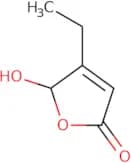
Formula:C6H6Br2N2Purity:Min. 95%Molecular weight:265.94 g/mol4-Ethyl-5-hydroxy-2,5-dihydrofuran-2-one
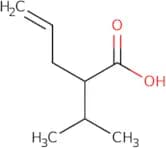
CAS:Versatile small molecule scaffoldFormula:C6H8O3Purity:Min. 95%Molecular weight:128.13 g/mol2-(Propan-2-yl)pent-4-enoic acid
CAS:2-(Propan-2-yl)pent-4-enoic acid is an organic compound that is a chiral, optically active fatty acid. It is used in the production of pharmaceuticals, including antihistamines and antiarrhythmics. 2-(Propan-2-yl)pent-4-enoic acid can be synthesized from dimethylamine and chloride in the presence of an acidic catalyst. The resulting product is purified by distillation or recrystallization to remove undesired byproducts and obtain a pure optical isomer.Formula:C8H14O2Purity:Min. 95%Molecular weight:142.2 g/mol