Building Blocks
Subcategories of "Building Blocks"
- Boronic Acids & Boronic Acid Derivatives(5,781 products)
- Chiral Building Blocks(1,242 products)
- Hydrocarbon Building Blocks(6,101 products)
- Organic Building Blocks(61,033 products)
Found 205320 products of "Building Blocks"
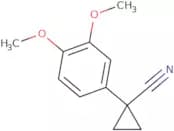
1-(3,4-Dimethoxyphenyl)cyclopropanecarbonitrile
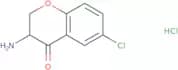
CAS:Versatile small molecule scaffoldFormula:C12H13NO2Purity:Min. 95%Molecular weight:203.24 g/mol3-Amino-6-chloro-3,4-dihydro-2H-1-benzopyran-4-one hydrochloride
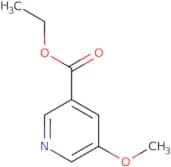
CAS:Versatile small molecule scaffoldFormula:C9H9Cl2NO2Purity:Min. 95%Molecular weight:234.08 g/molEthyl 5-methoxynicotinate
CAS:Versatile small molecule scaffold
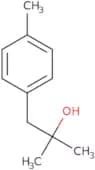
Formula:C9H11NO3Purity:Min. 95%Molecular weight:181.19 g/mol2-Methyl-1-(p-tolyl)-2-propanol
CAS:2-Methyl-1-(p-tolyl)-2-propanol is a chemical compound that belongs to the group of alcohols. It is an organic compound that can be used as a solvent or a raw material in the synthesis of other chemicals. 2-Methyl-1-(p-tolyl)-2-propanol has been found to be safe for use in dermatology and toxicology, although there are some cases of sensitization. This chemical is not classified as hazardous and does not pose any substantial risk to human health. It exhibits no functional groups, but does contain two benzene rings and one alcohol group. 2-Methyl-1-(p-tolyl)-2-propanol has been found to be useful in the treatment of dermatologic conditions such as dry skin, eczema, psoriasis, acne, and pruritus.
Formula:C11H16OPurity:Min. 95%Molecular weight:164.25 g/molRef: 3D-VAA83459
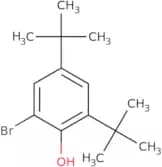
5gTo inquire10gTo inquire25gTo inquire50gTo inquire100gTo inquire250mg298.00€2500mg1,126.00€2,4-Bis(tert-butyl)-6-bromophenol
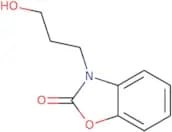
CAS:2,4-Bis(tert-butyl)-6-bromophenol (2,4-BBP) is a ligand that binds to copper and forms an electron transfer complex. It has been shown to form radical species in the presence of proton and hydrogen. The crystal structure of the copper complex has been determined by x-ray diffraction. The ligand can be debrominated with electrochemical methods and the resulting product can be identified by nmr spectroscopy or absorption spectroscopy. The phenoxy group is well known for its ability to form a thiolate bond with hydrogen peroxide. 2,4-BBP has also been shown to have metal ion binding properties as well as anti-inflammatory activities.Formula:C14H21BrOPurity:Min. 95%Molecular weight:285.22 g/mol3-(3-Hydroxypropyl)-2,3-dihydro-1,3-benzoxazol-2-one
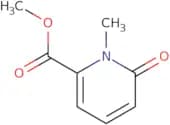
CAS:Versatile small molecule scaffoldFormula:C10H11NO3Purity:Min. 95%Molecular weight:193.2 g/molMethyl 1-methyl-6-oxo-1,6-dihydropyridine-2-carboxylate
CAS:Versatile small molecule scaffoldFormula:C8H9NO3Purity:Min. 95%Molecular weight:167.16 g/mol1-Chloro-4-phenylbutan-2-one
CAS:1-Chloro-4-phenylbutan-2-one is a ketone that inhibits the enzyme activity of polymerase chain reaction (PCR). It has been shown to be an effective inhibitor of inflammatory lesions, which may be due to its ability to activate toll-like receptor (TLR) signaling pathways. 1-Chloro-4-phenylbutan-2-one also has dna binding activity and inhibits the replication of both influenza A viruses and HIV. 1-Chloro-4 phenylbutan-2 one can inhibit the production of reactive oxygen species in human polymorphonuclear leucocytes, which may have applications in treating eye disorders and viral infections such as pandemic influenza.
Formula:C10H11ClOPurity:Min. 95%Molecular weight:182.64 g/mol2-Hydroxy-3-propylbutanedioic acid
CAS:2-Hydroxy-3-propylbutanedioic acid is a dicarboxylic acid that is found in the human body. It is also known as succinic or malic acid, and it is a natural metabolite of glucose. 2-Hydroxy-3-propylbutanedioic acid is converted to succinic acid by the enzyme succinic dehydrogenase. Succinic acid can be converted to malic acid by the enzyme malate dehydrogenase. The conversion of 2-hydroxy-3-propylbutanedioic acid to either of these two compounds involves the removal of two hydrogens and one carboxylic group. These reactions are catalyzed by enzymes that are part of the citric cycle, which is involved in energy production in cells. 2-Hydroxy-3-propylbutanedioic acid has been shown to have antiinflammatory effects on cells and tissues, and may play a role in preventing kidney
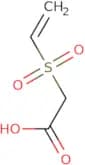
Formula:C7H12O5Purity:Min. 95%Molecular weight:176.2 g/mol2-(Ethenesulfonyl)acetic acid
CAS:2-(Ethenesulfonyl)acetic acid is a synthetic chemical that is used as a synthetic intermediate. It is also used as a conjugate to prepare radiofluorinated compounds and radiopharmaceuticals.Formula:C4H6O4SPurity:Min. 95%Molecular weight:150.16 g/mol[3-(4-Methoxyphenyl)phenyl]methanol
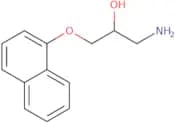
CAS:Versatile small molecule scaffoldFormula:C14H14O2Purity:Min. 95%Molecular weight:214.26 g/mol1-Amino-3-(naphthalen-1-yloxy)propan-2-ol
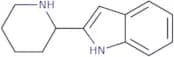
CAS:1-Amino-3-(naphthalen-1-yloxy)propan-2-ol (NAP) is a metabolite of propranolol. It is an inhibitor of cytochrome P450, which prevents the metabolism of propranolol and other drugs. NAP inhibits the activity of human liver microsomes in vitro, but does not inhibit the activity of rat liver microsomes. This may be due to the matrix effect on enzymes. NAP has been shown to have an inhibitory effect on a number of enzymes, including rat liver microsomes, human liver microsomes, and model systems such as fluorescence detection. NAP also reacts with propranolol hydrochloride to form naphthalene derivatives that are detectable using a fluorescence detector. The chemical structures for NAP and propranolol hydrochloride can be found below:Formula:C13H15NO2Purity:Min. 95%Molecular weight:217.26 g/mol2-(Piperidin-2-yl)-1H-indole
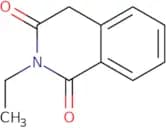
CAS:Versatile small molecule scaffoldFormula:C13H16N2Purity:Min. 95%Molecular weight:200.28 g/mol2-Ethyl-4H-isoquinoline-1,3-dione
CAS:Versatile small molecule scaffold
Formula:C11H11NO2Purity:Min. 95%Molecular weight:189.21 g/mol4-Methyl-8-nitrocinnoline
CAS:Versatile small molecule scaffold
Formula:C9H7N3O2Purity:Min. 95%Molecular weight:189.17 g/mol4-Methyl-3-nitrocinnoline
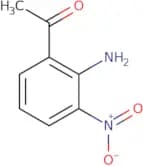
CAS:Versatile small molecule scaffoldFormula:C9H7N3O2Purity:Min. 95%Molecular weight:189.17 g/mol1-(2-Amino-3-nitrophenyl)ethan-1-one
CAS:Versatile small molecule scaffold
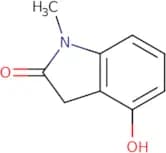
Formula:C8H8N2O3Purity:Min. 95%Molecular weight:180.16 g/mol4-Hydroxy-1-methylindolin-2-one
CAS:Versatile small molecule scaffold
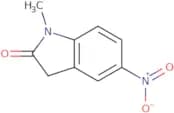
Formula:C9H9NO2Purity:Min. 95%Molecular weight:163.17 g/mol1-Methyl-5-nitro-2,3-dihydro-1H-indol-2-one
CAS:Versatile small molecule scaffoldFormula:C9H8N2O3Purity:Min. 95%Molecular weight:192.17 g/molEthyl 2-(4-hydroxyphenoxy)acetate
CAS:Ethyl 2-(4-hydroxyphenoxy)acetate is a heterocyclic compound that binds to insulin receptor and activates it. It has been shown to be an agonist of the insulin receptor and has also been shown to increase glucose uptake in cells. This compound has been found to be effective in animal models for type 2 diabetes, as well as showing efficacy in cell culture experiments. Ethyl 2-(4-hydroxyphenoxy)acetate is lipophilic, which means it can cross the blood-brain barrier, making it a potential candidate for treatment of neurological disorders such as Alzheimer's disease.Formula:C10H12O4Purity:Min. 95%Molecular weight:196.2 g/mol



![[3-(4-Methoxyphenyl)phenyl]methanol](/_next/image/?url=https%3A%2Fstatic.cymitquimica.com%2Fproducts%2F3D%2Fthumb-webp%2FVAA85456.webp&w=3840&q=75)