Building Blocks
Subcategories of "Building Blocks"
- Boronic Acids & Boronic Acid Derivatives(5,780 products)
- Chiral Building Blocks(1,241 products)
- Hydrocarbon Building Blocks(6,100 products)
- Organic Building Blocks(61,029 products)
Found 205306 products of "Building Blocks"
2-[(Thiophen-2-yl)carbonyl]pyridine
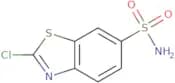
CAS:2-[(Thiophen-2-yl)carbonyl]pyridine is a diastereoselective, enantiopure, and ligand-free asymmetric synthesis of pyridines from the reaction of amines with anions. The reaction is catalyzed by a chiral tetrafluoroborate salt and proceeds with high yields and diastereoselectivities. This process can be used to synthesize pyridines from anion precursors that are not commercially available or are too expensive for large scale production. 2-[(Thiophen-2-yl)carbonyl]pyridine has been shown to have optical resolution in both the (+) and (-) configurations, which makes it ideal for use in pharmaceuticals or other biological applications.Formula:C10H7NOSPurity:Min. 95%Molecular weight:189.23 g/mol2-Chloro-1,3-benzothiazole-6-sulfonamide
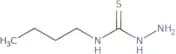
CAS:Versatile small molecule scaffoldFormula:C7H5ClN2O2S2Purity:Min. 95%Molecular weight:248.7 g/mol4-Butyl-3-thiosemicarbazide
CAS:4-Butyl-3-thiosemicarbazide is an intermediate used to synthesize thiosemicarbazide, which is a type of insecticide. The compound has shown insecticidal properties in the form of a cycloalkenyl or alkenyl group. 4-Butyl-3-thiosemicarbazide can be used as an intermediate for the synthesis of other compounds. It has also been shown to have antiinflammatory properties by inhibiting prostaglandin synthesis.Formula:C5H13N3SPurity:Min. 95%Molecular weight:147.24 g/molrac-(1R,2R)-2-Hydrazinylcyclohexan-1-ol dihydrochloride
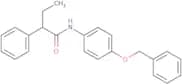
CAS:Versatile small molecule scaffoldFormula:C23H23NO2Purity:Min. 95%Molecular weight:345.4 g/mol2,5-bis[(morpholin-4-yl)methyl]benzene-1,4-diol
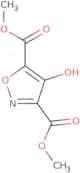
CAS:Versatile small molecule scaffoldFormula:C16H24N2O4Purity:Min. 95%Molecular weight:308.38 g/mol3,5-Dimethyl 4-hydroxy-1,2-oxazole-3,5-dicarboxylate
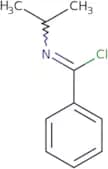
CAS:Versatile small molecule scaffoldFormula:C7H7NO6Purity:Min. 95%Molecular weight:201.13 g/molN-(Propan-2-yl)benzenecarbonimidoyl chloride
CAS:N-(Propan-2-yl)benzenecarbonimidoyl chloride (PCI) is a synthetic, water-soluble drug that is used to treat anaerobic infections. PCI binds to the imidoyl group of bacterial enzymes, such as penicillinase and beta-lactamase, and inhibits their activity. It has been shown that PCI has an affinity for copper ions in the crystallographic analysis. This affinity can be optimized by changing the substituents on the phenyl ring to increase affinity for copper ions. The oxadiazoles and hydroxyalkyl groups are also being considered for optimization of this compound. PCI has been shown to inhibit the growth of various bacteria in screening tests with a shift in its absorption spectrum.
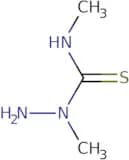
Formula:C10H12ClNPurity:Min. 95%Molecular weight:181.66 g/mol3-Amino-1,3-dimethylthiourea
CAS:Versatile small molecule scaffoldFormula:C3H9N3SPurity:Min. 95%Molecular weight:119.19 g/molN1-[4-(Allyloxy)phenyl]acetamide
CAS:N1-[4-(Allyloxy)phenyl]acetamide is a catalyst which is used to synthesize polyolefins, such as polyethylene and polypropylene. It has been shown to be an effective catalyst for the polymerization of ethylene. N1-[4-(Allyloxy)phenyl]acetamide has also been shown to have a high activity in the synthesis of polyolefins, with rates comparable to those of the most commonly used catalysts. The crystal structure of this compound was determined by X-ray diffraction analysis and found to contain two crystallographic asymmetric units. This complex can be immobilized on titanium or zirconium oxide supports and is soluble in dichloromethane. The molecular structure of N1-[4-(Allyloxy)phenyl]acetamide has been analyzed by X-ray crystallography and found to contain a planar acetamide group that is connected through a methylene bridge with an allylFormula:C11H13NO2Purity:Min. 95%Molecular weight:191.23 g/mol2-(1-Phenyl-ethylamino)-ethanol
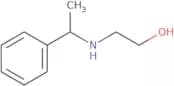
CAS:2-(1-Phenyl-ethylamino)-ethanol is an organic compound that is used as a catalyst. The compound is produced industrially by the reaction of formaldehyde with phenethylamine, followed by hydrogenation and hydrolysis. 2-(1-Phenyl-ethylamino)-ethanol can be used as a catalyst in the synthesis of oxazolidines, ketones, and other compounds containing aldehydes or carboxylic acids. It also has basic properties, which means it will react with acidic compounds to produce salts. 2-(1-Phenyl-ethylamino)-ethanol binds to amino alcohols and pyrroles through hydrogen bonding interactions.Formula:C10H15NOPurity:Min. 95%Molecular weight:165.24 g/mol2-(Benzyloxy)propanoic acid
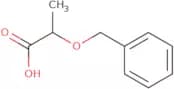
CAS:2-(Benzyloxy)propanoic acid is a carboxylic acid that is used in biotechnology as a substrate for the production of optically pure carboxylic acids. It can be converted to pure hydroxyapatite, which is an important component of bone grafts and dentures. The microbial synthesis of 2-(benzyloxy)propanoic acid has been studied extensively. The n-terminal amino group can be removed by reduction with sodium sulfate or sodium borohydride, and the resulting alcohols can be converted to esters either enzymatically or with organic acids. 2-(Benzyloxy)propanoic acid also reacts with dodecyl mercaptan to give the corresponding dodecyl sulfate.
Formula:C10H12O3Purity:Min. 95%Molecular weight:180.2 g/mol5-Chloro-N-(2-Chlorophenyl)-2-Hydroxybenzamide
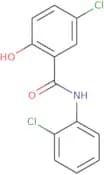
CAS:5-Chloro-N-(2-chlorophenyl)-2-hydroxybenzamide is a promyelocytic leukemia (PML) inhibitor that has been shown to have significant cytotoxicity against leukemia cells. 5-Chloro-N-(2-chlorophenyl)-2-hydroxybenzamide also inhibits the growth of prostate cancer cells and cervical cancer cells. It has been shown to inhibit the expression of oncogenes, such as sarcoma viral oncogene (SV40), and induce apoptosis in human cancer cells. This drug also shows significant cytotoxicity against human leukemia HL60 cells and erythroleukemia U937 cells.Formula:C13H9NO2Cl2Purity:Min. 95%Molecular weight:282.12 g/mol6-Chloro-9-cyclopropyl-9H-purine
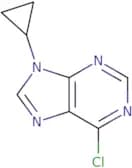
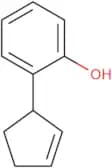
CAS:Versatile small molecule scaffoldFormula:C8H7ClN4Purity:Min. 95%Molecular weight:194.62 g/mol2-(2-Cyclopenten-1-yl)-phenol
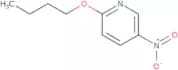
CAS:Versatile small molecule scaffoldFormula:C11H12OPurity:Min. 95%Molecular weight:160.21 g/mol2-Butoxy-5-nitropyridine
CAS:Versatile small molecule scaffold
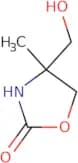
Formula:C9H12N2O3Purity:Min. 95%Molecular weight:196.2 g/mol4-(Hydroxymethyl)-4-methyl-1,3-oxazolidin-2-one
CAS:Versatile small molecule scaffoldFormula:C5H9NO3Purity:Min. 95%Molecular weight:131.13 g/mol9-Chlorofluorene
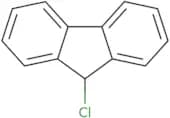
CAS:9-Chlorofluorene is a synthetic chemical that has been used as an intermediate for the production of polymers and dyes. It is a colorless liquid with a chloroform-like odor. 9-Chlorofluorene reacts with hydrogen chloride to form the chlorinated derivative, fluorene dichloride. This chemical is also known to react with other compounds such as alcohols, amines, and phenols in the presence of moisture or heat to produce unwanted byproducts including aldehydes, chlorides, and hydrocarbons. 9-Chlorofluorene may be contaminated with impurities such as carbon tetrachloride, which can lead to toxic effects on humans and animals. There are bioassays that measure the toxicity of this substance in mice. The toxicity of 9-chlorofluorene has been shown to depend on the electron transfer reactions it undergoes during metabolism.
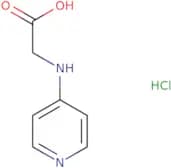
Formula:C13H9ClPurity:Min. 95%Molecular weight:200.66 g/mol(Pyridin-4-ylamino)acetic acid hydrochloride
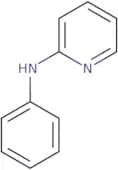
CAS:Versatile small molecule scaffoldFormula:C7H9ClN2O2Purity:Min. 95%Molecular weight:188.61 g/mol2-Anilinopyridine
CAS:2-Anilinopyridine is a reactive compound that binds to the mitochondrial membrane potential and inhibits the electron transport chain. It has been shown to be cytotoxic against colorectal adenocarcinoma cells in vitro. 2-Anilinopyridine binds to the carbonyl group of proteins, disrupting the function of proteins and leading to cell death by apoptosis. The compound was tested in vivo in a mouse model for cancer and showed promising results. 2-Anilinopyridine has also been shown to induce DNA strand breaks, which are used as biomarkers for carcinogenicity.
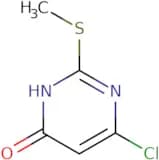
Formula:C11H10N2Purity:Min. 95%Molecular weight:170.21 g/mol6-Chloro-4-hydroxy-2-(methylthio)pyrimidine
CAS:Versatile small molecule scaffoldFormula:C5H5ClN2OSPurity:Min. 95%Molecular weight:176.62 g/mol
![2-[(Thiophen-2-yl)carbonyl]pyridine](/_next/image/?url=https%3A%2Fstatic.cymitquimica.com%2Fproducts%2F3D%2Fthumb-webp%2FGAA60263.webp&w=3840&q=75)

![2,5-bis[(morpholin-4-yl)methyl]benzene-1,4-diol](/_next/image/?url=https%3A%2Fstatic.cymitquimica.com%2Fproducts%2F3D%2Fthumb-webp%2FGAA61656.webp&w=3840&q=75)
![N1-[4-(Allyloxy)phenyl]acetamide](/_next/image/?url=https%3A%2Fstatic.cymitquimica.com%2Fproducts%2F3D%2Fthumb-webp%2FGAA62273.webp&w=3840&q=75)