Building Blocks
This section contains fundamental products for the synthesis of organic and biological compounds. Building blocks are the essential starting materials used to construct complex molecules through various chemical reactions. They play a critical role in drug discovery, material science, and chemical research. At CymitQuimica, we offer a diverse range of high-quality building blocks to support your innovative research and industrial projects, ensuring you have the essential components for successful synthesis.
Subcategories of "Building Blocks"
- Boronic Acids & Boronic Acid Derivatives(5,781 products)
- Chiral Building Blocks(1,242 products)
- Hydrocarbon Building Blocks(6,101 products)
- Organic Building Blocks(61,033 products)
Found 205320 products of "Building Blocks"
Sort by
Purity (%)
0
100
|
0
|
50
|
90
|
95
|
100
[2-(Aminomethyl)benzyl]dimethylamine dihydrochloride
CAS:Versatile small molecule scaffold
Formula:C10H18Cl2N2Purity:Min. 95%Molecular weight:237.17 g/molN'-Hydroxy-2-thiophenecarboximidamide
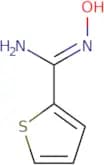
CAS:N'-Hydroxy-2-thiophenecarboximidamide is a factor-1 inhibitor that has been shown to inhibit the hypoxia inducible transcription factors (HIF) 1α and HIF2α. These proteins are involved in cellular response to hypoxia, which can lead to metastasis. This drug also inhibits the development of xenograft tumors by inhibiting cellular responses. N'-Hydroxy-2-thiophenecarboximidamide has been shown to be more effective than other inhibitors at preventing tumor growth and angiogenesis. It is also an important advance for cancer therapy as it provides a new target for cancer therapeutics.Formula:C5H6N2OSPurity:Min. 95%Molecular weight:142.18 g/mol2-Ethoxycyclopropane-1-carboxylic acid
CAS:Versatile small molecule scaffold
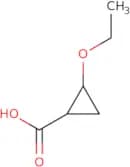
Formula:C6H10O3Purity:Min. 95%Molecular weight:130.14 g/molMethyl 2-(benzylamino)acetate
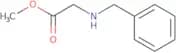
CAS:Methyl 2-(benzylamino)acetate is a carboxyalkyl compound that is involved in the biosynthesis of β-unsaturated ketones. It can be used as a substrate for the oxidation of molecules such as quinazolines, piperidines and piperazines. Methyl 2-(benzylamino)acetate can also act as an acceptor for hydrogen atoms or electrons from other molecules. The methyl group in this molecule has been shown to be able to donate or accept electrons from other molecules, allowing it to participate in many different reactions. Methyl 2-(benzylamino)acetate is synthesized by bacteria such as Bacillus subtilis.Formula:C10H13NO2Purity:Min. 95%Molecular weight:179.22 g/molMethyl 2-(tert-butylamino)acetate
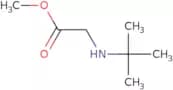
CAS:Versatile small molecule scaffoldFormula:C7H15NO2Purity:Min. 95%Molecular weight:145.2 g/molC-Furan-2-yl-C-phenyl-methylaminehydrochloride
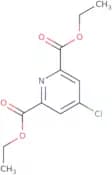
CAS:Versatile small molecule scaffoldFormula:C11H12ClNOPurity:Min. 95%Molecular weight:209.67 g/molDiethyl 4-chloropyridine-2,6-dicarboxylate
CAS:Versatile small molecule scaffoldFormula:C11H12ClNO4Purity:Min. 95%Molecular weight:257.67 g/molSpiro[2.2]pentan-1-ylmethanol
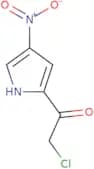
CAS:Versatile small molecule scaffoldFormula:C6H10OPurity:Min. 95%Molecular weight:98.14 g/mol2-Chloro-1-(4-nitro-1H-pyrrol-2-yl)ethan-1-one
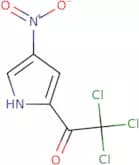
CAS:Versatile small molecule scaffoldFormula:C6H5ClN2O3Purity:Min. 95%Molecular weight:188.57 g/mol2,2,2-Trichloro-1-(4-nitro-1h-pyrrol-2-yl)ethanone
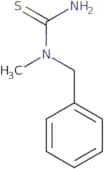
CAS:Versatile small molecule scaffoldFormula:C6H3Cl3N2O3Purity:Min. 95%Molecular weight:257.46 g/molN-Benzyl-N-methylthiourea
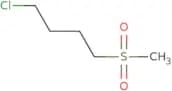
CAS:N-Benzyl-N-methylthiourea is an isomeric, bicyclic compound. It has antiaromatic properties and belongs to the thiazole class of compounds. It was isolated from a reaction mixture in which benzyl chloride and methylisothiourea were heated together with sodium amide. It has been reinvestigated as a possible intermediate for heterocyclic synthesis. The substance is stable at room temperature, but decomposes on heating.Formula:C9H12N2SPurity:Min. 95%Molecular weight:180.27 g/mol1-Chloro-4-methanesulfonylbutane
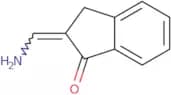
CAS:Versatile small molecule scaffoldFormula:C5H11ClO2SPurity:Min. 95%Molecular weight:170.66 g/mol2-(Aminomethylidene)-2,3-dihydro-1H-inden-1-one
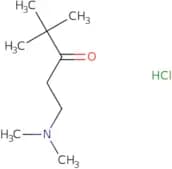
CAS:2-(Aminomethylidene)-2,3-dihydro-1H-inden-1-one is a lipophilic drug that is used in pharmaceutical preparations. It is a non-irritating and non-sensitizing agent that does not cause any significant sensitization reactions. It is used as a diagnostic aid for the detection of fatty acid esters in tissue samples, an enhancement agent during cavity preparation, and as pharmaceutical dosage for treatment of depression. This compound has been shown to act as a transporter gene modulator and can be found in tissues such as the brain, heart, kidney, liver, spleen, adrenal gland and pancreas. 2-(Aminomethylidene)-2,3-dihydro-1H-inden-1-one may be conjugated with glutathione or sulfate and excreted into bile. Fatty acids are transported into cells by carriersFormula:C10H9NOPurity:Min. 95%Molecular weight:159.18 g/mol1-(Dimethylamino)-4,4-dimethylpentan-3-one hydrochloride
CAS:Versatile small molecule scaffold
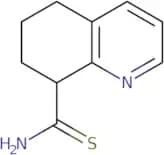
Formula:C9H20ClNOPurity:Min. 95%Molecular weight:193.71 g/mol5,6,7,8-Tetrahydro-8-quinolinecarbothioamide
CAS:5,6,7,8-Tetrahydro-8-quinolinecarbothioamide is a pyridine compound with the molecular formula C4H5N. It is an anti-ulcer agent that has been used in the synthesis of other organic compounds. This compound contains a pyridine ring with a nitrogen atom at position 8 that is substituted with a cyano group. It also contains two hydrocarbon rings and one nitro group at position 5. 5,6,7,8-Tetrahydro-8-quinolinecarbothioamide can be synthesized by reacting 2 equivalents of carbonyl fluoride with 1 equivalent of sodium nitrite in the presence of copper metal.Formula:C10H12N2SPurity:Min. 95%Molecular weight:192.28 g/mol6-Hydroxy-2H-benzo[b][1,4]oxazin-3(4H)-one
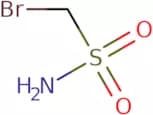
CAS:6-Hydroxy-2H-benzo[b][1,4]oxazin-3(4H)-one is a dermatological active substance that is used in the treatment of skin diseases. It has been shown to be an immunosuppressant in animals and humans and can also be used in the treatment of respiratory disease. It has vasotropic properties and is an antiinflammatory agent. 6-Hydroxy-2H-benzo[b][1,4]oxazin-3(4H)-one is a topoisomerase II inhibitor that binds to DNA and prevents the unwinding of DNA strands by inhibiting the formation of topoisomerases II–DNA complexes. The compound binds to the C1 position on the cyclohexane ring, which contains both unsubstituted alkyl and unsubstituted aryl groups as well as elements such as silver halide.Formula:C8H7NO3Purity:Min. 95%Molecular weight:165.15 g/molBromomethanesulfonamide
CAS:Bromomethanesulfonamide is a synthetic drug that is used to treat acute lymphoblastic leukemia and hepatitis. It inhibits the activity of the enzyme ns5b polymerase, which is involved in viral replication. Bromomethanesulfonamide is also an NS5B polymerase inhibitor, which may be effective against some types of chronic hepatitis caused by a virus. This drug has been shown to inhibit serotonin synthesis in animals, but this effect has not been observed in humans. Bromomethanesulfonamide has also been used as a control agent for pharmaceutical preparations and carbonic anhydrase inhibitors for glaucoma treatment.
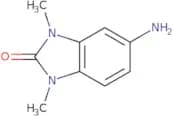
Formula:CH4BrNO2SPurity:Min. 95%Molecular weight:174.02 g/mol5-Amino-1,3-dimethyl-1,3-dihydro-2H-benzimidazol-2-one
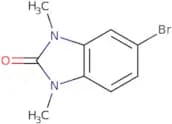
CAS:Versatile small molecule scaffoldFormula:C9H11N3OPurity:Min. 95%Molecular weight:177.21 g/mol5-Bromo-1,3-dimethyl-2,3-dihydro-1h-1,3-benzodiazol-2-one
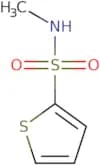
CAS:Versatile small molecule scaffoldFormula:C9H9N2OBrPurity:Min. 95%Molecular weight:241.08 g/molN-Methylthiophene-2-sulfonamide
CAS:N-Methylthiophene-2-sulfonamide is an inhibitor of arylsulfonamides. It can be used to investigate the conformational and torsional effects of arylsulfonamides and their relationship to the inhibition of sulfonamide. N-Methylthiophene-2-sulfonamide has been shown to have good inhibitory activity against sulfonamide with conformation and torsional effects, which may be due to its ability to bind to the sulfanilamide in the active site. The computational results also show that this compound has potential for use as a drug candidate.Formula:C5H7NO2S2Purity:Min. 95%Molecular weight:177.24 g/mol
![[2-(Aminomethyl)benzyl]dimethylamine dihydrochloride](/_next/image/?url=https%3A%2Fstatic.cymitquimica.com%2Fproducts%2F3D%2Fthumb-webp%2FDCA36978.webp&w=3840&q=75)

![Spiro[2.2]pentan-1-ylmethanol](/_next/image/?url=https%3A%2Fstatic.cymitquimica.com%2Fproducts%2F3D%2Fthumb-webp%2FDCA38910.webp&w=3840&q=75)
![6-Hydroxy-2H-benzo[b][1,4]oxazin-3(4H)-one](/_next/image/?url=https%3A%2Fstatic.cymitquimica.com%2Fproducts%2F3D%2Fthumb-webp%2FDCA41238.webp&w=3840&q=75)