Building Blocks
This section contains fundamental products for the synthesis of organic and biological compounds. Building blocks are the essential starting materials used to construct complex molecules through various chemical reactions. They play a critical role in drug discovery, material science, and chemical research. At CymitQuimica, we offer a diverse range of high-quality building blocks to support your innovative research and industrial projects, ensuring you have the essential components for successful synthesis.
Subcategories of "Building Blocks"
- Boronic Acids & Boronic Acid Derivatives(5,780 products)
- Chiral Building Blocks(1,241 products)
- Hydrocarbon Building Blocks(6,100 products)
- Organic Building Blocks(61,024 products)
Found 205297 products of "Building Blocks"
Sort by
Purity (%)
0
100
|
0
|
50
|
90
|
95
|
100
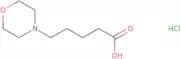
5-(Morpholin-4-yl)pentanoic acid hydrochloride
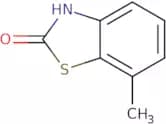
CAS:Versatile small molecule scaffoldFormula:C9H18ClNO3Purity:Min. 95%Molecular weight:223.7 g/mol7-Methyl-2,3-dihydro-1,3-benzothiazol-2-one
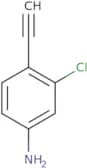
CAS:Versatile small molecule scaffoldFormula:C8H7NOSPurity:Min. 95%Molecular weight:165.21 g/mol4-Amino-2-chlorophenylacetylene
CAS:Versatile small molecule scaffold
Formula:C8H6ClNPurity:Min. 95%Molecular weight:151.59 g/mol2-Methyl-4h-furo[3,2-b]pyrrole-5-carboxylic acid
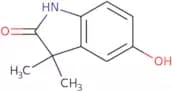
CAS:Versatile small molecule scaffoldFormula:C8H7NO3Purity:Min. 95%Molecular weight:165.15 g/mol5-Hydroxy-3,3-dimethylindolin-2-one
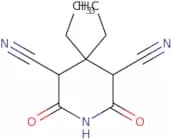
CAS:Versatile small molecule scaffoldFormula:C10H11NO2Purity:Min. 95%Molecular weight:177.2 g/mol4,4-Diethyl-2,6-dioxopiperidine-3,5-dicarbonitrile
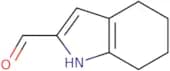
CAS:Versatile small molecule scaffoldFormula:C11H13N3O2Purity:Min. 95%Molecular weight:219.24 g/mol4,5,6,7-Tetrahydro-1H-indole-2-carbaldehyde
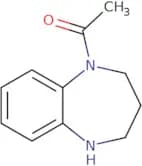
CAS:Versatile small molecule scaffoldFormula:C9H11NOPurity:Min. 95%Molecular weight:149.19 g/mol1-(2,3,4,5-Tetrahydro-1H-1,5-benzodiazepin-1-yl)ethan-1-one
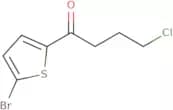
CAS:Versatile small molecule scaffoldFormula:C11H14N2OPurity:Min. 95%Molecular weight:190.24 g/mol1-(5-Bromothiophen-2-yl)-4-chlorobutan-1-one
CAS:Versatile small molecule scaffoldFormula:C8H8BrClOSPurity:Min. 95%Molecular weight:267.57 g/molMethyl 2-[(trifluoromethyl)sulfanyl]acetate
CAS:Versatile small molecule scaffoldFormula:C4H5F3O2SPurity:Min. 95%Molecular weight:174.14 g/molBenzyl 3-aminobenzoate
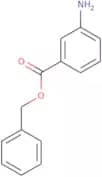
CAS:Benzyl 3-aminobenzoate is an amide that has a pharmacophore with the calixarenes, which are aromatic hydrocarbons that have a rigid carbon framework. Benzyl 3-aminobenzoate is a pseudopeptide, which means it has an amide bond and contains both amino acids and peptide bonds. It is composed of three subunits, each with a different function. The first subunit binds to the bile acid receptor in the liver and prevents the excretion of bile acids. The second subunit binds to the enzyme that synthesizes cyclic peptides and prevents its activity. The third subunit binds to the enzyme that produces cholesterol in order to prevent its production. Benzyl 3-aminobenzoate is scalable because it can be synthesized on a large scale at low cost through a ternary complex process involving hydrogenation, crystallization, and molecule modeling.Formula:C14H13NO2Purity:Min. 95%Molecular weight:227.26 g/mol3-Bromopyridine-2,4-diol
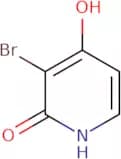
CAS:3-Bromopyridine-2,4-diol is a potent inhibitor of leukemias. It is an l1210 leukemia cell line, which is sensitive to this drug. 3-Bromopyridine-2,4-diol has been shown to inhibit the proliferation of murine leukemia cells and human leukemia cells that are resistant to other drugs. 3-Bromopyridine-2,4-diol inhibits the growth of viruses by alkylating their DNA and prevents the replication of carbocyclic nucleosides by binding to them. This drug also inhibits the synthesis of viral RNA and DNA in these cells.
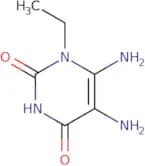
Formula:C5H4BrNO2Purity:Min. 95%Molecular weight:189.99 g/mol5,6-Diamino-1-ethyl-1,2,3,4-tetrahydropyrimidine-2,4-dione
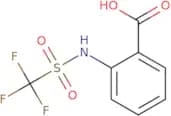
CAS:Versatile small molecule scaffoldFormula:C6H10N4O2Purity:Min. 95%Molecular weight:170.17 g/mol2-Trifluoromethanesulfonamidobenzoic acid
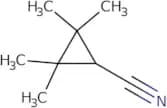
CAS:Versatile small molecule scaffoldFormula:C8H6F3NO4SPurity:Min. 95%Molecular weight:269.2 g/molTetramethylcyclopropane-1-carbonitrile
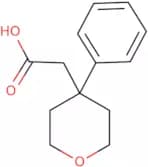
CAS:Versatile small molecule scaffoldFormula:C8H13NPurity:Min. 95%Molecular weight:123.2 g/mol2-(4-Phenyltetrahydro-2H-pyran-4-yl)acetic acid
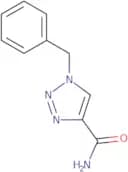
CAS:Versatile small molecule scaffoldFormula:C13H16O3Purity:Min. 95%Molecular weight:220.26 g/mol1-Benzyl-1H-1,2,3-triazole-4-carboxamide
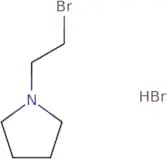
CAS:Versatile small molecule scaffoldFormula:C10H10N4OPurity:Min. 95%Molecular weight:202.21 g/mol1-(2-Bromoethyl)pyrrolidine hydrobromide
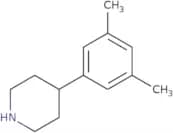
CAS:Versatile small molecule scaffoldFormula:C6H13Br2NPurity:Min. 95%Molecular weight:258.99 g/mol4-(3,5-Dimethylphenyl)piperidine
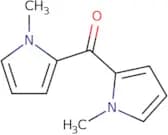
CAS:Versatile small molecule scaffoldFormula:C13H19NPurity:Min. 95%Molecular weight:189.3 g/mol1-Methyl-2-(1-methyl-1H-pyrrole-2-carbonyl)-1H-pyrrole
CAS:Versatile small molecule scaffoldFormula:C11H12N2OPurity:Min. 95%Molecular weight:188.23 g/mol

![2-Methyl-4h-furo[3,2-b]pyrrole-5-carboxylic acid](/_next/image/?url=https%3A%2Fstatic.cymitquimica.com%2Fproducts%2F3D%2Fthumb-webp%2FFDA70980.webp&w=3840&q=75)
![Methyl 2-[(trifluoromethyl)sulfanyl]acetate](/_next/image/?url=https%3A%2Fstatic.cymitquimica.com%2Fproducts%2F3D%2Fthumb-webp%2FFDA78358.webp&w=3840&q=75)