


Building Blocks
This section contains fundamental products for the synthesis of organic and biological compounds. Building blocks are the essential starting materials used to construct complex molecules through various chemical reactions. They play a critical role in drug discovery, material science, and chemical research. At CymitQuimica, we offer a diverse range of high-quality building blocks to support your innovative research and industrial projects, ensuring you have the essential components for successful synthesis.
Subcategories of "Building Blocks"
- Boronic Acids & Boronic Acid Derivatives(5,778 products)
- Chiral Building Blocks(1,242 products)
- Hydrocarbon Building Blocks(6,098 products)
- Organic Building Blocks(61,059 products)
Found 199580 products of "Building Blocks"
Sort by
Purity (%)
0
100
|
0
|
50
|
90
|
95
|
100
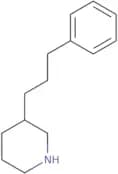
3-(3-Phenylpropyl)piperidine
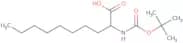
CAS:<p>Versatile small molecule scaffold</p>Formula:C14H21NPurity:Min. 95%Molecular weight:203.32 g/molBoc-(2RS)-2-amino-decanoic acid
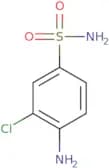
CAS:<p>Boc-(2RS)-2-amino-decanoic acid is a molecule that prevents the growth of bacteria by binding to its ribosomes and interfering with protein synthesis. It is composed of the amino acid decanoic acid and ethylene. Decanoic acid is an antibiotic component that is hydrolyzed to form an ester bond with the amine group on the 2nd carbon in 2-amino-decanoic acid, forming a conjugate that can be cleaved by β-lactamase. The spacer between the two components is methylene. This molecule has antibacterial activity against Staphylococcus aureus, but not against other bacteria such as Streptococcus pneumoniae or Haemophilus influenzae. This molecule has been shown to inhibit the growth of MRSA, which has developed resistance to many antibiotics.</p>Formula:C15H29NO4Purity:Min. 95%Molecular weight:287.39 g/mol2-chloro-4-sulfamoylaniline
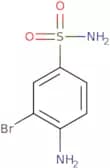
CAS:<p>2-chloro-4-sulfamoylaniline is a sepharose, which is a type of porous polysaccharide that can be used as an affinity matrix in chromatography. It has been used to purify sulfanilamide from the reaction mixture and to separate ethoxzolamide from lactoperoxidase. The affinity of 2-chloro-4-sulfamoylaniline is determined by the proximity of the enzyme to the surface and its ability to bind with the substrate.<br>2-chloro-4-sulfamoylaniline has also been shown to deacetylate cyanogen, causing it to form cyanamide. This chemical has polluting effects on water and air due to its aliphatic nature.</p>Formula:C6H7ClN2O2SPurity:Min. 95%Molecular weight:206.65 g/mol4-Amino-3-bromobenzene-1-sulfonamide
CAS:4-Amino-3-bromobenzene-1-sulfonamide is a sulfamate that has been shown to inhibit the growth of cancer cells in vitro. It may work by inhibiting an enzyme called carbonic anhydrase, which is involved in the hydration of carbon dioxide. 4-Amino-3-bromobenzene-1-sulfonamide has also been shown to have antibacterial activity against Mycobacterium tuberculosis and Mycobacterium avium complex. This compound is structurally related to coumarin derivatives, which are known inhibitors of an enzyme called anhydrase. Coumarin derivatives have also been shown to be potent anticancer agents.Formula:C6H7BrN2O2SPurity:Min. 95%Molecular weight:251.1 g/mol{2-[(Chlorocarbonyl)oxy]ethanesulfonyl}methane
CAS:2-[(Chlorocarbonyl)oxy]ethanesulfonyl}methane (CESM) is an organic solvent that has been shown to initiate polymerization of vinyl monomers. It reacts with electrophiles such as hydroxyl groups and fluorine, and undergoes ligation reactions with reactive functional groups. CESM is also used as a reagent in chemical ligation reactions, which have been used for the synthesis of proteins with novel sequences. The use of CESM in these reactions has been shown to be more efficient than traditional methods, with the rate of reaction being increased by up to five times. This agent has also been shown to be effective against infectious diseases such as HIV-1 and other retroviruses. CESM deprotects nitro groups from peptides and proteins, enabling their cleavage by proteases or reduction by hydrogenation agents. The trifluoromethyl group on CESM can react with hydrocarbon groupsFormula:C4H7ClO4SPurity:Min. 95%Molecular weight:186.61 g/mol2-Methanesulfonylethanethioamide
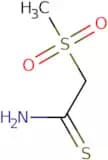
CAS:<p>Versatile small molecule scaffold</p>Formula:C3H7NO2S2Purity:Min. 95%Molecular weight:153.23 g/mol3-{3-Oxo-2H,3H-[1,2,4]triazolo[4,3-a]pyridin-2-yl}propanoic acid
CAS:Versatile small molecule scaffoldFormula:C9H9N3O3Purity:Min. 95%Molecular weight:207.19 g/molMethyl 2-[4-(chlorosulfonyl)phenyl]acetate
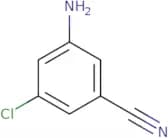
CAS:Versatile small molecule scaffoldFormula:C9H9ClO4SPurity:Min. 95%Molecular weight:248.68 g/mol3-Amino-5-chlorobenzonitrile
CAS:<p>Versatile small molecule scaffold</p>Formula:C7H5ClN2Purity:Min. 95%Molecular weight:152.58 g/molN-(3-Chloro-4-cyanophenyl)-2,2,2-trifluoroacetamide
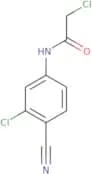
CAS:Versatile small molecule scaffoldFormula:C9H4ClF3N2OPurity:Min. 95%Molecular weight:248.59 g/mol2-Chloro-N-(3-chloro-4-cyanophenyl)acetamide
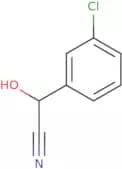
CAS:Versatile small molecule scaffoldFormula:C9H6Cl2N2OPurity:Min. 95%Molecular weight:229.06 g/mol2-(3-Chlorophenyl)-2-hydroxyacetonitrile
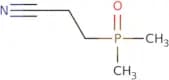
CAS:<p>Versatile small molecule scaffold</p>Formula:C8H6ClNOPurity:Min. 95%Molecular weight:167.59 g/mol3-(Dimethylphosphoryl)propanenitrile
CAS:<p>Versatile small molecule scaffold</p>Formula:C5H10NOPPurity:Min. 95%Molecular weight:131.11 g/mol4-(Dimethylphosphoryl)butan-2-one
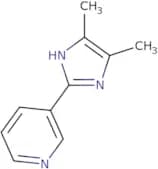
CAS:<p>Versatile small molecule scaffold</p>Formula:C6H13O2PPurity:Min. 95%Molecular weight:148.1 g/mol3-(4,5-Dimethyl-1H-imidazol-2-yl)-pyridine
CAS:<p>Versatile small molecule scaffold</p>Formula:C10H11N3Purity:Min. 95%Molecular weight:173.21 g/mol6-Amino-3-methyl-1,4-diphenyl-1,4-dihydropyrano[2,3-c]pyrazole-5-carbonitrile
CAS:<p>6-Amino-3-methyl-1,4-diphenyl-1,4-dihydropyrano[2,3-c]pyrazole-5-carbonitrile is a synthetic compound that has antioxidant properties and has been shown to induce apoptosis in cancer cells. It also shows antibacterial activity against Gram negative bacteria and has been shown to have antifungal properties. 6-Amino-3-methyl-1,4-diphenylpyrano [2,3 c] pyrazole 5 carbonitrile induces apoptotic cell death by inhibiting the phosphorylation of the protein kinase B (PKB) downstream of the insulin receptor substrate 1 (IRS1). This inhibition leads to an increased release of cytochrome C from mitochondria and activation of caspases. 6 aminopyrano[2,3 c]pyrazole 5 carbonitrile also inhibits the synthesis</p>Formula:C20H16N4OPurity:Min. 95%Molecular weight:328.4 g/mol4-[(4-Methylphenyl)methoxy]aniline
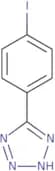
CAS:<p>Versatile small molecule scaffold</p>Formula:C14H15NOPurity:Min. 95%Molecular weight:213.27 g/mol5-(4-Iodophenyl)-2H-tetrazole
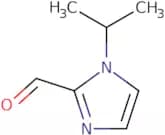
CAS:<p>5-(4-Iodophenyl)-2H-tetrazole is a ligand that can be used for optical imaging. It has been modified with methyl groups and was found to have increased uptake by cells. The modification of 5-(4-iodophenyl)-2H-tetrazole with methyl groups on the phenyl ring increased the uptake by cells, while the modification of the tetrazole moiety had no effect on cellular uptake. 5-(4-iodophenyl)-2H-tetrazole has also been shown to bind to DNA, RNA, and proteins in a perinuclear pattern. This ligand is also luminescent and can be used for optical imaging.</p>Formula:C7H5IN4Purity:Min. 95%Molecular weight:272.05 g/mol1-Isopropyl-1H-imidazole-2-carbaldehyde
CAS:Versatile small molecule scaffoldFormula:C7H10N2OPurity:Min. 95%Molecular weight:138.17 g/mol[(1-Methyl-1H-benzimidazol-2-yl)methyl]amine diHCl
CAS:Controlled ProductVersatile small molecule scaffoldFormula:C9H13Cl2N3Purity:Min. 95%Molecular weight:234.13 g/mol

![{2-[(Chlorocarbonyl)oxy]ethanesulfonyl}methane](/_next/image/?url=https%3A%2Fstatic.cymitquimica.com%2Fproducts%2F3D%2Fthumb-webp%2FDCA29829.webp&w=3840&q=75)
![3-{3-Oxo-2H,3H-[1,2,4]triazolo[4,3-a]pyridin-2-yl}propanoic acid](/_next/image/?url=https%3A%2Fstatic.cymitquimica.com%2Fproducts%2F3D%2Fthumb-webp%2FDCA30446.webp&w=3840&q=75)
![Methyl 2-[4-(chlorosulfonyl)phenyl]acetate](/_next/image/?url=https%3A%2Fstatic.cymitquimica.com%2Fproducts%2F3D%2Fthumb-webp%2FDCA30512.webp&w=3840&q=75)
![6-Amino-3-methyl-1,4-diphenyl-1,4-dihydropyrano[2,3-c]pyrazole-5-carbonitrile](/_next/image/?url=https%3A%2Fstatic.cymitquimica.com%2Fproducts%2F3D%2Fthumb-webp%2FDCA31657.webp&w=3840&q=75)
![4-[(4-Methylphenyl)methoxy]aniline](/_next/image/?url=https%3A%2Fstatic.cymitquimica.com%2Fproducts%2F3D%2Fthumb-webp%2FDCA32408.webp&w=3840&q=75)
![[(1-Methyl-1H-benzimidazol-2-yl)methyl]amine diHCl](/_next/image/?url=https%3A%2Fstatic.cymitquimica.com%2Fproducts%2F3D%2Fthumb-webp%2FDCA33279.webp&w=3840&q=75)