Building Blocks
This section contains fundamental products for the synthesis of organic and biological compounds. Building blocks are the essential starting materials used to construct complex molecules through various chemical reactions. They play a critical role in drug discovery, material science, and chemical research. At CymitQuimica, we offer a diverse range of high-quality building blocks to support your innovative research and industrial projects, ensuring you have the essential components for successful synthesis.
Subcategories of "Building Blocks"
- Boronic Acids & Boronic Acid Derivatives(5,778 products)
- Chiral Building Blocks(1,242 products)
- Hydrocarbon Building Blocks(6,098 products)
- Organic Building Blocks(61,084 products)
Found 198714 products of "Building Blocks"
Sort by
Purity (%)
0
100
|
0
|
50
|
90
|
95
|
100
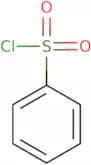
Benzenesulfonyl chloride
CAS:<p>Benzenesulfonyl chloride is an antimicrobial agent that inhibits the enzyme Cox-2. It has been shown to be a potent anti-cancer compound in laboratory studies and has been found to have anti-inflammatory properties. Benzenesulfonyl chloride may also be effective against metabolic disorders such as obesity, diabetes, and cancer. The mechanism of action is currently unclear, but it has been shown to inhibit the activity of human serum xanthine oxidase, which is involved in oxidation reactions. This inhibition may lead to a decrease in the production of reactive oxygen species (ROS) that are toxic to cells. The reaction between benzenesulfonyl chloride and sulfonyl chloride is as follows: Benzenesulfonyl chloride + Sulfonyl chloride → Benzenesulfonic acid + Chlorosulfonic acid</p>Formula:C6H5ClO2SPurity:Min. 95%Color and Shape:Clear LiquidMolecular weight:176.62 g/mol2-Bromo-1,3,5-triisopropylbenzene
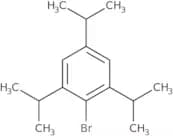
CAS:<p>2-Bromo-1,3,5-triisopropylbenzene is an ethylene acetal that is prepared by the catalyzed reaction of aryl chlorides and anhydrous zinc bromide in the presence of triethylamine. The selectivities of this method are high because it can produce mainly a single isomer. The stereoselectivity is also high because the reaction proceeds with the formation of only one stereoisomer. The mechanism for this reaction involves a nucleophilic substitution of the halogenated aryl chloride with the trialkylborane, which generates two different products. This product has been used in the synthesis of biphenyls and nitro compounds.</p>Formula:C15H23BrPurity:Min. 95%Color and Shape:Colorless Clear LiquidMolecular weight:283.25 g/mol8-Bromoisoquinoline
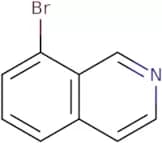
CAS:<p>8-Bromoisoquinoline is a bifunctional alkylating agent that is used to synthesize esters and amides. It is commonly used for the synthesis of amino acids, peptides, and other biologically active molecules. 8-Bromoisoquinoline has been shown to have a synergistic effect with hydroxyalkyl carbamates, which may be due to its ability to form an ionic bond with the carboxylic acid in these compounds. This chemical can also react with nitro groups and serve as a chlorinating agent, as well as react with anions such as phosphate and acetate. 8-Bromoisoquinoline can be synthesized by reacting ethyl bromoacetate with tetrahydroisoquinolinium chloride in hydrochloric acid or isopropyl alcohol.</p>Formula:C9H6BrNPurity:Min. 95%Color and Shape:PowderMolecular weight:208.05 g/mol5-Bromobenzo[d]oxazol-2-amine
CAS:<p>5-Bromobenzo[d]oxazol-2-amine is a chemical that is used in the treatment of cancer. It is synthesized from benzoic acid and bromoacetonitrile. 5-Bromobenzo[d]oxazol-2-amine is an anticancer agent that has been shown to have a depressant activity on animal tissues, which may be due to its ability to neutralize cyanogen chloride, a chemical that reacts with organic solvents and produces toxic gases such as hydrogen cyanide. This drug also binds to DNA, preventing cell growth and causing cell death. 5-Bromobenzo[d]oxazol-2-amine can be used to treat cancer cells in mice and has been shown to inhibit the proliferation of MCT7 cells. It also inhibits the growth of human breast cancer cells by blocking protein synthesis at the ribosome level.</p>Formula:C7H5BrN2OPurity:Min. 95%Molecular weight:213.03 g/mol2-Bromoethanol
CAS:<p>2-Bromoethanol is a chemical used in the manufacture of sodium salts and ethylene. It has been shown to inhibit the enzyme activity of wild-type strains of E. coli, but not resistant mutants. 2-Bromoethanol was found to cause cell lysis, which may be due to its hydroxyl group reacting with argon, forming reactive oxygen species. The reaction mechanism for 2-bromoethanol is as follows: 2-bromoethanol + H2O → 2-(hydroxyethyl) bromide + HBr + heat</p>Formula:C2H5BrOPurity:Min. 95%Color and Shape:Colorless Clear LiquidMolecular weight:124.96 g/mol(+/-)-BOC-a-phosphonoglycine tri-methyl ester
CAS:Reagent in the chemical synthesisFormula:C10H20NO7PPurity:Min. 95%Color and Shape:White PowderMolecular weight:297.24 g/mol2-(Bromomethyl)naphthalene
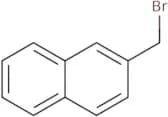
CAS:<p>2-(Bromomethyl)naphthalene is a chemical that has been studied extensively for its ability to inhibit the growth of cancer cells. It binds with high affinity to the mitochondrial membrane potential and inhibits the production of ATP, leading to cell death. 2-(Bromomethyl)naphthalene has also been shown to produce reactive oxygen species (ROS), which can also induce tumor cell death. This compound has been used in a variety of biological samples, including urine samples, which have shown promising results. A potential target for this drug is an enzyme called hydrolysis, which may be found at higher concentrations in tumor cells. The proposed reaction mechanism is shown below: 2- (bromomethyl) naphthalene + H 2 O → bromide ion + 2- (hydroxymethyl) naphthalene The kinetic data and diphenyl sulfoxide are unknown at this time.</p>Formula:C11H9BrPurity:Min. 98 Area-%Color and Shape:Off-White PowderMolecular weight:221.09 g/molBromoacetaldehyde diethyl acetal
CAS:<p>Bromoacetaldehyde diethyl acetal (BDAE) is an organic compound that has been shown to have receptor binding activity. BDAE binds to the ethylene diamine receptor and competes with ethylene diamine for binding sites. It also forms acid from sodium carbonate and hydrochloric acid, which may be due to its ability to act as a solid catalyst. BDAE has shown activity in hiv infection, with a potency comparable to that of dimethyl fumarate. The synthesis of BDAE can be accomplished by reacting monosodium malonate ester hydrochloride with adenine nucleotide and malonic acid. The reaction solution is heated until the desired product crystallizes out of solution.</p>Formula:C6H13BrO2Purity:Min. 95%Molecular weight:197.07 g/molN-Boc-ethanolamine
CAS:<p>N-Boc-ethanolamine is a naturally occurring antimicrobial peptide that has been shown to have an inhibitory effect on the growth of cancer cells in vitro. It also inhibits glucose production in the body and has been used in the treatment of diabetes mellitus. N-Boc-ethanolamine is synthesized by solid-phase synthesis with ferrocenecarboxylic acid, followed by reaction with aldehyde groups and subsequent hydrogenation. This compound has potent inhibition against cancer cells and can be used as a chemotherapeutic agent for cancer treatment. The hydrogen bond between this compound and β-unsaturated ketones leads to its photochemical properties. Cellular uptake of N-Boc-ethanolamine was observed when it was conjugated to polymers such as polyethylene glycol (PEG).</p>Formula:C7H15NO3Purity:Min. 95%Color and Shape:Colorless Clear LiquidMolecular weight:161.2 g/molN-Boc-3-hydroxypyrrolidine
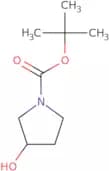
CAS:<p>N-Boc-3-hydroxypyrrolidine is a synthetic, orally available, broad spectrum antibiotic that inhibits bacterial DNA gyrase and topoisomerase IV. It has been shown to be effective against methicillin-resistant Staphylococcus aureus (MRSA) and resistant strains of other bacteria such as Pseudomonas aeruginosa. N-Boc-3-hydroxypyrrolidine is an amide that binds to the active site of PI3Kδ and inhibits its activity. This inhibition prevents the phosphorylation of Akt, leading to decreased production of inflammatory cytokines and chemokines. N-Boc-3-hydroxypyrrolidine also has immunosuppressive effects on T cells in vitro.</p>Formula:C9H17NO3Purity:Min. 95%Color and Shape:PowderMolecular weight:187.24 g/molBis[2-(perfluorooctyl)ethyl] phosphate
CAS:Controlled Product<p>Bis[2-(perfluorooctyl)ethyl] phosphate is a perfluorinated compound that can be used as an alternative to polyvinyl chloride in the manufacture of children's toys and other consumer products. It has been shown to have no health effects on humans, unlike other perfluorinated compounds, in a study where human serum was analyzed. Bis[2-(perfluorooctyl)ethyl] phosphate also has a high affinity for polyfluoroalkyl substances (PFASs) and can be used in analytical methods for their detection. The optimised extraction procedure is simple and rapid, using ultrasonic extraction with no need for any organic solvents. Recoveries are high (>99%) and the method does not require any volatile solvents.</p>Formula:C20H9F34O4PPurity:Min. 95%Molecular weight:990.2 g/molBis[(pinacolato)boryl]methane
CAS:<p>Bis[(pinacolato)boryl]methane is a bifunctional organoboron reagent with an allyl group on one end and a cyclopropane on the other end. It is useful in organic synthesis as a nucleophile for allylation, as well as for the synthesis of unsymmetrical cyclopropanes. This compound can be used to catalyze asymmetric methods, such as the synthesis of alicyclic compounds. Bis[(pinacolato)boryl]methane can also be used to synthesize biomolecules.</p>Formula:C13H26B2O4Purity:Min. 95%Color and Shape:White To Off-White SolidMolecular weight:267.97 g/moltert-Butyl 7-formyl-3,4-dihydro-2H-1,4-benzoxazine-4-carboxylate
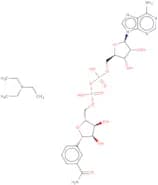
CAS:<p>Please enquire for more information about tert-Butyl 7-formyl-3,4-dihydro-2H-1,4-benzoxazine-4-carboxylate including the price, delivery time and more detailed product information at the technical inquiry form on this page</p>Formula:C14H17NO4Molecular weight:263.29 g/molBenzamide adenine dinucleotide triethylamine
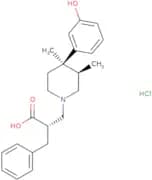
CAS:<p>Please enquire for more information about Benzamide adenine dinucleotide triethylamine including the price, delivery time and more detailed product information at the technical inquiry form on this page</p>Formula:C22H28N6O14P2•C6H15NPurity:Min. 95%Molecular weight:763.63 g/mol(3R,4R)-1-((2S)-2-Benzyl-2-carboxyethyl)-4-(3-hydroxyphenyl)-3,4-dimethylpiperidine hydrochloride
CAS:Please enquire for more information about (3R,4R)-1-((2S)-2-Benzyl-2-carboxyethyl)-4-(3-hydroxyphenyl)-3,4-dimethylpiperidine hydrochloride including the price, delivery time and more detailed product information at the technical inquiry form on this pageFormula:C23H29NO3•HClPurity:Min. 95%Molecular weight:403.94 g/molN-[(2-Bromo-4,5-dimethoxyphenyl)methyl]-N-(2-chloroethyl)morpholine bromide
<p>Please enquire for more information about N-[(2-Bromo-4,5-dimethoxyphenyl)methyl]-N-(2-chloroethyl)morpholine bromide including the price, delivery time and more detailed product information at the technical inquiry form on this page</p>Formula:C15H22Br2ClNO3Purity:Min. 95%Molecular weight:459.6 g/moltrans-1-Boc-4-amino-piperidine-3-carboxylic acid ethyl ester hydrochloride
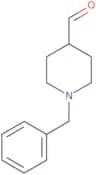
CAS:<p>Please enquire for more information about trans-1-Boc-4-amino-piperidine-3-carboxylic acid ethyl ester hydrochloride including the price, delivery time and more detailed product information at the technical inquiry form on this page</p>Formula:C13H24N2O4•HClPurity:Min. 95%Molecular weight:308.8 g/mol1-Benzyl-4-piperidine-carboxaldehyde
CAS:<p>1-Benzyl-4-piperidine-carboxaldehyde is a polymorphic compound with two crystalline forms: the α form and β form. The α form has a molecular weight of 174.2 g/mol and the β form has a molecular weight of 178.3 g/mol. Both forms are soluble in organic solvents but not in water. It is insoluble in hydrochloric acid, n-hexane, and acetonitrile. It is stable at room temperature but unstable at temperatures above 60°C. 1-Benzyl-4-piperidinecarboxaldehyde is an inhibitor of liver function, which may be due to its inhibition of CYP450 enzymes or other unknown mechanisms that lead to haemodynamic effects such as hypotension and tachycardia.</p>Formula:C13H17NOPurity:Min. 95%Color and Shape:Yellow PowderMolecular weight:203.28 g/molBis(ethylamino)-1,3,5-triazin-2-ol hydrochloride
CAS:<p>Please enquire for more information about Bis(ethylamino)-1,3,5-triazin-2-ol hydrochloride including the price, delivery time and more detailed product information at the technical inquiry form on this page</p>Formula:C7H13N5O•HClPurity:Min. 95%Molecular weight:219.67 g/molBenzydamine hydrochloride EP Impurity D
CAS:Controlled Product<p>Please enquire for more information about Benzydamine hydrochloride EP Impurity D including the price, delivery time and more detailed product information at the technical inquiry form on this page</p>Formula:C23H32N4OPurity:Min. 95%Molecular weight:380.53 g/mol

![5-Bromobenzo[d]oxazol-2-amine](/_next/image/?url=https%3A%2Fstatic.cymitquimica.com%2Fproducts%2F3D%2Fthumb-webp%2FFB32511.webp&w=3840&q=75)




![Bis[2-(perfluorooctyl)ethyl] phosphate](/_next/image/?url=https%3A%2Fstatic.cymitquimica.com%2Fproducts%2F3D%2Fthumb-webp%2FFB18790.webp&w=3840&q=75)
![Bis[(pinacolato)boryl]methane](/_next/image/?url=https%3A%2Fstatic.cymitquimica.com%2Fproducts%2F3D%2Fthumb-webp%2FFB18774.webp&w=3840&q=75)
![N-[(2-Bromo-4,5-dimethoxyphenyl)methyl]-N-(2-chloroethyl)morpholine bromide](/_next/image/?url=https%3A%2Fstatic.cymitquimica.com%2Fproducts%2F3D%2Fthumb-webp%2FFB183793.webp&w=3840&q=75)