Building Blocks
This section contains fundamental products for the synthesis of organic and biological compounds. Building blocks are the essential starting materials used to construct complex molecules through various chemical reactions. They play a critical role in drug discovery, material science, and chemical research. At CymitQuimica, we offer a diverse range of high-quality building blocks to support your innovative research and industrial projects, ensuring you have the essential components for successful synthesis.
Subcategories of "Building Blocks"
- Boronic Acids & Boronic Acid Derivatives(5,778 products)
- Chiral Building Blocks(1,242 products)
- Hydrocarbon Building Blocks(6,098 products)
- Organic Building Blocks(61,069 products)
Found 197521 products of "Building Blocks"
Sort by
Purity (%)
0
100
|
0
|
50
|
90
|
95
|
100
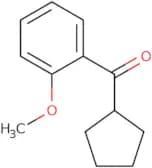
Cyclopentyl 2-methoxyphenyl ketone
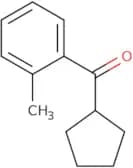
CAS:<p>Versatile small molecule scaffold</p>Formula:C13H16O2Purity:Min. 95%Molecular weight:204.26 g/molCyclopentyl(2-methylphenyl)methanone
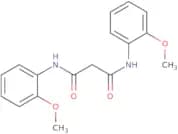
CAS:Versatile small molecule scaffoldFormula:C13H16OPurity:Min. 95%Molecular weight:188.26 g/molN1,N3-Bis(2-methoxyphenyl)malonamide
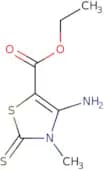
CAS:<p>Versatile small molecule scaffold</p>Formula:C17H18N2O4Purity:Min. 95%Molecular weight:314.34 g/molEthyl 4-amino-3-methyl-2-sulfanylidene-2,3-dihydro-1,3-thiazole-5-carboxylate
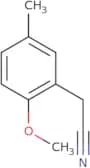
CAS:<p>Versatile small molecule scaffold</p>Formula:C7H10N2O2S2Purity:Min. 95%Molecular weight:218.3 g/mol2-(2-Methoxy-5-methylphenyl)acetonitrile
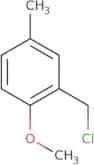
CAS:<p>Versatile small molecule scaffold</p>Formula:C10H11NOPurity:Min. 95%Molecular weight:161.2 g/mol2-(Chloromethyl)-1-methoxy-4-methylbenzene
CAS:<p>2-(Chloromethyl)-1-methoxy-4-methylbenzene is a coordination complex with an octahedral geometry. It contains a metal ion in the axial position, bound by two ligands. The ligands are typically electron donating groups such as phenols, alcohols and ethers. 2-(Chloromethyl)-1-methoxy-4-methylbenzene has been used to study the electronic spectra of metal complexes.</p>Formula:C9H11ClOPurity:Min. 95%Molecular weight:170.64 g/mol6-Hydroxy-2,6-dimethyloct-7-enoic acid
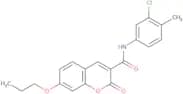
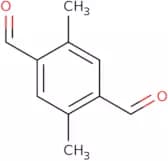
CAS:<p>Versatile small molecule scaffold</p>Formula:C20H18ClNO4Purity:Min. 95%Molecular weight:371.8 g/mol2,5-Dimethylbenzene-1,4-dicarbaldehyde
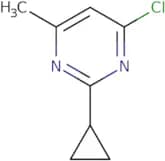
CAS:Versatile small molecule scaffoldFormula:C10H10O2Purity:Min. 95%Molecular weight:162.18 g/mol4-chloro-2-cyclopropyl-6-methylpyrimidine
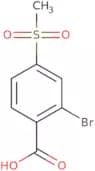
CAS:<p>Versatile small molecule scaffold</p>Formula:C8H9ClN2Purity:Min. 95%Molecular weight:168.62 g/mol2-Bromo-4-methanesulfonylbenzoic acid
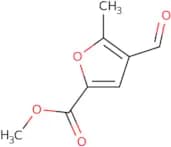
CAS:Versatile small molecule scaffoldFormula:C8H7BrO4SPurity:Min. 95%Molecular weight:279.11 g/molMethyl 4-formyl-5-methylfuran-2-carboxylate
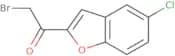
CAS:Versatile small molecule scaffoldFormula:C8H8O4Purity:Min. 95%Molecular weight:168.15 g/mol2-Bromo-1-(5-chloro-1-benzofuran-2-yl)ethan-1-one
CAS:<p>Versatile small molecule scaffold</p>Formula:C10H6BrClO2Purity:Min. 95%Molecular weight:273.51 g/mol6-Cyclopropylpyrimidin-4-ol
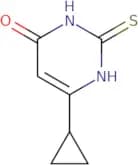
CAS:<p>Versatile small molecule scaffold</p>Formula:C7H8N2OPurity:Min. 95%Molecular weight:136.15 g/mol6-Cyclopropyl-2-sulfanylpyrimidin-4-ol
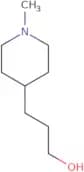
CAS:<p>Versatile small molecule scaffold</p>Formula:C7H8N2OSPurity:Min. 95%Molecular weight:168.22 g/mol3-(1-Methyl-piperidin-4-yl)-propan-1-ol
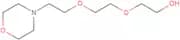
CAS:3-(1-Methyl-piperidin-4-yl)-propan-1-ol is a potent and selective inhibitor of the protein kinase activity of Pim1. It inhibits the phosphorylation of Pim1 at its optimal binding site, leading to cellular apoptosis. 3-(1-Methyl-piperidin-4-yl)-propan-1-ol has been shown to inhibit the growth of human tumor cells in vivo, as well as inhibiting cell proliferation in vitro. 3-(1-Methyl-piperidin-4-yl)-propan-1-ol also has a strong inhibitory effect on the kinase activity of Pim2 in vitro.Formula:C9H19NOPurity:Min. 95%Molecular weight:157.26 g/mol2-(2-(2-Morpholinoethoxy)ethoxy)ethanol
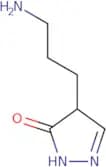
CAS:<p>Versatile small molecule scaffold</p>Formula:C10H21NO4Purity:Min. 95%Molecular weight:219.28 g/mol4-(3-Aminopropyl)-2,4-dihydro-3H-pyrazol-3-one
CAS:<p>Versatile small molecule scaffold</p>Formula:C6H11N3OPurity:Min. 95%Molecular weight:141.17 g/mol3-(1,3-Dioxaindan-5-yl)propan-1-ol
CAS:Controlled Product3-(1,3-Dioxaindan-5-yl)propan-1-ol is a carboxylic acid with the chemical formula CH3COOH. It is a colorless liquid that is soluble in water and slightly soluble in ethanol. 3-(1,3-Dioxaindan-5-yl)propan-1-ol has been shown to be safe for use in animals as well as humans. In some cases, it may cause mild skin irritation or dermatitis. The toxicology of 3-(1,3-dioxaindan-5-yl)propan-1-ol has not been fully investigated because it is not widely used in industry.Formula:C10H12O3Purity:Min. 95%Molecular weight:180.2 g/mol2-Methyl-4H-benzo[1,4]thiazin-3-one
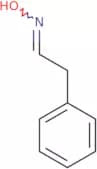
CAS:<p>2-Methyl-4H-benzo[1,4]thiazin-3-one is a tricyclic compound with anti-HIV activity. It has been shown to be a potent inhibitor of HIV reverse transcriptase and HIV protease. This compound is structurally similar to thiophenol, an analog of the anti-HIV agent AZT. 2-Methyl-4H-benzo[1,4]thiazin-3-one binds to the conserved aspartic acid residue in HIV protease and reverses the effect of this enzyme on the viral proteinases. This binding prevents any further cleavage of viral proteins, which are necessary for virus replication. 2MTHBZ also inhibits HIV reverse transcriptase by binding to its active site. In addition, it has been shown that 2MTHBZ is capable of inhibiting human leukocyte elastase (HLE), an enzyme found in high concentrations</p>Formula:C9H9NOSPurity:Min. 95%Molecular weight:179.24 g/molN-(2-Phenylethylidene)hydroxylamine
CAS:<p>N-(2-Phenylethylidene)hydroxylamine is a methyl ethyl transfer agent. It is used in wastewater treatment to remove fatty acids, such as methyl ethyl and fatty acid esters, from water and industrial effluents. N-(2-Phenylethylidene)hydroxylamine is also used in the extraction of nasturtium officinale, an edible plant that belongs to the family Brassicaceae. The wild-type strain of this plant has been shown to be sensitive to N-(2-phenylethylidene)hydroxylamine. This chemical has also been shown to have potential as an oxidation catalyst for rat liver microsomes and neutral ph luciferase activity.</p>Formula:C8H9NOPurity:Min. 95%Molecular weight:135.16 g/mol



![2-Methyl-4H-benzo[1,4]thiazin-3-one](/_next/image/?url=https%3A%2Fstatic.cymitquimica.com%2Fproducts%2F3D%2Fthumb-webp%2FHAA02857.webp&w=3840&q=75)