Building Blocks
This section contains fundamental products for the synthesis of organic and biological compounds. Building blocks are the essential starting materials used to construct complex molecules through various chemical reactions. They play a critical role in drug discovery, material science, and chemical research. At CymitQuimica, we offer a diverse range of high-quality building blocks to support your innovative research and industrial projects, ensuring you have the essential components for successful synthesis.
Subcategories of "Building Blocks"
- Boronic Acids & Boronic Acid Derivatives(5,778 products)
- Chiral Building Blocks(1,243 products)
- Hydrocarbon Building Blocks(6,098 products)
- Organic Building Blocks(61,057 products)
Found 200716 products of "Building Blocks"
Sort by
Purity (%)
0
100
|
0
|
50
|
90
|
95
|
100
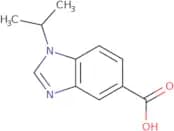
1-(Propan-2-yl)-1H-1,3-benzodiazole-5-carboxylic acid
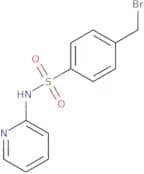
CAS:Versatile small molecule scaffoldFormula:C11H12N2O2Purity:Min. 95%Molecular weight:204.22 g/mol4-(Bromomethyl)-N-(pyridin-2-yl)benzene-1-sulfonamide
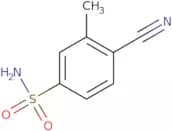
CAS:Versatile small molecule scaffoldFormula:C12H11BrN2O2SPurity:Min. 95%Molecular weight:327.2 g/mol4-Cyano-3-methylbenzene-1-sulfonamide
CAS:Versatile small molecule scaffoldFormula:C8H8N2O2SPurity:Min. 95%Molecular weight:196.23 g/mol7-Methyl-4H,5H-thieno[2,3-c]pyridine
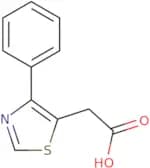
CAS:<p>Versatile small molecule scaffold</p>Formula:C8H9NSPurity:Min. 95%Molecular weight:151.23 g/mol2-(4-Phenyl-1,3-thiazol-5-yl)acetic acid
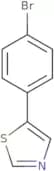
CAS:Versatile small molecule scaffoldFormula:C11H9NO2SPurity:Min. 95%Molecular weight:219.26 g/mol5-(4-Bromophenyl)-1,3-thiazole
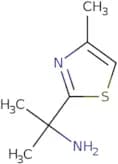
CAS:Versatile small molecule scaffoldFormula:C9H6BrNSPurity:Min. 95%Molecular weight:240.12 g/mol2-(4-Methyl-1,3-thiazol-2-yl)propan-2-amine
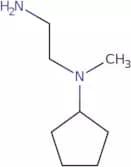
CAS:Versatile small molecule scaffoldFormula:C7H12N2SPurity:Min. 95%Molecular weight:156.25 g/molN-(2-Aminoethyl)-N-methylcyclopentanamine
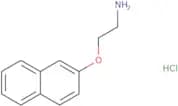
CAS:Versatile small molecule scaffoldFormula:C8H18N2Purity:Min. 95%Molecular weight:142.24 g/mol2-(2-Aminoethoxy)naphthalene hydrochloride
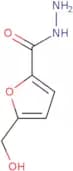
CAS:Versatile small molecule scaffoldFormula:C12H14ClNOPurity:Min. 95%Molecular weight:223.7 g/mol5-(Hydroxymethyl)furan-2-carbohydrazide
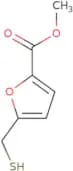
CAS:<p>Versatile small molecule scaffold</p>Formula:C6H8N2O3Purity:Min. 95%Molecular weight:156.14 g/molMethyl 5-(mercaptomethyl)furan-2-carboxylate
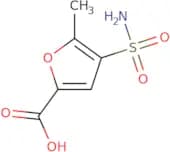
CAS:Versatile small molecule scaffoldFormula:C7H8O3SPurity:Min. 95%Molecular weight:172.2 g/mol5-Methyl-4-sulfamoylfuran-2-carboxylic acid
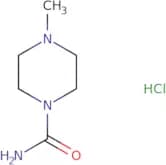
CAS:Versatile small molecule scaffoldFormula:C6H7NO5SPurity:Min. 95%Molecular weight:205.19 g/mol4-Methylpiperazine-1-carboxamide hydrochloride
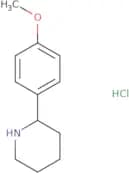
CAS:Versatile small molecule scaffoldFormula:C6H14ClN3OPurity:Min. 95%Molecular weight:179.65 g/mol2-(4-Methoxyphenyl)piperidine hydrochloride
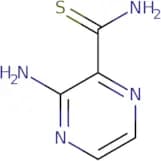
CAS:Versatile small molecule scaffoldFormula:C12H18ClNOPurity:Min. 95%Molecular weight:227.73 g/mol3-Aminopyrazine-2-carbothioamide
CAS:<p>Versatile small molecule scaffold</p>Formula:C5H6N4SPurity:Min. 95%Molecular weight:154.2 g/molPyrido[3,4-b]pyrazin-5-amine
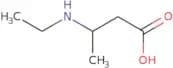
CAS:<p>Pyrido[3,4-b]pyrazin-5-amine is a crystalline solid with a solvate. It has been shown to inhibit the growth of bacteria by binding to the 50S ribosomal subunit. Pyrido[3,4-b]pyrazin-5-amine binds to the penicillin-binding proteins in the bacterial cell wall by competitive inhibition. This binding prevents the formation of an antibiotic-inhibitor complex with the enzyme cell wall synthesis that is required for cell wall biosynthesis, inhibiting protein synthesis and cell division.</p>Formula:C7H6N4Purity:Min. 95%Molecular weight:146.15 g/mol3-(Ethylamino)butanoic acid
CAS:<p>Versatile small molecule scaffold</p>Formula:C6H13NO2Purity:Min. 95%Molecular weight:131.17 g/mol(5-Phenylfuran-2-yl)methanamine hydrochloride
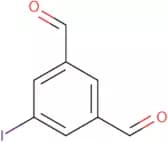
CAS:Versatile small molecule scaffoldFormula:C11H12ClNOPurity:Min. 95%Molecular weight:209.67 g/mol5-Iodobenzene-1,3-dicarbaldehyde
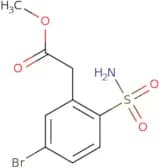
CAS:<p>5-Iodobenzene-1,3-dicarbaldehyde is a chemical compound with the molecular formula C6H5I. It is an electron acceptor that can be used in organic chemistry as a moiety to form transition metal complexes. 5-Iodobenzene-1,3-dicarbaldehyde can be detected by its red shift in the visible light spectrum and has been shown to exhibit antiferromagnetic coupling. The unpaired electron delocalizes over two carbons, which leads to hyperfine coupling between the two carbons. This results in a detectable shift in the wavelength of light absorbed or emitted by the molecule.</p>Formula:C8H5IO2Purity:Min. 95%Molecular weight:260.03 g/mol4-Bromo-2-(Methoxycarbonylmethyl)Benzenesulfonamide
CAS:Versatile small molecule scaffoldFormula:C9H10BrNO4SPurity:Min. 95%Molecular weight:308.15 g/mol

![7-Methyl-4H,5H-thieno[2,3-c]pyridine](/_next/image/?url=https%3A%2Fstatic.cymitquimica.com%2Fproducts%2F3D%2Fthumb-webp%2FJJB48670.webp&w=3840&q=75)
![Pyrido[3,4-b]pyrazin-5-amine](/_next/image/?url=https%3A%2Fstatic.cymitquimica.com%2Fproducts%2F3D%2Fthumb-webp%2FJJB29523.webp&w=3840&q=75)