Building Blocks
This section contains fundamental products for the synthesis of organic and biological compounds. Building blocks are the essential starting materials used to construct complex molecules through various chemical reactions. They play a critical role in drug discovery, material science, and chemical research. At CymitQuimica, we offer a diverse range of high-quality building blocks to support your innovative research and industrial projects, ensuring you have the essential components for successful synthesis.
Subcategories of "Building Blocks"
- Boronic Acids & Boronic Acid Derivatives(5,780 products)
- Chiral Building Blocks(1,241 products)
- Hydrocarbon Building Blocks(6,100 products)
- Organic Building Blocks(61,029 products)
Found 205306 products of "Building Blocks"
Sort by
Purity (%)
0
100
|
0
|
50
|
90
|
95
|
100
4-Methyl-N-[2-(methylamino)ethyl]benzene-1-sulfonamide
CAS:Versatile small molecule scaffold
Formula:C10H16N2O2SPurity:Min. 95%Molecular weight:228.31 g/mol1-(3-Chloropropyl)-4-phenylpiperazine hydrochloride
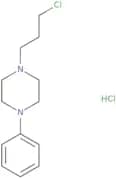
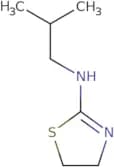
CAS:Controlled ProductVersatile small molecule scaffoldFormula:C13H20Cl2N2Purity:Min. 95%Molecular weight:275.21 g/molN-(2-Methylpropyl)-4,5-dihydro-1,3-thiazol-2-amine
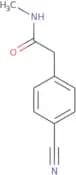
CAS:Versatile small molecule scaffoldFormula:C7H14N2SPurity:Min. 95%Molecular weight:158.27 g/mol2-(4-cyanophenyl)-N-methylacetamide
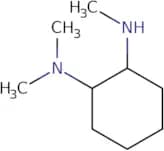
CAS:Versatile small molecule scaffoldFormula:C10H10N2OPurity:Min. 95%Molecular weight:174.2 g/mol(1R,2R)-N,N,N-Trimethyl-1,2-diaminocyclohexane
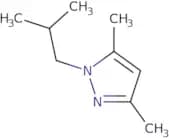
CAS:Controlled ProductVersatile small molecule scaffoldFormula:C9H20N2Purity:Min. 95%Molecular weight:156.27 g/mol3,5-Dimethyl-1-(2-methylpropyl)-1H-pyrazole
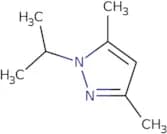
CAS:Versatile small molecule scaffoldFormula:C9H16N2Purity:Min. 95%Molecular weight:152.24 g/mol3,5-Dimethyl-1-(propan-2-yl)-1H-pyrazole
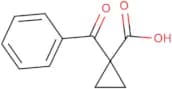
CAS:Versatile small molecule scaffoldFormula:C8H14N2Purity:Min. 95%Molecular weight:138.21 g/mol1-Benzoylcyclopropane-1-carboxylic acid
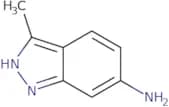
CAS:The 1-benzoylcyclopropane-1-carboxylic acid is a chiral molecule with two stereoisomers. It is a substrate for the enzyme mediated and has been shown to yield the desired product in high yields.Formula:C11H10O3Purity:Min. 95%Molecular weight:190.19 g/mol3-Methyl-1H-indazol-6-amine
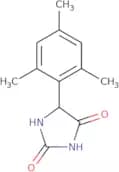
CAS:3-Methyl-1H-indazol-6-amine is an organic compound that belongs to the group of diazo compounds. It is a benzene derivative with three alkoxy groups, which are substituted with an alkyl or an aryl group. 3-Methyl-1H-indazol-6-amine can be synthesized by coupling the corresponding chlorides with toluene and diazonium salts in an alkaline solution. The fibre used for this synthesis has been shown to have aryl and alkyl groups. This compound reacts with acid as hydrogen chloride, resulting in the release of carbon dioxide gas. 3-Methyl-1H-indazol-6-amine also reacts readily with water and alcohols, forming indazole hydrochloride and benzoic acid respectively.Formula:C8H9N3Purity:Min. 95%Molecular weight:147.18 g/mol5-(2,4,6-Trimethylphenyl)imidazolidine-2,4-dione
CAS:Versatile small molecule scaffold
Formula:C12H14N2O2Purity:Min. 95%Molecular weight:218.25 g/mol1-[(4-Bromophenyl)methyl]indole-2,3-dione
CAS:Versatile small molecule scaffoldFormula:C15H10BrNO2Purity:Min. 95%Molecular weight:316.15 g/mol2-{Imidazo[2,1-b][1,3]thiazol-3-yl}acetic acid
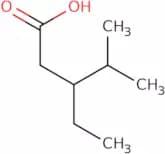
CAS:Versatile small molecule scaffoldFormula:C7H6N2O2SPurity:Min. 95%Molecular weight:182.2 g/mol(3R)-3-Ethyl-4-methylpentanoic acid
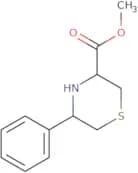
CAS:Versatile small molecule scaffoldFormula:C8H16O2Purity:Min. 95%Molecular weight:144.21 g/molrac-Methyl (3R,5S)-5-phenylthiomorpholine-3-carboxylate
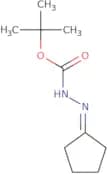
CAS:Versatile small molecule scaffoldFormula:C12H15NO2SPurity:Min. 95%Molecular weight:237.3 g/moltert-Butyl 2-cyclopentylidenehydrazinecarboxylate
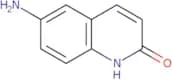
CAS:tert-Butyl 2-cyclopentylidenehydrazinecarboxylate is a molecule that has been modified to be an agonist for the human liver. It has a profile of pharmacokinetic and molecular target similar to that of endogenous tyrosine kinase ligands, which are peptides and proteins involved in the regulation of metabolism, growth, and development. The pharmacokinetic profile of tert-Butyl 2-cyclopentylidenehydrazinecarboxylate can be optimized through structural modifications such as changes in hydrophobicity or lipophilicity. This optimization can increase its potency as a receptor agonist and lead to better treatment options for diseases such as type II diabetes.Formula:C10H18N2O2Purity:Min. 95%Molecular weight:198.26 g/mol6-Aminoquinolin-2-ol
CAS:6-Aminoquinolin-2-ol is an antiviral drug that inhibits the transcription of viral RNA. It has been shown to inhibit the activity of human and murine cytomegalovirus by inhibiting their transcriptase activity and transactivating. 6-Aminoquinolin-2-ol also inhibits the growth of S. aureus strains, including MRSA, through its ability to inhibit bacterial efflux pumps. 6-Aminoquinolin-2-ol has long term toxicity in animals and should be used with caution in humans.Formula:C9H8N2OPurity:Min. 95%Molecular weight:160.18 g/mol6'-Bromo-1',2'-dihydrospiro[cyclopentane-1,3'-indole]-2'-one
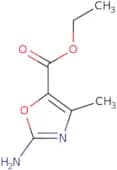
CAS:Versatile small molecule scaffoldFormula:C12H12BrNOPurity:Min. 95%Molecular weight:266.13 g/molEthyl 2-amino-4-methyl-1,3-oxazole-5-carboxylate
CAS:Ethyl 2-amino-4-methyl-1,3-oxazole-5-carboxylate is a structurally active methylene compound. It is biodegradable and has been used as an effective catalyst in the laboratory. This substance is produced by the reaction of ethyl 2-aminothiazole with chloride and thiourea. Ethyl 2-amino-4-methyl-1,3-oxazole-5 carboxylate has been shown to be an effective catalyst for the synthesis of choline from acetaldehyde and ammonia, which are both commercially available compounds. The eutectic point for this compound is at -35 degrees Celsius and it has a melting point of 134 degrees Celsius.Formula:C7H10N2O3Purity:Min. 95%Molecular weight:170.17 g/molN-(4,5,6,7-Tetrahydro-1-benzothiophen-4-ylidene)hydroxylamine
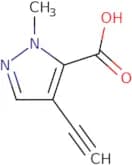
CAS:Versatile small molecule scaffoldFormula:C8H9NOSPurity:Min. 95%Molecular weight:167.2 g/mol4-Ethynyl-1-methyl-1(H)-pyrazole-5-carboxylic acid
CAS:Versatile small molecule scaffoldFormula:C7H6N2O2Purity:Min. 95%Molecular weight:150.13 g/mol
![4-Methyl-N-[2-(methylamino)ethyl]benzene-1-sulfonamide](/_next/image/?url=https%3A%2Fstatic.cymitquimica.com%2Fproducts%2F3D%2Fthumb-webp%2FEDA14352.webp&w=3840&q=75)

![1-[(4-Bromophenyl)methyl]indole-2,3-dione](/_next/image/?url=https%3A%2Fstatic.cymitquimica.com%2Fproducts%2F3D%2Fthumb-webp%2FEDA18337.webp&w=3840&q=75)
![2-{Imidazo[2,1-b][1,3]thiazol-3-yl}acetic acid](/_next/image/?url=https%3A%2Fstatic.cymitquimica.com%2Fproducts%2F3D%2Fthumb-webp%2FEDA19064.webp&w=3840&q=75)
![6'-Bromo-1',2'-dihydrospiro[cyclopentane-1,3'-indole]-2'-one](/_next/image/?url=https%3A%2Fstatic.cymitquimica.com%2Fproducts%2F3D%2Fthumb-webp%2FEDA20884.webp&w=3840&q=75)