Building Blocks
This section contains fundamental products for the synthesis of organic and biological compounds. Building blocks are the essential starting materials used to construct complex molecules through various chemical reactions. They play a critical role in drug discovery, material science, and chemical research. At CymitQuimica, we offer a diverse range of high-quality building blocks to support your innovative research and industrial projects, ensuring you have the essential components for successful synthesis.
Subcategories of "Building Blocks"
- Boronic Acids & Boronic Acid Derivatives(5,780 products)
- Chiral Building Blocks(1,241 products)
- Hydrocarbon Building Blocks(6,100 products)
- Organic Building Blocks(61,029 products)
Found 205306 products of "Building Blocks"
Sort by
Purity (%)
0
100
|
0
|
50
|
90
|
95
|
100
6-Chloro-8-iodo-[1,2,4]triazolo[1,5-a]pyridine
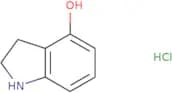
CAS:Versatile small molecule scaffoldFormula:C6H3ClIN3Purity:Min. 95%Molecular weight:279.46 g/mol2,3-Dihydro-1H-indol-4-ol hydrochloride
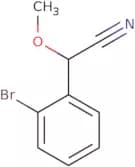
CAS:Versatile small molecule scaffoldFormula:C8H10ClNOPurity:Min. 95%Molecular weight:171.62 g/mol2-(2-Bromophenyl)-2-methoxyacetonitrile
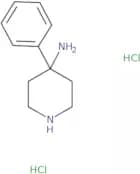
CAS:Versatile small molecule scaffoldFormula:C9H8BrNOPurity:Min. 95%Molecular weight:226.07 g/mol4-Phenylpiperidin-4-amine dihydrochloride
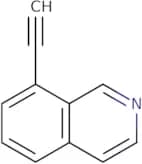
CAS:Versatile small molecule scaffoldFormula:C11H18Cl2N2Purity:Min. 95%Molecular weight:249.18 g/mol8-ethynylisoquinoline
CAS:Versatile small molecule scaffold
Formula:C11H7NPurity:Min. 95%Molecular weight:153.18 g/mol3,3-Dimethyl-1-oxa-6-azaspiro[3.3]heptane hydrochloride
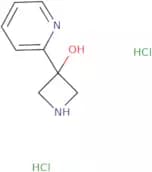
CAS:Versatile small molecule scaffoldFormula:C7H14ClNOPurity:Min. 95%Molecular weight:163.64 g/mol3-(Pyridin-2-yl)azetidin-3-ol dihydrochloride
CAS:Versatile small molecule scaffoldFormula:C8H12Cl2N2OPurity:Min. 95%Molecular weight:223.1 g/moltert-Butyl 2-(chloromethyl)-2-(hydroxymethyl)pyrrolidine-1-carboxylate
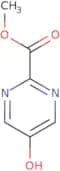
CAS:Versatile small molecule scaffoldFormula:C11H20ClNO3Purity:Min. 95%Molecular weight:249.73 g/molMethyl 5-hydroxypyrimidine-2-carboxylate
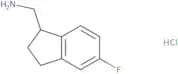
CAS:Versatile small molecule scaffoldFormula:C6H6N2O3Purity:Min. 95%Molecular weight:154.12 g/mol(5-Fluoro-2,3-dihydro-1H-inden-1-yl)methanamine hydrochloride
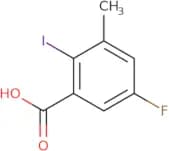
CAS:Versatile small molecule scaffoldFormula:C10H13ClFNPurity:Min. 95%Molecular weight:201.7 g/mol5-Fluoro-2-iodo-3-methylbenzoic acid
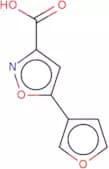
CAS:Versatile small molecule scaffoldFormula:C8H6FIO2Purity:Min. 95%Molecular weight:280.03 g/mol5-(Furan-3-yl)-1,2-oxazole-3-carboxylic acid
CAS:Versatile small molecule scaffoldFormula:C8H5NO4Purity:Min. 95%Molecular weight:179.1 g/mol5-[(tert-butoxy)carbonyl]pyridine-2-carboxylic acid
CAS:Versatile small molecule scaffoldFormula:C11H13NO4Purity:Min. 95%Molecular weight:223.2 g/mol{4-[4-(Trifluoromethyl)phenoxy]phenyl}boronic acid
CAS:Versatile small molecule scaffoldFormula:C13H10BF3O3Purity:Min. 95%Molecular weight:282.02 g/mol1-N-Boc-5-bromo-3,6-dihydro-2H-pyridine
CAS:1-N-Boc-5-bromo-3,6-dihydro-2H-pyridine is an alkaloid that is used as a precursor for the synthesis of other compounds. This compound can be obtained from the reaction of ethylmagnesium bromide and 1,2,4,5 tetraisopropoxy benzene. The 1,2,4,5 tetraisopropoxybenzene reacts with titanium tetrachloride to yield 1-N-Boc-5-bromo-3,6 dihydro 2H pyridine. 1-N-Boc 5 bromo 3,6 dihydro 2H pyridine can also be obtained by the reduction of 1 N Boc 5 bromo 3,6 dihydro 2H pyridinium chloride with sodium sulfonate in a high yield. The nitrogen atom in this compound is stereFormula:C10H16BrNO2Purity:Min. 95%Molecular weight:262.15 g/mol2-(1,2,4-Oxadiazol-3-yl)propan-2-amine hydrochloride
CAS:Versatile small molecule scaffoldFormula:C5H10ClN3OPurity:Min. 95%Molecular weight:163.6 g/mol6-Chloropyridazin-4-ol
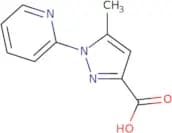
CAS:6-Chloropyridazin-4-ol is a heterocyclic compound with a pyridine ring and an aromatic ring. It is structurally similar to pyridazine, but with the chlorine atom replaced by a hydroxyl group in the 4 position. 6-Chloropyridazin-4-ol is a good nucleophile and can be used as an intermediate in organic synthesis. This heterocyclic compound is an excellent catalyst for the conversion of esters into acid chlorides. 6-Chloropyridazin-4-ol can also be used as an intermediate for the synthesis of pyrazoles or pyrimidines, which are important compounds in the pharmaceutical industry.Formula:C4H3ClN2OPurity:Min. 95%Molecular weight:130.53 g/mol5-Methyl-1-(pyridin-2-yl)-1H-pyrazole-3-carboxylic acid
CAS:5-Methyl-1-(pyridin-2-yl)-1H-pyrazole-3-carboxylic acid is an experimental molecule that has shown selectivity for pyrazole derivatives in analytical and biological studies. This molecule is a fluorescence probe with high selectivity for pyrazoles, which can be used in the detection of pyrazoles in complex mixtures. 5-Methyl-1-(pyridin-2-yl)-1H-pyrazole-3-carboxylic acid has been validated to detect pyrazoles with high sensitivity.Formula:C10H9N3O2Purity:Min. 95%Molecular weight:203.2 g/mol2-Chloro-N-[(4-cyanophenyl)methyl]acetamide
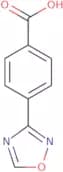
CAS:Versatile small molecule scaffoldFormula:C10H9ClN2OPurity:Min. 95%Molecular weight:208.64 g/mol4-(1,2,4-Oxadiazol-3-yl)benzoic acid
CAS:Versatile small molecule scaffoldFormula:C9H6N2O3Purity:Min. 95%Molecular weight:190.16 g/mol
![6-Chloro-8-iodo-[1,2,4]triazolo[1,5-a]pyridine](/_next/image/?url=https%3A%2Fstatic.cymitquimica.com%2Fproducts%2F3D%2Fthumb-webp%2FQGC31422.webp&w=3840&q=75)

![3,3-Dimethyl-1-oxa-6-azaspiro[3.3]heptane hydrochloride](/_next/image/?url=https%3A%2Fstatic.cymitquimica.com%2Fproducts%2F3D%2Fthumb-webp%2FQGC56241.webp&w=3840&q=75)
![5-[(tert-butoxy)carbonyl]pyridine-2-carboxylic acid](/_next/image/?url=https%3A%2Fstatic.cymitquimica.com%2Fproducts%2F3D%2Fthumb-webp%2FQGC81986.webp&w=3840&q=75)
![{4-[4-(Trifluoromethyl)phenoxy]phenyl}boronic acid](/_next/image/?url=https%3A%2Fstatic.cymitquimica.com%2Fproducts%2F3D%2Fthumb-webp%2FQGC82494.webp&w=3840&q=75)


![2-Chloro-N-[(4-cyanophenyl)methyl]acetamide](/_next/image/?url=https%3A%2Fstatic.cymitquimica.com%2Fproducts%2F3D%2Fthumb-webp%2FQNA73246.webp&w=3840&q=75)