


Building Blocks
This section contains fundamental products for the synthesis of organic and biological compounds. Building blocks are the essential starting materials used to construct complex molecules through various chemical reactions. They play a critical role in drug discovery, material science, and chemical research. At CymitQuimica, we offer a diverse range of high-quality building blocks to support your innovative research and industrial projects, ensuring you have the essential components for successful synthesis.
Subcategories of "Building Blocks"
- Boronic Acids & Boronic Acid Derivatives(5,778 products)
- Chiral Building Blocks(1,243 products)
- Hydrocarbon Building Blocks(6,097 products)
- Organic Building Blocks(61,052 products)
Found 201390 products of "Building Blocks"
Sort by
Purity (%)
0
100
|
0
|
50
|
90
|
95
|
100
Methyl 1-{[(tert-butoxy)carbonyl]amino}-3-hydroxycyclobutane-1-carboxylate
CAS:Versatile small molecule scaffoldFormula:C11H19NO5Purity:Min. 95%Molecular weight:245.27 g/molMethyl 2-{[(tert-butoxy)carbonyl]amino}-3-hydroxy-2-methylpropanoate
CAS:<p>Versatile small molecule scaffold</p>Formula:C10H19NO5Purity:Min. 95%Molecular weight:233.26 g/mol3-[(Benzyloxy)methyl]-1-{[(tert-butoxy)carbonyl]amino}cyclobutane-1-carboxylic acid
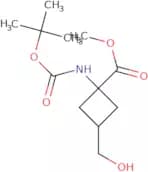
CAS:<p>Versatile small molecule scaffold</p>Formula:C18H25NO5Purity:Min. 95%Molecular weight:335.4 g/molMethyl cis-1-((tert-butoxycarbonyl)amino)-3-(hydroxymethyl)cyclobutane-1-carboxylate
CAS:Versatile small molecule scaffoldFormula:C12H21NO5Purity:Min. 95%Molecular weight:259.3 g/molMethyl 1-{[(tert-butoxy)carbonyl]amino}-3-oxocyclobutane-1-carboxylate
CAS:Versatile small molecule scaffoldFormula:C11H17NO5Purity:Min. 95%Molecular weight:243.26 g/mol3-[3-(Trifluoromethyl)phenyl]cyclohex-2-en-1-one
CAS:Versatile small molecule scaffoldFormula:C13H11F3OPurity:Min. 95%Molecular weight:240.22 g/mol2-[(3,4-Dichlorophenyl)sulfanyl]-5-fluorobenzoic acid
CAS:<p>Versatile small molecule scaffold</p>Formula:C13H7Cl2FO2SPurity:Min. 95%Molecular weight:317.2 g/molMethyl 4-[3-(trifluoromethyl)phenyl]butanoate
CAS:<p>Versatile small molecule scaffold</p>Formula:C12H13F3O2Purity:Min. 95%Molecular weight:246.22 g/mol[2-(4-Fluorophenyl)-1H-imidazol-5-yl]methanol
CAS:Versatile small molecule scaffoldFormula:C10H9FN2OPurity:Min. 95%Molecular weight:192.19 g/mol3-[(4-Methoxyphenyl)methoxy]propan-1-amine
CAS:Versatile small molecule scaffoldFormula:C11H17NO2Purity:Min. 95%Molecular weight:195.26 g/mol2-({[(9H-Fluoren-9-yl)methoxy]carbonyl}amino)pent-4-ynoic acid
CAS:2-({[(9H-Fluoren-9-yl)methoxy]carbonyl}amino)pent-4-ynoic acid is a synthetic amino acid that has been used to study bacterial resistance. The molecule was synthesized by the reaction of 9H-fluorene with pentanenitrile. This organic compound is an isomer of 2,3,4,5,6-pentafluoroheptanoic acid and can be analyzed by FTIR spectroscopy. It has been used to calibrate the mass spectrometer and identify the isomerism in amino acids. The molecule also has diagnostic potential as it can be used to detect the presence of carbohydrates in a sample. 2-({[(9H-Fluoren-9-yl)methoxy]carbonyl}amino)pent-4-ynoic acid is also a protonated molecule that reacts with matrix ionsFormula:C20H17NO4Purity:Min. 95%Molecular weight:335.4 g/mol5-Bromo-2-(trifluoromethoxy)benzene-1-sulfonamide
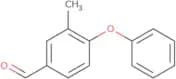
CAS:Versatile small molecule scaffoldFormula:C7H5BrF3NO3SPurity:Min. 95%Molecular weight:320.09 g/mol3-Methyl-4-phenoxybenzaldehyde
CAS:<p>Versatile small molecule scaffold</p>Formula:C14H12O2Purity:Min. 95%Molecular weight:212.24 g/mol4,5,6,7-Tetrahydro-1H-imidazo[4,5-c]pyridine-6-carboxylic acid hydrochloride
CAS:<p>Versatile small molecule scaffold</p>Formula:C7H10ClN3O2Purity:Min. 95%Molecular weight:203.62 g/mol4-[(2-Fluorophenyl)methyl]piperidin-4-ol
CAS:Versatile small molecule scaffoldFormula:C12H16FNOPurity:Min. 95%Molecular weight:209.26 g/molMethyl 2-bromo-3,3-dimethoxypropanoate
CAS:<p>Versatile small molecule scaffold</p>Formula:C6H11BrO4Purity:Min. 95%Molecular weight:227.05 g/mol2-chloro-3-iodopyrazine
CAS:<p>2-Chloro-3-iodopyrazine is a reactive compound that can be used to synthesize diazines. This compound reacts readily with lithium metal in the presence of magnesium to form the corresponding Grignard reagent. The Grignard reagent then reacts with carbon monoxide to produce the desired diazine. 2-Chloro-3-iodopyrazine can also be converted to a functionalized heterocycle through sonication, which produces cinnoline and halogen as products.<br>2-Chloro-3-iodopyrazine is not soluble in water but will react with alcohols such as ethanol and methanol, producing chloroethanol and chloromethyl ether, respectively.</p>Formula:C4H2ClIN2Purity:Min. 95%Molecular weight:240.4 g/mol{4-[(2-Aminophenyl)sulfanyl]butyl}phosphonic acid
CAS:{4-[(2-Aminophenyl)sulfanyl]butyl}phosphonic acid is a polymerase chain reaction (PCR) reagent that is used to detect the presence of nucleic acids in solution. It is a phosphonic acid derivative that has been shown to be effective against both human and animal pathogens, such as HIV, hepatitis B and C, influenza A and B, RSV, and vaccinia virus. This compound can also be used as an inhibitor of DNA polymerases in the presence of radiation or natural compounds.Formula:C10H16NO3PSPurity:Min. 95%Molecular weight:261.28 g/molMethyl 5-(chlorosulfonyl)-2-methoxybenzoate
CAS:<p>Versatile small molecule scaffold</p>Formula:C9H9ClO5SPurity:Min. 95%Molecular weight:264.68 g/mol1-[(tert-Butoxy)carbonyl]-5-(methoxycarbonyl)piperidine-3-carboxylic acid
CAS:Versatile small molecule scaffoldFormula:C13H21NO6Purity:Min. 95%Molecular weight:287.3 g/mol
![Methyl 1-{[(tert-butoxy)carbonyl]amino}-3-hydroxycyclobutane-1-carboxylate](/_next/image/?url=https%3A%2Fstatic.cymitquimica.com%2Fproducts%2F3D%2Fthumb-webp%2FRHA11053.webp&w=3840&q=75)

![Methyl 2-{[(tert-butoxy)carbonyl]amino}-3-hydroxy-2-methylpropanoate](/_next/image/?url=https%3A%2Fstatic.cymitquimica.com%2Fproducts%2F3D%2Fthumb-webp%2FRHA11061.webp&w=3840&q=75)
![3-[(Benzyloxy)methyl]-1-{[(tert-butoxy)carbonyl]amino}cyclobutane-1-carboxylic acid](/_next/image/?url=https%3A%2Fstatic.cymitquimica.com%2Fproducts%2F3D%2Fthumb-webp%2FRHA11091.webp&w=3840&q=75)
![Methyl 1-{[(tert-butoxy)carbonyl]amino}-3-oxocyclobutane-1-carboxylate](/_next/image/?url=https%3A%2Fstatic.cymitquimica.com%2Fproducts%2F3D%2Fthumb-webp%2FRHA11097.webp&w=3840&q=75)
![3-[3-(Trifluoromethyl)phenyl]cyclohex-2-en-1-one](/_next/image/?url=https%3A%2Fstatic.cymitquimica.com%2Fproducts%2F3D%2Fthumb-webp%2FRHA11225.webp&w=3840&q=75)
![2-[(3,4-Dichlorophenyl)sulfanyl]-5-fluorobenzoic acid](/_next/image/?url=https%3A%2Fstatic.cymitquimica.com%2Fproducts%2F3D%2Fthumb-webp%2FRHA15443.webp&w=3840&q=75)
![Methyl 4-[3-(trifluoromethyl)phenyl]butanoate](/_next/image/?url=https%3A%2Fstatic.cymitquimica.com%2Fproducts%2F3D%2Fthumb-webp%2FRHA15577.webp&w=3840&q=75)
![[2-(4-Fluorophenyl)-1H-imidazol-5-yl]methanol](/_next/image/?url=https%3A%2Fstatic.cymitquimica.com%2Fproducts%2F3D%2Fthumb-webp%2FRHA15831.webp&w=3840&q=75)
![3-[(4-Methoxyphenyl)methoxy]propan-1-amine](/_next/image/?url=https%3A%2Fstatic.cymitquimica.com%2Fproducts%2F3D%2Fthumb-webp%2FRHA16522.webp&w=3840&q=75)
![2-({[(9H-Fluoren-9-yl)methoxy]carbonyl}amino)pent-4-ynoic acid](/_next/image/?url=https%3A%2Fstatic.cymitquimica.com%2Fproducts%2F3D%2Fthumb-webp%2FRHA21587.webp&w=3840&q=75)

![4,5,6,7-Tetrahydro-1H-imidazo[4,5-c]pyridine-6-carboxylic acid hydrochloride](/_next/image/?url=https%3A%2Fstatic.cymitquimica.com%2Fproducts%2F3D%2Fthumb-webp%2FRHA32729.webp&w=3840&q=75)
![4-[(2-Fluorophenyl)methyl]piperidin-4-ol](/_next/image/?url=https%3A%2Fstatic.cymitquimica.com%2Fproducts%2F3D%2Fthumb-webp%2FRHA32796.webp&w=3840&q=75)


![{4-[(2-Aminophenyl)sulfanyl]butyl}phosphonic acid](/_next/image/?url=https%3A%2Fstatic.cymitquimica.com%2Fproducts%2F3D%2Fthumb-webp%2FRHA41161.webp&w=3840&q=75)

![1-[(tert-Butoxy)carbonyl]-5-(methoxycarbonyl)piperidine-3-carboxylic acid](/_next/image/?url=https%3A%2Fstatic.cymitquimica.com%2Fproducts%2F3D%2Fthumb-webp%2FRHA54471.webp&w=3840&q=75)