


Building Blocks
This section contains fundamental products for the synthesis of organic and biological compounds. Building blocks are the essential starting materials used to construct complex molecules through various chemical reactions. They play a critical role in drug discovery, material science, and chemical research. At CymitQuimica, we offer a diverse range of high-quality building blocks to support your innovative research and industrial projects, ensuring you have the essential components for successful synthesis.
Subcategories of "Building Blocks"
- Boronic Acids & Boronic Acid Derivatives(5,778 products)
- Chiral Building Blocks(1,243 products)
- Hydrocarbon Building Blocks(6,097 products)
- Organic Building Blocks(61,052 products)
Found 201390 products of "Building Blocks"
Sort by
Purity (%)
0
100
|
0
|
50
|
90
|
95
|
100
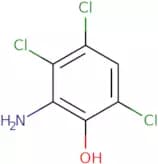
2-Amino-3,4,6-trichlorophenol
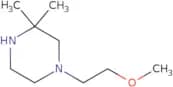
CAS:<p>2-Amino-3,4,6-trichlorophenol is a versatile compound that has various applications in different fields. It is commonly used in chromatographic analysis as a reference standard and as a reagent in organic synthesis. This compound is also found naturally in plants such as monoterpenoids, isoflavones, pyrazoles, alkaloids, and chalcones. Additionally, it has been identified as a component of certain research chemicals.</p>Formula:C6H4Cl3NOPurity:Min. 95%Molecular weight:212.5 g/mol1-(2-Methoxyethyl)-3,3-dimethylpiperazine
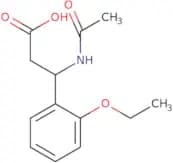
CAS:<p>Versatile small molecule scaffold</p>Formula:C9H20N2OPurity:Min. 95%Molecular weight:172.27 g/mol3-Acetamido-3-(2-ethoxyphenyl)propanoic acid
CAS:<p>Versatile small molecule scaffold</p>Formula:C13H17NO4Purity:Min. 95%Molecular weight:251.28 g/mol2-[2-(Hydroxymethyl)phenyl]ethan-1-ol
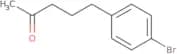
CAS:2-[2-(Hydroxymethyl)phenyl]ethan-1-ol is an antibacterial agent that belongs to the group of aryl alcohols. It is a bactericidal agent that inhibits the growth and reproduction of bacteria by binding to their DNA. 2-[2-(Hydroxymethyl)phenyl]ethan-1-ol has shown effectiveness against gram-positive and gram-negative bacteria, including Staphylococcus aureus, Streptococcus pneumoniae, Escherichia coli, Haemophilus influenzae and Bacillus subtilis. This compound has also been shown to be active against Mycobacterium tuberculosis, but not against Candida albicans or Aspergillus niger.Formula:C9H12O2Purity:Min. 95%Molecular weight:152.19 g/mol5-(4-Bromophenyl)pentan-2-one
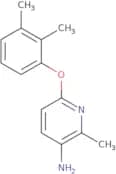
CAS:<p>Versatile small molecule scaffold</p>Formula:C11H13BrOPurity:Min. 95%Molecular weight:241.12 g/mol6-(2,3-Dimethylphenoxy)-2-methylpyridin-3-amine
CAS:<p>Versatile small molecule scaffold</p>Formula:C14H16N2OPurity:Min. 95%Molecular weight:228.3 g/mol2-Chloro-N-{2-[4-(propan-2-yl)phenoxy]ethyl}acetamide
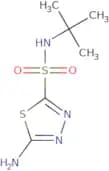
CAS:<p>Versatile small molecule scaffold</p>Formula:C13H18ClNO2Purity:Min. 95%Molecular weight:255.74 g/mol5-Amino-N-tert-butyl-1,3,4-thiadiazole-2-sulfonamide
CAS:<p>Versatile small molecule scaffold</p>Formula:C6H12N4O2S2Purity:Min. 95%Molecular weight:236.3 g/mol1-[(4-Chlorophenyl)methyl]cyclopentane-1-carboxylic acid
CAS:Versatile small molecule scaffoldFormula:C13H15ClO2Purity:Min. 95%Molecular weight:238.71 g/mol2-[(Pyridin-3-yl)amino]acetic acid hydrochloride
CAS:Versatile small molecule scaffoldFormula:C7H9ClN2O2Purity:Min. 95%Molecular weight:188.61 g/mol2-Chloro-N-[3-(3-methylphenoxy)propyl]acetamide
CAS:Versatile small molecule scaffoldFormula:C12H16ClNO2Purity:Min. 95%Molecular weight:241.71 g/mol1-benzoylpyrrolidine-2,5-dione
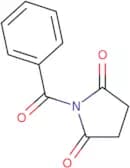
CAS:1-Benzoylpyrrolidine-2,5-dione is a ketone that can be used as an industrial coupling agent. It is used in the synthesis of saccharin and arylketones. This reagent can be used to cleave amides and succinimide esters. 1-Benzoylpyrrolidine-2,5-dione reacts with arylsiloxanes to form functional groups on the silicon atom. In addition, this compound can be used as a substrate for organic synthesis.Formula:C11H9NO3Purity:Min. 95%Molecular weight:203.2 g/mol(1R)-1-Cycloheptylethan-1-ol
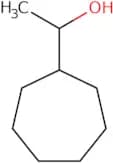
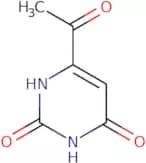
CAS:<p>Versatile small molecule scaffold</p>Formula:C9H18OPurity:Min. 95%Molecular weight:142.24 g/mol6-Acetyl-1,2,3,4-tetrahydropyrimidine-2,4-dione
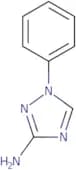
CAS:6-Acetyl-1,2,3,4-tetrahydropyrimidine-2,4-dione is a chemical compound that has two functions. One function is as a dianion that can be used to measure the hydrogen ion concentration in an aqueous solution with the pH range of 1 to 14. The second function is as an acid complex with constant K1 and K2 values. This compound is stable in the presence of acids and bases and can react with alcohols to form esters. 6-Acetyl-1,2,3,4-tetrahydropyrimidine-2,4-dione has been used in the synthesis of orotic acid from orotic acid esters.Formula:C6H6N2O3Purity:Min. 95%Molecular weight:154.12 g/mol1-Phenyl-1H-1,2,4-triazol-3-amine
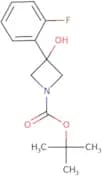
CAS:<p>Versatile small molecule scaffold</p>Formula:C8H8N4Purity:Min. 95%Molecular weight:160.18 g/moltert-Butyl 3-(2-fluorophenyl)-3-hydroxyazetidine-1-carboxylate
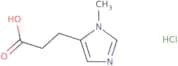
CAS:Versatile small molecule scaffoldFormula:C14H18FNO3Purity:Min. 95%Molecular weight:267.3 g/mol3-(1-Methyl-1H-imidazol-5-yl)propanoic acid hydrochloride
CAS:<p>Versatile small molecule scaffold</p>Formula:C7H11ClN2O2Purity:Min. 95%Molecular weight:190.63 g/mol2-Hydroxy-2-(naphthalen-1-yl)propanoic acid
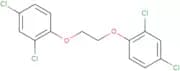
CAS:<p>Versatile small molecule scaffold</p>Formula:C13H12O3Purity:Min. 95%Molecular weight:216.23 g/mol1,2-Bis(2,4-dichlorophenoxy)ethane
CAS:Versatile small molecule scaffoldFormula:C14H10Cl4O2Purity:Min. 95%Molecular weight:352 g/mol2-Methylspiro[indole-3,4'-piperidine]
CAS:<p>Versatile small molecule scaffold</p>Formula:C13H16N2Purity:Min. 95%Molecular weight:200.28 g/mol

![2-[2-(Hydroxymethyl)phenyl]ethan-1-ol](/_next/image/?url=https%3A%2Fstatic.cymitquimica.com%2Fproducts%2F3D%2Fthumb-webp%2FGAA34600.webp&w=3840&q=75)
![2-Chloro-N-{2-[4-(propan-2-yl)phenoxy]ethyl}acetamide](/_next/image/?url=https%3A%2Fstatic.cymitquimica.com%2Fproducts%2F3D%2Fthumb-webp%2FAZB48907.webp&w=3840&q=75)
![1-[(4-Chlorophenyl)methyl]cyclopentane-1-carboxylic acid](/_next/image/?url=https%3A%2Fstatic.cymitquimica.com%2Fproducts%2F3D%2Fthumb-webp%2FAZB48269.webp&w=3840&q=75)
![2-[(Pyridin-3-yl)amino]acetic acid hydrochloride](/_next/image/?url=https%3A%2Fstatic.cymitquimica.com%2Fproducts%2F3D%2Fthumb-webp%2FGAA34528.webp&w=3840&q=75)
![2-Chloro-N-[3-(3-methylphenoxy)propyl]acetamide](/_next/image/?url=https%3A%2Fstatic.cymitquimica.com%2Fproducts%2F3D%2Fthumb-webp%2FAZB48024.webp&w=3840&q=75)
![2-Methylspiro[indole-3,4'-piperidine]](/_next/image/?url=https%3A%2Fstatic.cymitquimica.com%2Fproducts%2F3D%2Fthumb-webp%2FAZB38867.webp&w=3840&q=75)