Building Blocks
This section contains fundamental products for the synthesis of organic and biological compounds. Building blocks are the essential starting materials used to construct complex molecules through various chemical reactions. They play a critical role in drug discovery, material science, and chemical research. At CymitQuimica, we offer a diverse range of high-quality building blocks to support your innovative research and industrial projects, ensuring you have the essential components for successful synthesis.
Subcategories of "Building Blocks"
- Boronic Acids & Boronic Acid Derivatives(5,774 products)
- Chiral Building Blocks(1,237 products)
- Hydrocarbon Building Blocks(6,098 products)
- Organic Building Blocks(60,969 products)
Found 205134 products of "Building Blocks"
Sort by
Purity (%)
0
100
|
0
|
50
|
90
|
95
|
100
1,5-Dimethyl-1H-Pyrrole-3-Carboxylic Acid
CAS:Versatile small molecule scaffold
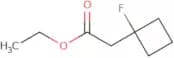
Formula:C7H9NO2Purity:Min. 95%Molecular weight:139.15 g/molethyl 2-(1-fluorocyclobutyl)acetate
CAS:Versatile small molecule scaffoldFormula:C8H13FO2Purity:Min. 95%Molecular weight:160.19 g/mol3,3-difluoro-n-methylcyclobutanamine hcl
CAS:Versatile small molecule scaffoldFormula:C5H10ClF2NPurity:Min. 95%Molecular weight:157.59 g/mol2-{1-[(tert-butoxy)carbonyl]-3-methoxyazetidin-3-yl}acetic acid
CAS:Versatile small molecule scaffoldFormula:C11H19NO5Purity:Min. 95%Molecular weight:245.3 g/mol5-cyclopropyl-1,2,3-thiadiazole-4-carboxylic acid
CAS:Versatile small molecule scaffoldFormula:C6H6N2O2SPurity:Min. 95%Molecular weight:170.19 g/molrac-(3aR,6aR)-2-[(tert-butoxy)carbonyl]-octahydrocyclopenta[c]pyrrole-3a-carboxylic acid, trans
CAS:Versatile small molecule scaffoldFormula:C13H21NO4Purity:Min. 95%Molecular weight:255.3 g/molCis-Tert-Butyl 3A-(Hydroxymethyl)Hexahydrocyclopenta[C]Pyrrole-2(1H)-Carboxylate
CAS:Versatile small molecule scaffold
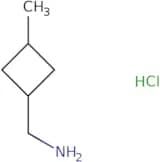
Formula:C26H46N2O6Purity:Min. 95%Molecular weight:482.65 g/molC-(3-Methyl-Cyclobutyl)-Methylamine Hydrochloride
CAS:Versatile small molecule scaffold
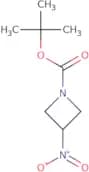
Formula:C6H14ClNPurity:Min. 95%Molecular weight:135.64 g/molTert-Butyl 3-Nitroazetidine-1-Carboxylate
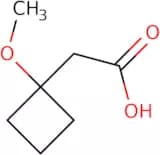
CAS:Versatile small molecule scaffoldFormula:C8H14N2O4Purity:Min. 95%Molecular weight:202.21 g/mol2-(1-Methoxycyclobutyl)acetic acid
CAS:Versatile small molecule scaffold
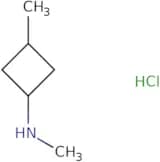
Formula:C7H12O3Purity:Min. 95%Molecular weight:144.17 g/molN,3-Dimethylcyclobutanamine Hydrochloride
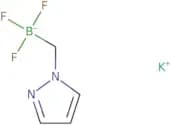
CAS:Versatile small molecule scaffoldFormula:C6H14ClNPurity:Min. 95%Molecular weight:135.64 g/molPotassium trifluoro(1H-pyrazol-1-ylmethyl)boranuide
CAS:Versatile small molecule scaffoldFormula:C4H5BF3KN2Purity:Min. 95%Molecular weight:188 g/molEthyl 4,5,6,7-tetrahydropyrazolo[1,5-a]pyrazine-2-carboxylate, hydrochloride
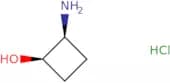
CAS:Versatile small molecule scaffoldFormula:C9H14ClN3O2Purity:Min. 95%Molecular weight:231.68 g/molcis-2-Aminocyclobutan-1-ol hydrochloride
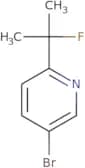
CAS:Versatile small molecule scaffoldFormula:C4H10ClNOPurity:Min. 95%Molecular weight:123.58 g/mol5-Bromo-2-(2-fluoro-2-propyl)pyridine
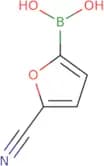
CAS:Versatile small molecule scaffoldFormula:C8H9BrFNPurity:Min. 95%Molecular weight:218.07 g/mol(5-Cyanofuran-2-yl)boronic acid
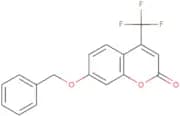
CAS:Versatile small molecule scaffoldFormula:C5H4BNO3Purity:Min. 95%Molecular weight:136.9 g/mol7-Benzyloxy-4-(trifluoromethyl)coumarin
CAS:7-Benzyloxy-4-(trifluoromethyl)coumarin is a chemical inhibitor of cytochrome P450 enzymes. It inhibits the catalytic activity of cytochrome P450 enzymes, which are important in drug metabolism and detoxification. This compound has been shown to be a potent inhibitor of CYP3A4 and may have potential as an anti-inflammatory agent. 7-Benzyloxy-4-(trifluoromethyl)coumarin binds reversibly to the heme group of cytochrome P450 enzymes and blocks access by oxygen, preventing the formation of reactive oxygen species that can cause cell damage. 7-Benzyloxy-4-(trifluoromethyl)coumarin has been shown to inhibit the activities of recombinant CYP3A4 enzyme from model organisms such as Saccharomyces cerevisiae, Escherichia coli, and Aspergillus nidulFormula:C17H11F3O3Purity:Min. 95%Molecular weight:320.26 g/mol5H,6H,7H-Cyclopenta[b]pyridine-6-carboxylic acid hydrochloride
CAS:Versatile small molecule scaffoldFormula:C9H10ClNO2Purity:Min. 95%Molecular weight:199.63 g/molMethyl 6-(chloromethyl)pyridine-2-carboxylate
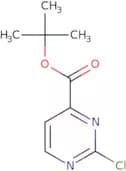
CAS:Methyl 6-(chloromethyl)pyridine-2-carboxylate is a synthetic ligand that binds to the human serum albumin (HSA) and has been shown to be stable in vitro. The compound has been shown to have high resistance in vivo, which may be due to its metabolism. Methyl 6-(chloromethyl)pyridine-2-carboxylate was found to bind to HSA with a Kd value of 0.5 μM, which is much higher than the binding affinity of other ligands such as methyl 5-(chloromethyl) pyridine-2-carboxylate (Kd=0.035 μM), methyl 2-(chloromethyl)pyrimidine-4-carboxylate (Kd=0.03 μM), and methyl 3-(chloromethyl)piperidine-4-carboxylate (Kd=0.055Formula:C8H8ClNO2Purity:Min. 95%Molecular weight:185.61 g/moltert-Butyl 2-chloropyrimidine-4-carboxylate
CAS:Versatile small molecule scaffoldFormula:C9H11ClN2O2Purity:Min. 95%Molecular weight:214.65 g/mol



![2-{1-[(tert-butoxy)carbonyl]-3-methoxyazetidin-3-yl}acetic acid](/_next/image/?url=https%3A%2Fstatic.cymitquimica.com%2Fproducts%2F3D%2Fthumb-webp%2FVHC95115.webp&w=3840&q=75)

![rac-(3aR,6aR)-2-[(tert-butoxy)carbonyl]-octahydrocyclopenta[c]pyrrole-3a-carboxylic acid, trans](/_next/image/?url=https%3A%2Fstatic.cymitquimica.com%2Fproducts%2F3D%2Fthumb-webp%2FVHC95133.webp&w=3840&q=75)
![Cis-Tert-Butyl 3A-(Hydroxymethyl)Hexahydrocyclopenta[C]Pyrrole-2(1H)-Carboxylate](/_next/image/?url=https%3A%2Fstatic.cymitquimica.com%2Fproducts%2F3D%2Fthumb-webp%2FVHC95144.webp&w=3840&q=75)
![Ethyl 4,5,6,7-tetrahydropyrazolo[1,5-a]pyrazine-2-carboxylate, hydrochloride](/_next/image/?url=https%3A%2Fstatic.cymitquimica.com%2Fproducts%2F3D%2Fthumb-webp%2FVHD01534.webp&w=3840&q=75)
![5H,6H,7H-Cyclopenta[b]pyridine-6-carboxylic acid hydrochloride](/_next/image/?url=https%3A%2Fstatic.cymitquimica.com%2Fproducts%2F3D%2Fthumb-webp%2FVIA00182.webp&w=3840&q=75)