Building Blocks
This section contains fundamental products for the synthesis of organic and biological compounds. Building blocks are the essential starting materials used to construct complex molecules through various chemical reactions. They play a critical role in drug discovery, material science, and chemical research. At CymitQuimica, we offer a diverse range of high-quality building blocks to support your innovative research and industrial projects, ensuring you have the essential components for successful synthesis.
Subcategories of "Building Blocks"
- Boronic Acids & Boronic Acid Derivatives(5,780 products)
- Chiral Building Blocks(1,241 products)
- Hydrocarbon Building Blocks(6,100 products)
- Organic Building Blocks(61,023 products)
Found 205289 products of "Building Blocks"
Sort by
Purity (%)
0
100
|
0
|
50
|
90
|
95
|
100
AG 1295
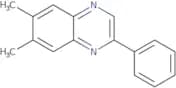
CAS:AG 1295 is a growth factor that binds to the tyrosine kinase receptor. It is also a potent inhibitor of the receptor activity of PDGF-BB and other tyrosine kinases. AG 1295 was originally developed as an eluting agent for protein purification, but has been shown to have therapeutic potential for vascular injury repair and angiogenesis. The drug can be used in vitro to inhibit the phosphorylation of PDGF-BB by blocking its binding to the PDGF-BB receptor.Formula:C16H14N2Purity:Min. 95%Molecular weight:234.3 g/molUndec-1-en-6-one
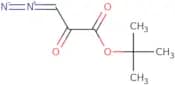
CAS:Undec-1-en-6-one is a product of the reaction between pentenyl and hexanal. It can be synthesized by the carbonylation of calvine. This compound has been used to produce other products, such as alkaloids, which are important for medicinal and pharmaceutical applications.Formula:C11H20OPurity:Min. 95%Molecular weight:168.3 g/moltert-Butyl 3-diazo-2-oxopropanoate
CAS:Versatile small molecule scaffoldFormula:C7H10N2O3Purity:Min. 95%Molecular weight:170.17 g/mol2-(([(tert-Butoxy)carbonyl]amino)methyl)-1,3-thiazole-4-carboxylic acid
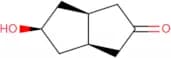
CAS:Versatile small molecule scaffoldFormula:C10H14N2O4SPurity:Min. 95%Molecular weight:258.3 g/molrac-(3aR,5R,6aS)-5-Hydroxy-octahydropentalen-2-one
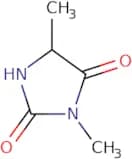
CAS:Versatile small molecule scaffoldFormula:C8H12O2Purity:Min. 95%Molecular weight:140.2 g/mol(5R)-3,5-Dimethylimidazolidine-2,4-dione
CAS:Versatile small molecule scaffoldFormula:C5H8N2O2Purity:Min. 95%Molecular weight:128.1 g/mol(5S)-3,5-Dimethylimidazolidine-2,4-dione
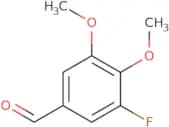
CAS:Versatile small molecule scaffoldFormula:C5H8N2O2Purity:Min. 95%Molecular weight:128.1 g/mol3-Fluoro-4,5-Dimethoxybenzaldehyde
CAS:Versatile small molecule scaffold
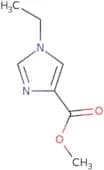
Formula:C9H9FO3Purity:Min. 95%Molecular weight:184.16 g/molMethyl 1-ethyl-1H-imidazole-4-carboxylate
CAS:Versatile small molecule scaffold
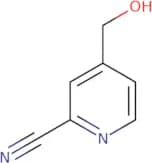
Formula:C7H10N2O2Purity:Min. 95%Molecular weight:154.17 g/mol4-(Hydroxymethyl)picolinonitrile
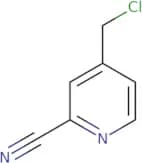
CAS:Versatile small molecule scaffoldFormula:C7H6N2OPurity:Min. 95%Molecular weight:134.14 g/mol4-(chloromethyl)pyridine-2-carbonitrile
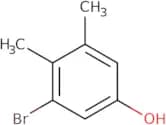
CAS:Versatile small molecule scaffoldFormula:C7H5N2ClPurity:Min. 95%Molecular weight:152.58 g/mol3-Bromo-4,5-dimethylphenol
CAS:3-Bromo-4,5-dimethylphenol is a bromination product of the structurally related compound 4,5-dimethylphenol. The electrophilic character of 3-bromo-4,5-dimethylphenol is due to the bromine atom. It can be used as an intermediate for the synthesis of other chemicals. Bromination of 4,5-dimethylphenol takes place in two steps: first a nucleophilic attack by bromide ion on one of the carbon atoms in 4,5-dimethylphenol and then an electrophilic substitution reaction between the bromine atom and one of the hydroxyl groups. The mechanisms for these reactions are shown below:Formula:C8H9BrOPurity:Min. 95%Molecular weight:201.06 g/mol2-(4-Chlorophenyl)-2-(methylamino)acetamide
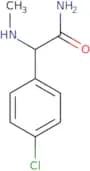
CAS:Versatile small molecule scaffoldFormula:C9H11ClN2OPurity:Min. 95%Molecular weight:198.65 g/molHexane-1,5-diamine dihydrochloride
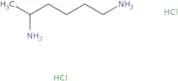
CAS:Versatile small molecule scaffoldFormula:C6H18Cl2N2Purity:Min. 95%Molecular weight:189.12 g/mol5-Hydroxy-2-methyl-1H-indole-3-carboxylic acid
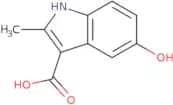
CAS:Versatile small molecule scaffoldFormula:C10H9NO3Purity:Min. 95%Molecular weight:191.18 g/molPyrrolidin-2-yl-acetic acid hydrochloride
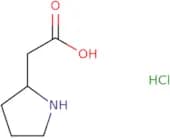
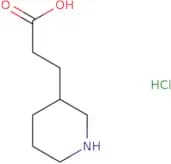
CAS:Versatile small molecule scaffoldFormula:C6H11NO2·HClPurity:Min. 95%Molecular weight:165.62 g/mol3-(3-Piperidine)propionic acid hcl
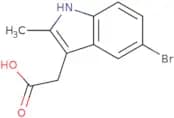
CAS:Versatile small molecule scaffoldFormula:C8H16ClNO2Purity:Min. 95%Molecular weight:193.67 g/mol2-(5-bromo-2-methyl-1H-indol-3-yl)acetic acid
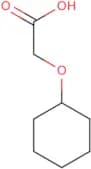
CAS:Versatile small molecule scaffoldFormula:C11H10BrNO2Purity:Min. 95%Molecular weight:268.1 g/mol2-(Cyclohexyloxy)acetic acid
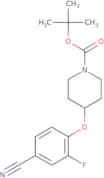
CAS:2-(Cyclohexyloxy)acetic acid is a synthetic organic compound that has the chemical formula CH2OCH2COCH2OH. It is an acid catalyst with a pK of 1.6, and it can be used to catalyze the reaction between sodium carbonate and cyclohexanol. 2-(Cyclohexyloxy)acetic acid is also used as a solid catalyst in the conversion of ethyl diazoacetate to phenyl acetic acid. It has been shown to be effective for wastewater treatment, as well as for removal of nitrogen from wastewater. 2-(Cyclohexyloxy)acetic acid has been found to be toxic to aquatic organisms at relatively low concentrations, so care should be taken if this substance is released into the environment.Formula:C8H14O3Purity:Min. 95%Molecular weight:158.2 g/moltert-Butyl 4-(4-cyano-2-fluorophenoxy)piperidine-1-carboxylate
CAS:Versatile small molecule scaffold
Formula:C17H21FN2O3Purity:Min. 95%Molecular weight:320.36 g/mol


![2-(([(tert-Butoxy)carbonyl]amino)methyl)-1,3-thiazole-4-carboxylic acid](/_next/image/?url=https%3A%2Fstatic.cymitquimica.com%2Fproducts%2F3D%2Fthumb-webp%2FWCA90480.webp&w=3840&q=75)