Building Blocks
This section contains fundamental products for the synthesis of organic and biological compounds. Building blocks are the essential starting materials used to construct complex molecules through various chemical reactions. They play a critical role in drug discovery, material science, and chemical research. At CymitQuimica, we offer a diverse range of high-quality building blocks to support your innovative research and industrial projects, ensuring you have the essential components for successful synthesis.
Subcategories of "Building Blocks"
- Boronic Acids & Boronic Acid Derivatives(5,780 products)
- Chiral Building Blocks(1,241 products)
- Hydrocarbon Building Blocks(6,100 products)
- Organic Building Blocks(61,024 products)
Found 205297 products of "Building Blocks"
Sort by
Purity (%)
0
100
|
0
|
50
|
90
|
95
|
100
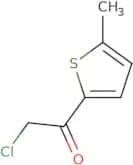
2-Chloro-1-(5-methyl-thiophen-2-yl)-ethanone
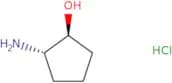
CAS:Versatile small molecule scaffoldFormula:C7H7ClOSPurity:Min. 95%Molecular weight:174.65 g/moltrans-(1R,2R)-2-Aminocyclopentanol hydrochloride
CAS:Versatile small molecule scaffoldFormula:C5H12ClNOPurity:Min. 95%Molecular weight:137.61 g/mol2-Aminothiazolo[5,4-b]pyridine
CAS:2-Aminothiazolo[5,4-b]pyridine is an isothiocyanate that has potent antiproliferative and anticancer effects. It causes the inhibition of tumor growth by inhibiting the activity of enzymes such as DNA polymerase or topoisomerase II. 2-Aminothiazolo[5,4-b]pyridine also inhibits the proliferation of cancer cells and induces apoptosis. The anticancer effects are due to its ability to inhibit tumor cell growth and induce apoptosis in cancer cells.Formula:C6H5N3SPurity:Min. 95%Molecular weight:151.19 g/mol5-chloro-[1,3]thiazolo[5,4-b]pyridin-2-amine
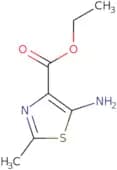
CAS:Versatile small molecule scaffoldFormula:C6H4ClN3SPurity:Min. 95%Molecular weight:185.6 g/molEthyl 5-amino-2-methyl-1,3-thiazole-4-carboxylate
CAS:Versatile small molecule scaffold
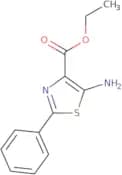
Formula:C7H10N2O2SPurity:Min. 95%Molecular weight:186.23 g/molEthyl 5-amino-2-phenylthiazole-4-carboxylate
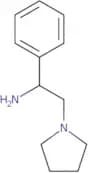
CAS:Versatile small molecule scaffoldFormula:C12H12N2O2SPurity:Min. 95%Molecular weight:248.3 g/mol1-Phenyl-2-(pyrrolidin-1-yl)ethan-1-amine
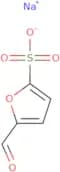
CAS:Versatile small molecule scaffoldFormula:C12H18N2Purity:Min. 95%Molecular weight:190.28 g/molSodium 5-Formyl-2-furansulfonate
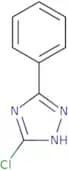
CAS:Sodium 5-Formyl-2-furansulfonate is a water soluble amine that is used as an additive in the production of pharmaceuticals, agricultural chemicals, and coatings. It is an anticoagulant that has been shown to prevent blood clotting by inhibiting platelet activation. Sodium 5-Formyl-2-furansulfonate can be used as a coating on medical devices and implants to prevent clotting. One of its most promising applications is in the development of new drug delivery systems for drugs with low solubility or poor bioavailability. This chemical may also play a role in the prevention of atherosclerosis by modifying fibrinogen and dopamine, which are important for regulating blood pressure.Formula:C5H3NaO5SPurity:Min. 95%Molecular weight:198.12 g/mol3-Chloro-5-phenyl-4H-1,2,4-triazole
CAS:Versatile small molecule scaffoldFormula:C8H6ClN3Purity:Min. 95%Molecular weight:179.6 g/mol6-(2,6-Dioxopiperidin-3-yl)-5H-pyrrolo[3,4-b]pyridine-5,7(6H)-dione
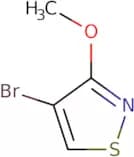
CAS:Versatile small molecule scaffoldFormula:C12H9N3O4Purity:Min. 95%Molecular weight:259.22 g/mol4-Bromo-3-methoxy-1,2-thiazole
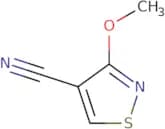
CAS:4-Bromo-3-methoxy-1,2-thiazole is a carboxylic acid. It is a cyanating agent and can be used to form carboxamides. The dealkylation of 4-bromo-3-methoxy-1,2-thiazole gives methyl 4-(4′-bromophenyl)butanoate. Halogenation of the carbonyl group leads to the formation of 4-(4′-chlorophenyl)butanoic acid. 4-(4′-Bromophenyl)butanoic acid can be converted into an isothiazole by reacting with potassium hydroxide in methanol.Formula:C4H4BrNOSPurity:Min. 95%Molecular weight:194.05 g/mol3-Methoxy-1,2-thiazole-4-carbonitrile
CAS:Versatile small molecule scaffoldFormula:C5H4N2OSPurity:Min. 95%Molecular weight:140.17 g/mol4-[(1,5-Dimethyl-3-oxo-2-phenyl-2,3-dihydro-1H-pyrazol-4-yl)sulfamoyl]benzoic acid
CAS:Versatile small molecule scaffoldFormula:C18H17N3O5SPurity:Min. 95%Molecular weight:387.4 g/molEthyl bicyclo[2.2.2]octane-1-carboxylate
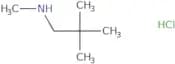
CAS:Ethyl bicyclo[2.2.2]octane-1-carboxylate is a chelate ring that has been shown to enhance the absorption of drugs into the skin and other tissues. It is a cationic surfactant with the ability to form hydrogen bonds in intermolecular and intramolecular configurations. Ethyl bicyclo[2.2.2]octane-1-carboxylate has been used as a catalyst in the synthesis of palladium complexes, as well as an absorption enhancer for hydrophobic compounds such as pesticides, herbicides, and fungicides. The coordination geometry of ethyl bicyclo[2.2.2]octane-1-carboxylate allows it to form hydrogen bonds with nitrogen atoms in proteins and other molecules, which enhances its absorption properties when applied topically on human skin or other tissues.Formula:C10H16O2Purity:Min. 95%Molecular weight:168.23 g/molN,2,2-Trimethyl-1-propanamine hydrochloride
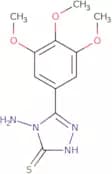
CAS:Versatile small molecule scaffoldFormula:C6H16ClNPurity:Min. 95%Molecular weight:137.65 g/mol4-Amino-5-(3,4,5-trimethoxyphenyl)-4H-1,2,4-triazole-3-thiol
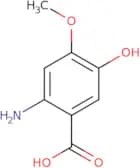
CAS:Versatile small molecule scaffoldFormula:C11H14N4O3SPurity:Min. 95%Molecular weight:282.32 g/mol2-Amino-5-hydroxy-4-methoxybenzoic acid
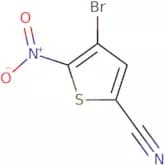
CAS:Versatile small molecule scaffoldFormula:C8H9NO4Purity:Min. 95%Molecular weight:183.16 g/mol4-Bromo-5-nitrothiophene-2-carbonitrile
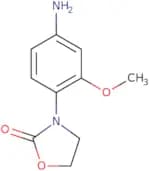
CAS:Versatile small molecule scaffoldFormula:C5HBrN2O2SPurity:Min. 95%Molecular weight:233.04 g/mol3-(4-Amino-2-methoxyphenyl)-1,3-oxazolidin-2-one
CAS:Versatile small molecule scaffold
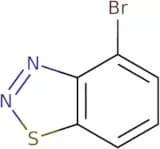
Formula:C10H12N2O3Purity:Min. 95%Molecular weight:208.21 g/mol4-Bromo-1,2,3-benzothiadiazole
CAS:4-Bromo-1,2,3-benzothiadiazole is an electron donor and ligand that is used as a reagent in organic synthesis. It reacts with an electron acceptor to form a covalent bond. 4-Bromo-1,2,3-benzothiadiazole has been detected by mass spectroscopy and can be used as a molecular weight marker. It is insoluble in water at room temperature and has low solubility in most organic solvents. 4-Bromo-1,2,3-benzothiadiazole is the monomer for the polymerization of poly(4-bromophenylsulfonate) (PBPPS), which is used to produce polymers with different properties. 4-Bromo-1,2,3-benzothiadiazole also reacts with benzene to form 2-(4'-bromFormula:C6H3BrN2SPurity:Min. 95%Molecular weight:215.07 g/mol

![2-Aminothiazolo[5,4-b]pyridine](/_next/image/?url=https%3A%2Fstatic.cymitquimica.com%2Fproducts%2F3D%2Fthumb-webp%2FGBA78470.webp&w=3840&q=75)
![5-chloro-[1,3]thiazolo[5,4-b]pyridin-2-amine](/_next/image/?url=https%3A%2Fstatic.cymitquimica.com%2Fproducts%2F3D%2Fthumb-webp%2FGBA78471.webp&w=3840&q=75)
![6-(2,6-Dioxopiperidin-3-yl)-5H-pyrrolo[3,4-b]pyridine-5,7(6H)-dione](/_next/image/?url=https%3A%2Fstatic.cymitquimica.com%2Fproducts%2F3D%2Fthumb-webp%2FGBA80466.webp&w=3840&q=75)
![4-[(1,5-Dimethyl-3-oxo-2-phenyl-2,3-dihydro-1H-pyrazol-4-yl)sulfamoyl]benzoic acid](/_next/image/?url=https%3A%2Fstatic.cymitquimica.com%2Fproducts%2F3D%2Fthumb-webp%2FGBA81670.webp&w=3840&q=75)
![Ethyl bicyclo[2.2.2]octane-1-carboxylate](/_next/image/?url=https%3A%2Fstatic.cymitquimica.com%2Fproducts%2F3D%2Fthumb-webp%2FGBA81812.webp&w=3840&q=75)