


Building Blocks
This section contains fundamental products for the synthesis of organic and biological compounds. Building blocks are the essential starting materials used to construct complex molecules through various chemical reactions. They play a critical role in drug discovery, material science, and chemical research. At CymitQuimica, we offer a diverse range of high-quality building blocks to support your innovative research and industrial projects, ensuring you have the essential components for successful synthesis.
Subcategories of "Building Blocks"
- Boronic Acids & Boronic Acid Derivatives(5,778 products)
- Chiral Building Blocks(1,242 products)
- Hydrocarbon Building Blocks(6,098 products)
- Organic Building Blocks(61,063 products)
Found 197855 products of "Building Blocks"
Sort by
Purity (%)
0
100
|
0
|
50
|
90
|
95
|
100
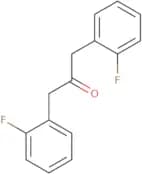
1,3-Bis(2-fluorophenyl)propan-2-one
CAS:<p>1,3-Bis(2-fluorophenyl)propan-2-one is a cytotoxic agent that is effective against murine melanoma. The compound can be prepared by reacting phenylacetone with 2-bromopropene in the presence of a base. The reaction proceeds with high yield and produces 1,3-bis(2-fluorophenyl)propan-2-one as an intermediate. This synthetic intermediate can then be used to prepare prasugrel and tribromide. Prasugrel is a platelet inhibitor that inhibits the activity of GpIIb/IIIa receptors and prevents blood from clotting. Tribromide is an anticancer drug that targets microtubules and prevents cells from dividing.</p>Formula:C15H12F2OPurity:Min. 95%Molecular weight:246.25 g/molMethyl 3-fluoroadamantane-1-carboxylate
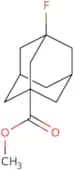
CAS:<p>Methyl 3-fluoroadamantane-1-carboxylate is a chiral compound. The synthesis of this molecule involves the electrochemical method in which the fluorine atom is added to the phenacyl group, which is attached to a phenyl group. The fluorine atom can be seen in the skeleton and on both the left and right side of the molecule. This molecule belongs to an enantiomer of methyl adamantane-1-carboxylate, which has been studied for its ability to inhibit memantine binding and to produce a variety of functional groups. Methyl 3-fluoroadamantane-1-carboxylate has not been studied extensively and is not commercially available.</p>Formula:C12H17FO2Purity:Min. 95%Molecular weight:212.26 g/mol(2S)-3-Hydroxy-2-(trifluoroacetamido)propanoic acid
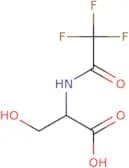
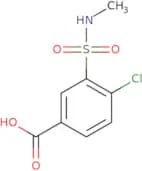
CAS:<p>(2S)-3-Hydroxy-2-(trifluoroacetamido)propanoic acid is a condensation product of l-serine and trichloroacetic acid. It is isolated as a white solid after hydrolysis. (2S)-3-Hydroxy-2-(trifluoroacetamido)propanoic acid may be used in the synthesis of amino acids, such as l-threonine, l-tyrosine, and l-alanine.</p>Formula:C5H6F3NO4Purity:Min. 95%Molecular weight:201.1 g/mol4-Chloro-3-(methylsulfamoyl)benzoic acid
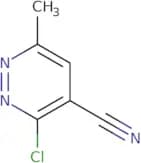
CAS:<p>Versatile small molecule scaffold</p>Formula:C8H8ClNO4SPurity:Min. 95%Molecular weight:249.67 g/mol3-Chloro-6-methylpyridazine-4-carbonitrile
CAS:Versatile small molecule scaffoldFormula:C6H4ClN3Purity:Min. 95%Molecular weight:153.57 g/mol3,6-Dimethylpyrazolo[1,5-a]pyrimidin-7-amine
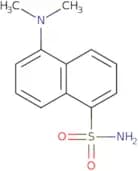
CAS:<p>Versatile small molecule scaffold</p>Formula:C8H10N4Purity:Min. 95%Molecular weight:162.19 g/mol5-(Dimethylamino)-1-naphthalenesulfonamide
CAS:<p>5-(Dimethylamino)-1-naphthalenesulfonamide (DNS) is a fluorescence probe that can be used to measure the concentration of nonsteroidal anti-inflammatory drugs. It is a competitive inhibitor of the drug transporter protein, and it binds to the drug transporter protein in the cell membrane, which alters its transport activity. This probe has been shown to have a phase transition temperature of about 200 °C, which makes it suitable for use in biological samples that are heated at this temperature. DNS inhibits bacterial growth by binding to DNA-dependent RNA polymerase, thereby preventing transcription and replication. The high frequency of human activity has been shown using a patch-clamp technique on human erythrocytes. This active form is metabolized through a number of metabolic transformations, including hydrolysis by esterases or glucuronidases, oxidation by cytochrome P450 enzymes, reduction by glutathione reductase, or conjugation with gluc</p>Formula:C12H14N2O2SPurity:Min. 95%Molecular weight:250.32 g/mol2-(Methylthio)pyrimidine-4,5,6-triamine
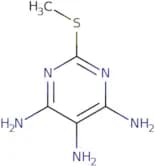
CAS:<p>2-(Methylthio)pyrimidine-4,5,6-triamine is a centrosymmetric molecule with a molecular weight of 184.07 g/mol. It forms hydrogen bonds with water and interacts with other molecules. 2-(Methylthio)pyrimidine-4,5,6-triamine has been shown to form stacking interactions in crystal structures due to the presence of hydrogen bonds. Hydrogen bonds are formed between molecules when the partial positive charge on one molecule is attracted to the partial negative charge on another molecule. The attraction between these molecules can be facilitated by the presence of water molecules and is most prevalent in substances that have a high degree of hydrogen bonding potential, such as sugars and proteins.<br>2-(Methylthio)pyrimidine-4,5,6-triamine has also been shown to form hydrogen bonds with organic compounds such as methanol and ethanol.</p>Formula:C5H9N5SPurity:Min. 95%Molecular weight:171.22 g/mol4-(2-Aminoethyl)benzene-1,3-diol hydrochloride
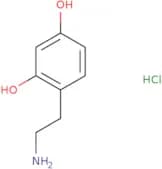
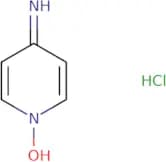
CAS:Versatile small molecule scaffoldFormula:C8H12ClNO2Purity:Min. 95%Molecular weight:189.64 g/mol4-Aminopyridin-1-ium-1-olate hydrochloride
CAS:Versatile small molecule scaffoldFormula:C5H7ClN2OPurity:Min. 95%Molecular weight:146.57 g/mol1-Bromo-2,5-dichlorobenzene
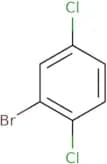
CAS:<p>1-Bromo-2,5-dichlorobenzene is an anticancer drug that belongs to the class of brominated aromatic compounds. The vibrational spectra of 1-bromo-2,5-dichlorobenzene have been characterized by FTIR. The anticancer activity of 1-bromo-2,5-dichlorobenzene has been shown in in vitro and in vivo studies. It is orally active and has a low toxicity profile. The major metabolite of 1-Bromo-2,5-dichlorobenzene is 2,6 dichloropyridine, which can be detected by mass spectrometry. The metabolites are thought to be formed by dehydration or Friedel–Crafts acylation reactions.</p>Formula:C6H3BrCl2Purity:Min. 95%Molecular weight:225.89 g/mol4-Methyl-1,3-thiazolidine-2-thione
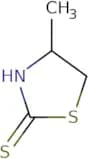
CAS:<p>4-Methyl-1,3-thiazolidine-2-thione is a selective disulfide reductase with metal halide and cycloaddition activity. It catalyzes the reaction of alkali metal with carbon disulfide to form aziridine. The reaction proceeds through two steps: in the first step, alkali metal is reduced by carbon disulfide to form an alkyl radical; in the second step, the alkyl radical reacts with carbon disulfide to form aziridine. 4-Methyl-1,3-thiazolidine-2-thione has been shown to be an efficient catalyst for this reaction and can also catalyze cycloadditions between urethane and aziridine.</p>Formula:C4H7NS2Purity:Min. 95%Molecular weight:133.2 g/mol1-Bromo-3-methylbutan-2-ol
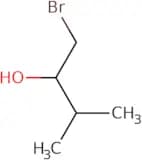
CAS:<p>Versatile small molecule scaffold</p>Formula:C5H11BrOPurity:Min. 95%Molecular weight:167.04 g/mol3-Aminorhodanine
CAS:<p>3-Aminorhodanine is an inhibitor molecule that can be used to inhibit enzymes and other molecules. It has been shown to have anti-inflammatory activity by inhibiting the enzyme cyclooxygenase (COX). 3-Aminorhodanine has been used in the development of microcapsules for drug delivery, as well as analytical chemistry methods such as particle size analysis and electrochemical impedance spectroscopy.</p>Formula:C3H4N2OS2Purity:Min. 95%Molecular weight:148.21 g/molN-Cyclohexyl-1,3-thiazol-2-amine
CAS:<p>Versatile small molecule scaffold</p>Formula:C9H14N2SPurity:Min. 95%Molecular weight:182.29 g/molN-tert-Butyl-1,3-thiazol-2-amine
CAS:<p>Versatile small molecule scaffold</p>Formula:C7H12N2SPurity:Min. 95%Molecular weight:156.25 g/mol1-[2-(Methylsulfanyl)phenyl]ethan-1-one
CAS:<p>Versatile small molecule scaffold</p>Formula:C9H10OSPurity:Min. 95%Molecular weight:166.24 g/mol1-[3-(Methylsulfanyl)phenyl]ethan-1-one
CAS:<p>Versatile small molecule scaffold</p>Formula:C9H10OSPurity:Min. 95%Molecular weight:166.24 g/molEthyl 3-chloro-6-methylpyridazine-4-carboxylate
CAS:<p>Versatile small molecule scaffold</p>Formula:C8H9ClN2O2Purity:Min. 95%Molecular weight:200.62 g/mol6-Methoxy-1,2,3,4-tetrahydro-naphthalen-2-ol
CAS:Versatile small molecule scaffoldFormula:C11H14O2Purity:Min. 95%Molecular weight:178.23 g/mol

![3,6-Dimethylpyrazolo[1,5-a]pyrimidin-7-amine](/_next/image/?url=https%3A%2Fstatic.cymitquimica.com%2Fproducts%2F3D%2Fthumb-webp%2FBAA43100.webp&w=3840&q=75)


![1-[2-(Methylsulfanyl)phenyl]ethan-1-one](/_next/image/?url=https%3A%2Fstatic.cymitquimica.com%2Fproducts%2F3D%2Fthumb-webp%2FBAA44197.webp&w=3840&q=75)
![1-[3-(Methylsulfanyl)phenyl]ethan-1-one](/_next/image/?url=https%3A%2Fstatic.cymitquimica.com%2Fproducts%2F3D%2Fthumb-webp%2FBAA44199.webp&w=3840&q=75)

