


Building Blocks
This section contains fundamental products for the synthesis of organic and biological compounds. Building blocks are the essential starting materials used to construct complex molecules through various chemical reactions. They play a critical role in drug discovery, material science, and chemical research. At CymitQuimica, we offer a diverse range of high-quality building blocks to support your innovative research and industrial projects, ensuring you have the essential components for successful synthesis.
Subcategories of "Building Blocks"
- Boronic Acids & Boronic Acid Derivatives(5,778 products)
- Chiral Building Blocks(1,242 products)
- Hydrocarbon Building Blocks(6,098 products)
- Organic Building Blocks(61,092 products)
Found 199296 products of "Building Blocks"
Sort by
Purity (%)
0
100
|
0
|
50
|
90
|
95
|
100
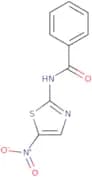
N-(5-Nitro-thiazol-2-yl)-benzamide
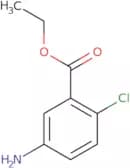
CAS:<p>N-(5-Nitro-thiazol-2-yl)-benzamide is a noncompetitive inhibitor of the enzyme succinate dehydrogenase and is used as an molluscicide. It binds to the active site of the enzyme, which is located in the mitochondrial membrane, and prevents electron transfer from succinate to ubiquinone. This leads to a decrease in production of ATP, which is needed for cell growth and division. N-(5-Nitro-thiazol-2-yl)-benzamide has been shown to inhibit inflammation by inhibiting prostaglandin synthesis in mice. The drug also inhibits neutrophil infiltration into inflamed areas, which may be due to its effect on 5HT2A receptors.</p>Formula:C10H7N3O3SPurity:Min. 95%Molecular weight:249.25 g/molEthyl 5-amino-2-chlorobenzoate
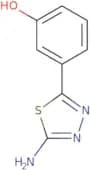
CAS:<p>Versatile small molecule scaffold</p>Formula:C9H10ClNO2Purity:Min. 95%Molecular weight:199.63 g/mol3-(5-Amino-1,3,4-thiadiazol-2-yl)phenol
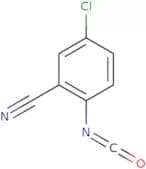
CAS:<p>Versatile small molecule scaffold</p>Formula:C8H7N3OSPurity:Min. 95%Molecular weight:193.23 g/mol5-Chloro-2-isocyanatobenzonitrile
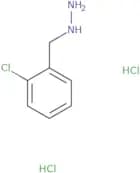
CAS:<p>Versatile small molecule scaffold</p>Formula:C8H3ClN2OPurity:Min. 95%Molecular weight:178.58 g/mol(2-chlorobenzyl)hydrazine 2hcl
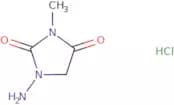
CAS:<p>Versatile small molecule scaffold</p>Formula:C7H11Cl3N2Purity:Min. 95%Molecular weight:229.53 g/mol1-Amino-3-methylimidazolidine-2,4-dione hydrochloride
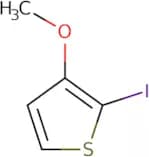
CAS:<p>Versatile small molecule scaffold</p>Formula:C4H8ClN3O2Purity:Min. 95%Molecular weight:165.58 g/mol2-Iodo-3-methoxythiophene
CAS:<p>Versatile small molecule scaffold</p>Formula:C5H5IOSPurity:Min. 95%Molecular weight:240.06 g/mol2-Methyl-1-[4-(trifluoromethyl)phenyl]propan-1-one
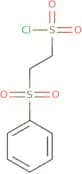
CAS:<p>Versatile small molecule scaffold</p>Formula:C11H11F3OPurity:Min. 95%Molecular weight:216.2 g/mol2-(Benzenesulfonyl)ethane-1-sulfonyl chloride
CAS:<p>Versatile small molecule scaffold</p>Formula:C8H9ClO4S2Purity:Min. 95%Molecular weight:268.7 g/mol4-Cyanophenyl chloroformate
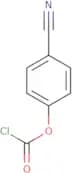
CAS:<p>4-Cyanophenyl chloroformate is a macrocyclic compound that has been shown to have a potential use as an almqvist reagent. Almqvist reagents are nucleophilic compounds that can be used in organic synthesis as carbonylating agents, which are used to form esters and amides. 4-Cyanophenyl chloroformate is a chiral compound with the ability to form macrocycles, which are biomimetic structures. The conformational stepwise reaction of the macrocycle formation enables it to mimic natural processes.</p>Formula:C8H4ClNO2Purity:Min. 95%Molecular weight:181.57 g/molethyl 2-(2-aminophenyl)acetate
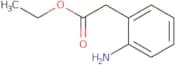
CAS:<p>Ethyl 2-(2-aminophenyl)acetate is a cytotoxic agent that binds to DNA and inhibits the synthesis of RNA and protein. It has been shown to inhibit the growth of murine leukemia cells in culture at concentrations between 0.3 and 3 mM, which are dependent on the concentration of benzyl substituents. Ethyl 2-(2-aminophenyl)acetate also exhibits dose-dependent cytotoxic activity against murine leukemia cells. The cytotoxic effects of this compound have been studied in vivo and in vitro using murine leukemia cells (WEHI-3).</p>Formula:C10H13NO2Purity:Min. 95%Molecular weight:179.2 g/mol4-Hydroxy-4-(2-oxo-1,2,3,4-tetrahydroquinolin-6-yl)butanoic acid
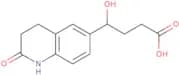
CAS:<p>Versatile small molecule scaffold</p>Formula:C13H15NO4Purity:Min. 95%Molecular weight:249.26 g/molMethyl 4-formylpyridine-2-carboxylate
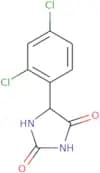
CAS:<p>Versatile small molecule scaffold</p>Formula:C8H7NO3Purity:Min. 95%Molecular weight:165.15 g/mol5-(2,4-Dichlorophenyl)imidazolidine-2,4-dione
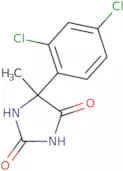
CAS:<p>Versatile small molecule scaffold</p>Formula:C9H6Cl2N2O2Purity:Min. 95%Molecular weight:245.06 g/mol5-(2,4-Dichlorophenyl)-5-methylimidazolidine-2,4-dione
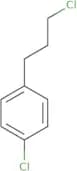
CAS:<p>Versatile small molecule scaffold</p>Formula:C10H8Cl2N2O2Purity:Min. 95%Molecular weight:259.09 g/mol1-Chloro-3-(4-chlorophenyl)propane
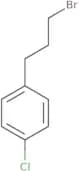
CAS:<p>Versatile small molecule scaffold</p>Formula:C9H10Cl2Purity:Min. 95%Molecular weight:189.08 g/mol1-(3-Bromopropyl)-4-chlorobenzene
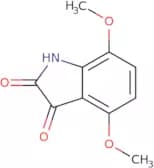
CAS:<p>1-(3-Bromopropyl)-4-chlorobenzene is an expedited source of chlorine that is used in the oxidation of aromatic compounds. The chlorination of 1-(3-bromopropyl)-4-chlorobenzene occurs with a yield of about 98% and has high selectivity for the chlorination product. In a photoredox process, this compound can be used as an oxidant to produce an intermediate that can then be used in the oxidative chlorination reactions. This compound has been shown to have bioactivity and is used as a science catalyst.</p>Formula:C9H10BrClPurity:Min. 95%Molecular weight:233.54 g/mol4,7-Dimethoxy-2,3-dihydro-1H-indole-2,3-dione
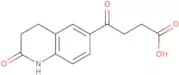
CAS:<p>Versatile small molecule scaffold</p>Formula:C10H9NO4Purity:Min. 95%Molecular weight:207.18 g/mol4-Oxo-4-(2-oxo-1,2,3,4-tetrahydroquinolin-6-yl)butanoic acid
CAS:<p>Versatile small molecule scaffold</p>Formula:C13H13NO4Purity:Min. 95%Molecular weight:247.25 g/molN-[(3-Chlorophenyl)methyl]-2-cyanoacetamide
CAS:<p>Versatile small molecule scaffold</p>Formula:C10H9ClN2OPurity:Min. 95%Molecular weight:208.64 g/mol

![2-Methyl-1-[4-(trifluoromethyl)phenyl]propan-1-one](/_next/image/?url=https%3A%2Fstatic.cymitquimica.com%2Fproducts%2F3D%2Fthumb-webp%2FPCA43658.webp&w=3840&q=75)
![N-[(3-Chlorophenyl)methyl]-2-cyanoacetamide](/_next/image/?url=https%3A%2Fstatic.cymitquimica.com%2Fproducts%2F3D%2Fthumb-webp%2FPCA48808.webp&w=3840&q=75)