Building Blocks
This section contains fundamental products for the synthesis of organic and biological compounds. Building blocks are the essential starting materials used to construct complex molecules through various chemical reactions. They play a critical role in drug discovery, material science, and chemical research. At CymitQuimica, we offer a diverse range of high-quality building blocks to support your innovative research and industrial projects, ensuring you have the essential components for successful synthesis.
Subcategories of "Building Blocks"
- Boronic Acids & Boronic Acid Derivatives(5,756 products)
- Chiral Building Blocks(1,242 products)
- Hydrocarbon Building Blocks(6,095 products)
- Organic Building Blocks(61,037 products)
Found 196200 products of "Building Blocks"
Sort by
Purity (%)
0
100
|
0
|
50
|
90
|
95
|
100
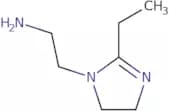
2-(2-Ethyl-4,5-dihydro-1H-imidazol-1-yl)ethan-1-amine
CAS:<p>Versatile small molecule scaffold</p>Formula:C7H15N3Purity:Min. 95%Molecular weight:141.21 g/mol7-Methoxy-2H-benzo[b][1,4]oxazin-3(4H)-one
CAS:<p>7-Methoxy-2H-benzo[b][1,4]oxazin-3(4H)-one (7MB) is a hydroxamic acid that has been shown to be an effective inhibitor of β-glucosidase. 7MB leaves the glucosides intact and only affects the substrate by attacking the carbonyl group. The enzyme β-glucosidase is responsible for hydrolyzing these glycosides into glucose, which can then be absorbed by the body. 7MB has been shown to inhibit glucosidase activity in insect and bacterial cells. It also inhibits esculin, which is a drug used as a skin test for allergies, and has been shown to have antiinflammatory properties.</p>Formula:C9H9NO3Purity:Min. 95%Molecular weight:179.17 g/mol1-{[4-(2-Hydroxyethyl)piperazin-1-yl]methyl}-2,3-dihydro-1H-indole-2,3-dione
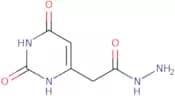
CAS:<p>Versatile small molecule scaffold</p>Formula:C15H19N3O3Purity:Min. 95%Molecular weight:289.33 g/mol2-(2,6-Dioxo-1,2,3,6-tetrahydropyrimidin-4-yl)acetohydrazide
CAS:<p>Versatile small molecule scaffold</p>Formula:C6H8N4O3Purity:Min. 95%Molecular weight:184.15 g/mol5H-chromeno[2,3-b]pyridin-5-one
CAS:<p>5H-chromeno[2,3-b]pyridin-5-one is a truncated aromatic ketone that has been synthesized by the cyclodehydration of 5-hydroxybenzaldehyde. This compound can be used in the synthesis of analogues and it can also be used for cross coupling, hydrazine and hydroxylamine synthesis. 5H-chromeno[2,3-b]pyridin-5-one has been shown to react with amines to form substituted pyridines. The substituent on the aryl ring determines the type of substitution that will occur. This product may also be used as a palladium catalyst in cross coupling reactions.</p>Formula:C12H7NO2Purity:Min. 95%Molecular weight:197.19 g/mol5-Methyl-1,3,2λ⁴-dioxathian-2-one
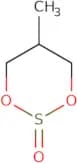
CAS:<p>Versatile small molecule scaffold</p>Formula:C4H8O3SPurity:Min. 95%Molecular weight:136.17 g/mol3-[(4-Sulfamoylphenyl)amino]propanoic acid
CAS:<p>Versatile small molecule scaffold</p>Formula:C9H12N2O4SPurity:Min. 95%Molecular weight:244.27 g/mol1,2,4-Trichloro-5-ethynyl-benzene
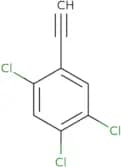
CAS:<p>Versatile small molecule scaffold</p>Formula:C8H3Cl3Purity:Min. 95%Molecular weight:205.5 g/mol8-Methyl-1-naphthaldehyde
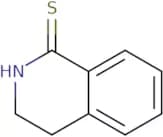
CAS:<p>Versatile small molecule scaffold</p>Formula:C12H10OPurity:Min. 95%Molecular weight:170.21 g/mol1,2,3,4-Tetrahydroisoquinoline-1-thione
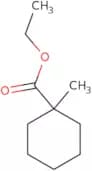
CAS:<p>Versatile small molecule scaffold</p>Formula:C9H9NSPurity:Min. 95%Molecular weight:163.24 g/molEthyl 1-methylcyclohexane-1-carboxylate
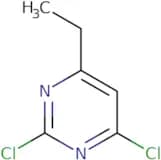
CAS:<p>Versatile small molecule scaffold</p>Formula:C10H18O2Purity:Min. 95%Molecular weight:170.25 g/mol2,4-dichloro-6-ethylpyrimidine
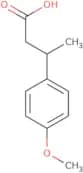
CAS:<p>Versatile small molecule scaffold</p>Formula:C6H6Cl2N2Purity:Min. 95%Molecular weight:177 g/mol3-(4-Methoxyphenyl)butanoic acid
CAS:<p>Versatile small molecule scaffold</p>Formula:C11H14O3Purity:Min. 95%Molecular weight:194.23 g/mol1-(1-Phenylcyclohexyl)ethan-1-ol
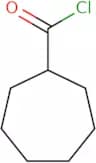
CAS:<p>Versatile small molecule scaffold</p>Formula:C14H20OPurity:Min. 95%Molecular weight:204.3 g/molCycloheptanecarbonyl chloride
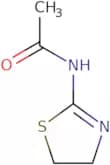
CAS:<p>Cycloheptanecarbonyl chloride (CHCl) is a chemical compound that has been shown to inhibit the growth of cancer cells. It is a pyrimidine compound with a basic structure and an active agent that inhibits the CB2 receptor. CHCl also reacts with nitro groups in benzimidazole compounds, which may lead to proliferation inhibitors. The heterocycle structures in CHCl are biologically active agents, especially for the treatment of leukemia. The high resistance of this compound makes it suitable for use in cancer treatments. Cycloheptanecarbonyl chloride can be synthesized by reacting sodium carbonate with cycloheptanone and hydrochloric acid.</p>Formula:C8H13ClOPurity:Min. 95%Molecular weight:160.64 g/molN-(4,5-Dihydro-1,3-thiazol-2-yl)acetamide
CAS:<p>Versatile small molecule scaffold</p>Formula:C5H8N2OSPurity:Min. 95%Molecular weight:144.2 g/mol3-Methylimidazo[1,5-a]pyridine
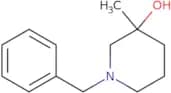
CAS:<p>3-Methylimidazo[1,5-a]pyridine is a chemical compound that binds to the gamma-aminobutyric acid receptor. It has been used in diagnostic tests for myocardial infarction and congestive heart failure. 3-Methylimidazo[1,5-a]pyridine has been shown to inhibit the activity of lipid kinases and growth factors, which may be beneficial in the treatment of coronary heart diseases. The drug is also known to be an HIV inhibitor.</p>Formula:C8H8N2Purity:Min. 95%Molecular weight:132.16 g/mol1-Benzyl-3-methylpiperidin-3-ol
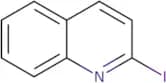
CAS:<p>Versatile small molecule scaffold</p>Formula:C13H19NOPurity:Min. 95%Molecular weight:205.3 g/mol2-Iodoquinoline
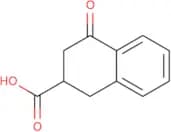
CAS:<p>2-Iodoquinoline is a quinoline derivative that has been shown to be a potent inhibitor of the uptake of amyloid protein in vitro. 2-Iodoquinoline is also able to inhibit the growth of cancer cells and induce apoptosis. The mechanism by which 2-Iodoquinoline inhibits tumor cell growth may be due to its ability to activate epidermal growth factor receptor (EGFR). This compound has also been shown to stimulate epidermal growth through the activation of EGFR and other signaling pathways, such as phosphatidylinositol 3 kinase (PI3K) and mitogen-activated protein kinase (MAPK).</p>Formula:C9H6INPurity:Min. 95%Molecular weight:255.06 g/mol2-Naphthalenecarboxylic acid, 1,2,3,4-tetrahydro-4-oxo-
CAS:<p>2-Naphthalenecarboxylic acid, 1,2,3,4-tetrahydro-4-oxo-, is an organic compound that is a derivative of naphthalene. It can be synthesized by reacting benzene with acetic anhydride in the presence of a base catalyst. This product is used as a solvent and antioxidant in plastics manufacturing.</p>Formula:C11H10O3Purity:Min. 95%Molecular weight:190.2 g/mol

![7-Methoxy-2H-benzo[b][1,4]oxazin-3(4H)-one](/_next/image/?url=https%3A%2Fstatic.cymitquimica.com%2Fproducts%2F3D%2Fthumb-webp%2FGAA52994.webp&w=3840&q=75)
![1-{[4-(2-Hydroxyethyl)piperazin-1-yl]methyl}-2,3-dihydro-1H-indole-2,3-dione](/_next/image/?url=https%3A%2Fstatic.cymitquimica.com%2Fproducts%2F3D%2Fthumb-webp%2FGAA53217.webp&w=3840&q=75)
![5H-chromeno[2,3-b]pyridin-5-one](/_next/image/?url=https%3A%2Fstatic.cymitquimica.com%2Fproducts%2F3D%2Fthumb-webp%2FGAA53746.webp&w=3840&q=75)
![3-[(4-Sulfamoylphenyl)amino]propanoic acid](/_next/image/?url=https%3A%2Fstatic.cymitquimica.com%2Fproducts%2F3D%2Fthumb-webp%2FGAA54198.webp&w=3840&q=75)
![3-Methylimidazo[1,5-a]pyridine](/_next/image/?url=https%3A%2Fstatic.cymitquimica.com%2Fproducts%2F3D%2Fthumb-webp%2FGAA55863.webp&w=3840&q=75)