Building Blocks
This section contains fundamental products for the synthesis of organic and biological compounds. Building blocks are the essential starting materials used to construct complex molecules through various chemical reactions. They play a critical role in drug discovery, material science, and chemical research. At CymitQuimica, we offer a diverse range of high-quality building blocks to support your innovative research and industrial projects, ensuring you have the essential components for successful synthesis.
Subcategories of "Building Blocks"
- Boronic Acids & Boronic Acid Derivatives(5,778 products)
- Chiral Building Blocks(1,243 products)
- Hydrocarbon Building Blocks(6,098 products)
- Organic Building Blocks(61,057 products)
Found 200716 products of "Building Blocks"
Sort by
Purity (%)
0
100
|
0
|
50
|
90
|
95
|
100
4-Fluoro-1-N-(2-phenoxyethyl)benzene-1,2-diamine
CAS:Versatile small molecule scaffoldFormula:C14H15FN2OPurity:Min. 95%Molecular weight:246.28 g/mol(Furan-2-ylmethyl)[(5-methyl-1-benzofuran-2-yl)methyl]amine
CAS:Versatile small molecule scaffoldFormula:C15H15NO2Purity:Min. 95%Molecular weight:241.28 g/mol{[6-Methyl-2-(piperidin-1-yl)pyrimidin-4-yl]methyl}(2-methylpropyl)amine
CAS:Versatile small molecule scaffoldFormula:C15H26N4Purity:Min. 95%Molecular weight:262.39 g/mol2-(4-Chlorophenyl)-6-methylpyrimidine-4-carboxylic acid
CAS:Versatile small molecule scaffoldFormula:C12H9ClN2O2Purity:Min. 95%Molecular weight:248.66 g/mol5-Bromo-2-methoxypyridine-3-sulfonamide
CAS:Versatile small molecule scaffoldFormula:C6H7BrN2O3SPurity:Min. 95%Molecular weight:267.1 g/moltert-Butyl 2-(but-3-yn-1-yl)pyrrolidine-1-carboxylate
CAS:Versatile small molecule scaffoldFormula:C13H21NO2Purity:Min. 95%Molecular weight:223.31 g/moltert-Butyl 6-(aminomethyl)-3-azabicyclo[3.1.0]hexane-3-carboxylate
CAS:Versatile small molecule scaffoldFormula:C11H20N2O2Purity:Min. 95%Molecular weight:212.29 g/mol(OC-6-21)-Pentafluoro(3-methoxyphenyl)-sulfur
CAS:Versatile small molecule scaffoldFormula:C7H7F5OSPurity:Min. 95%Molecular weight:234.19 g/mol2,2-dimethyl-1λ6-thiomorpholine-1,1-dione
CAS:Versatile small molecule scaffoldFormula:C6H13NO2SPurity:Min. 95%Molecular weight:163.24 g/mol3,3-Dimethylthiomorpholine-1,1-dioxide hydrochloride
CAS:Versatile small molecule scaffoldFormula:C6H14ClNO2SPurity:Min. 95%Molecular weight:199.7 g/mol1-[4-(3-Aminocyclobutyl)piperazin-1-yl]ethan-1-one
CAS:Versatile small molecule scaffoldFormula:C10H19N3OPurity:Min. 95%Molecular weight:197.28 g/mol2-Methyl-4-[(2R)-pyrrolidin-2-yl]-1,3-thiazole
CAS:<p>Versatile small molecule scaffold</p>Formula:C8H12N2SPurity:Min. 95%Molecular weight:168.26 g/mol2-Methyl-4-[(2S)-pyrrolidin-2-yl]-1,3-thiazole
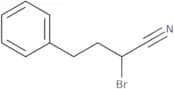
CAS:Versatile small molecule scaffoldFormula:C8H12N2SPurity:Min. 95%Molecular weight:168.26 g/mol2-Bromo-4-phenylbutanenitrile
CAS:2-Bromo-4-phenylbutanenitrile is a quinoline derivative that is used in the synthesis of nitriles, thiophenes, and pyridines. This compound can be obtained by cross-coupling reactions with organometallic reagents such as iodides and pyridines. The use of 2-bromo-4-phenylbutanenitrile in synthesis allows for enantioselective syntheses. This compound is also a nucleophile, which can be used to introduce a carbon atom into organic compounds. 2-Bromo-4-phenylbutanenitrile can be reduced with lithium aluminum hydride or sodium borohydride to form an alcohol or an amine respectively.Formula:C10H10BrNPurity:Min. 95%Molecular weight:224.1 g/moltert-Butyl N-[(3-nitrophenyl)methyl]carbamate
CAS:<p>Versatile small molecule scaffold</p>Formula:C12H16N2O4Purity:Min. 95%Molecular weight:252.27 g/mol1-Chloro-3-[(2-methylpropyl)sulfanyl]propane
CAS:Versatile small molecule scaffoldFormula:C7H15ClSPurity:Min. 95%Molecular weight:166.71 g/mol6-Methoxy-1,2-benzothiazole
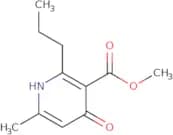
CAS:<p>Versatile small molecule scaffold</p>Formula:C8H9N3OPurity:Min. 95%Molecular weight:163.18 g/molMethyl 6-methyl-4-oxo-2-propyl-1,4-dihydropyridine-3-carboxylate
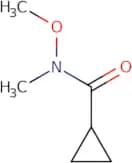
CAS:<p>Versatile small molecule scaffold</p>Formula:C11H15NO3Purity:Min. 95%Molecular weight:209.24 g/molN-Methoxy-N-methylcyclopropanecarboxamide
CAS:<p>N-Methoxy-N-methylcyclopropanecarboxamide is a selective inhibitor of the enzyme azaindole synthase. This drug was shown to be efficacious in vivo in rats with an azaindole-resistant strain of neutrophil leukemia. It also showed efficacy in vitro against human neutrophils and erythrocytes, as well as human blood cells. Azaindole synthase is an enzyme that catalyzes the synthesis of azaindoles from indole and acetaldehyde. This compound has been identified as a lead optimization candidate for treatment of certain cancers, such as leukemia and lymphoma.</p>Formula:C6H11NO2Purity:Min. 95%Molecular weight:129.16 g/molMethyl 2-amino-3,4,5,6-tetrahydropyridine-3-carboxylate hydrochloride
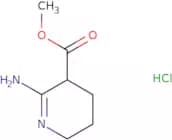
CAS:Versatile small molecule scaffoldFormula:C7H13ClN2O2Purity:Min. 95%Molecular weight:192.64 g/mol


![(Furan-2-ylmethyl)[(5-methyl-1-benzofuran-2-yl)methyl]amine](/_next/image/?url=https%3A%2Fstatic.cymitquimica.com%2Fproducts%2F3D%2Fthumb-webp%2FXAC20756.webp&w=3840&q=75)
![{[6-Methyl-2-(piperidin-1-yl)pyrimidin-4-yl]methyl}(2-methylpropyl)amine](/_next/image/?url=https%3A%2Fstatic.cymitquimica.com%2Fproducts%2F3D%2Fthumb-webp%2FXAC30138.webp&w=3840&q=75)


![tert-Butyl 6-(aminomethyl)-3-azabicyclo[3.1.0]hexane-3-carboxylate](/_next/image/?url=https%3A%2Fstatic.cymitquimica.com%2Fproducts%2F3D%2Fthumb-webp%2FXAC42500.webp&w=3840&q=75)


![1-[4-(3-Aminocyclobutyl)piperazin-1-yl]ethan-1-one](/_next/image/?url=https%3A%2Fstatic.cymitquimica.com%2Fproducts%2F3D%2Fthumb-webp%2FXAC66829.webp&w=3840&q=75)
![2-Methyl-4-[(2R)-pyrrolidin-2-yl]-1,3-thiazole](/_next/image/?url=https%3A%2Fstatic.cymitquimica.com%2Fproducts%2F3D%2Fthumb-webp%2FXAC72802.webp&w=3840&q=75)
![2-Methyl-4-[(2S)-pyrrolidin-2-yl]-1,3-thiazole](/_next/image/?url=https%3A%2Fstatic.cymitquimica.com%2Fproducts%2F3D%2Fthumb-webp%2FXAC74351.webp&w=3840&q=75)
![tert-Butyl N-[(3-nitrophenyl)methyl]carbamate](/_next/image/?url=https%3A%2Fstatic.cymitquimica.com%2Fproducts%2F3D%2Fthumb-webp%2FXFA29165.webp&w=3840&q=75)
![1-Chloro-3-[(2-methylpropyl)sulfanyl]propane](/_next/image/?url=https%3A%2Fstatic.cymitquimica.com%2Fproducts%2F3D%2Fthumb-webp%2FXFA29864.webp&w=3840&q=75)