


Building Blocks
This section contains fundamental products for the synthesis of organic and biological compounds. Building blocks are the essential starting materials used to construct complex molecules through various chemical reactions. They play a critical role in drug discovery, material science, and chemical research. At CymitQuimica, we offer a diverse range of high-quality building blocks to support your innovative research and industrial projects, ensuring you have the essential components for successful synthesis.
Subcategories of "Building Blocks"
- Boronic Acids & Boronic Acid Derivatives(5,756 products)
- Chiral Building Blocks(1,242 products)
- Hydrocarbon Building Blocks(6,095 products)
- Organic Building Blocks(61,038 products)
Found 196817 products of "Building Blocks"
Sort by
Purity (%)
0
100
|
0
|
50
|
90
|
95
|
100
1-(1,2-Oxazol-5-yl)propan-2-ol
CAS:<p>Versatile small molecule scaffold</p>Formula:C6H9NO2Purity:Min. 95%Molecular weight:127.14 g/mol3-[(Dimethylamino)methylidene]-2,3-dihydro-1H-indol-2-one
CAS:<p>Versatile small molecule scaffold</p>Formula:C11H12N2OPurity:Min. 95%Molecular weight:188.23 g/mol1-Methyl-1,4,7-triazonane
CAS:<p>Versatile small molecule scaffold</p>Formula:C7H17N3Purity:Min. 95%Molecular weight:143.23 g/molN-[4-(2-Chloroacetyl)-3-fluorophenyl]acetamide
CAS:<p>Versatile small molecule scaffold</p>Formula:C10H9ClFNO2Purity:Min. 95%Molecular weight:229.63 g/mol3-(3,4-Dimethoxyphenyl)prop-2-enoyl chloride
CAS:<p>3-(3,4-Dimethoxyphenyl)prop-2-enoyl chloride is a lactone that can be used for coupling reactions. It is a triester of quinic acid and 3,4-dimethoxybenzene propionic acid. 3-(3,4-Dimethoxyphenyl)prop-2-enoyl chloride is prepared by the reaction of 3,4-dimethoxyphenol with chloroacetic acid and sodium ethoxide in ethanol. This product has been shown to inhibit the growth of bacteria by inhibiting protein synthesis and cell division.</p>Formula:C11H11ClO3Purity:Min. 95%Molecular weight:226.65 g/mol4-(4-Chloro-1H-1,3-benzodiazol-2-yl)aniline
CAS:<p>Versatile small molecule scaffold</p>Formula:C13H10ClN3Purity:Min. 95%Molecular weight:243.69 g/mol2-Chloro-4-ethylquinoline
CAS:<p>Versatile small molecule scaffold</p>Formula:C11H10ClNPurity:Min. 95%Molecular weight:191.65 g/molHexahydro-1H-cyclopenta[C]furan-5-one
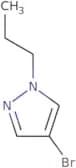
CAS:<p>Versatile small molecule scaffold</p>Formula:C7H10O2Purity:Min. 95%Molecular weight:126.2 g/mol4-Bromo-1-propyl-1H-pyrazole
CAS:<p>4-Bromo-1-propyl-1H-pyrazole is a pyrazole derivative. It is synthesized from the reaction of 4-bromobenzaldehyde and propyl hydrazine, followed by reduction with sodium borohydride. This compound has been shown to be effective against E. coli in an express test. The mechanism of action for this compound is not yet known.</p>Formula:C6H9BrN2Purity:Min. 95%Molecular weight:189.06 g/mol4-Bromo-1-cyclohexyl-1H-pyrazole
CAS:<p>Versatile small molecule scaffold</p>Formula:C9H13BrN2Purity:Min. 95%Molecular weight:229.12 g/mol5-(2,5-Dimethylphenoxymethyl)-1,3,4-oxadiazole-2-thiol
CAS:<p>Versatile small molecule scaffold</p>Formula:C11H12N2O2SPurity:Min. 95%Molecular weight:236.29 g/mol6-(Benzenesulfonyl)-6-azabicyclo[3.1.0]hexane
CAS:<p>Versatile small molecule scaffold</p>Formula:C11H13NO2SPurity:Min. 95%Molecular weight:223.29 g/molEthyl 5-(chloromethyl)-1-methyl-1H-pyrazole-4-carboxylate
CAS:<p>Versatile small molecule scaffold</p>Formula:C8H11ClN2O2Purity:Min. 95%Molecular weight:202.64 g/mol4-Cyclohexyl-butyne
CAS:<p>Versatile small molecule scaffold</p>Formula:C10H16Purity:Min. 95%Molecular weight:136.24 g/mol(±)-N-[3-(9H-Carbazol-4-yloxy)-2-hydroxypropyl]-N-[2-(2-methoxyphenoxy)ethyl]acetamide
CAS:<p>Versatile small molecule scaffold</p>Formula:C26H28N2O5Purity:Min. 95%Molecular weight:448.5 g/mol6-(1,3-Dioxo-2,3-dihydro-1H-isoindol-2-yl)hexanamide
CAS:<p>Versatile small molecule scaffold</p>Formula:C14H16N2O3Purity:Min. 95%Molecular weight:260.29 g/mol(2S)-2-(2-Chlorophenyl)oxirane
CAS:<p>(2S)-2-(2-Chlorophenyl)oxirane is an aromatic hydrocarbon that is used to make organic chemicals. It is a racemate and can be used as an enantioselective epoxide hydrolase substrate, which has been shown to have microbial activity. The enzyme catalyzes the formation of an epoxide from (2S)-2-(2-chlorophenyl)oxirane. This reaction can be performed with high enantioselectivity and in low yields for the synthesis of chiral epoxides.</p>Formula:C8H7ClOPurity:Min. 95%Molecular weight:154.59 g/mol2-Oxatricyclo[5.4.0.0,1,5]undecan-8-one
CAS:<p>Versatile small molecule scaffold</p>Formula:C10H14O2Purity:Min. 95%Molecular weight:166.22 g/mol4-(Chloromethyl)-2-methyloxazole
CAS:<p>Versatile small molecule scaffold</p>Formula:C5H6ClNOPurity:Min. 95%Molecular weight:131.56 g/mol2-{1-[(tert-Butoxy)carbonyl]piperidin-2-yl}-2-hydroxyacetic acid
CAS:<p>Versatile small molecule scaffold</p>Formula:C12H21NO5Purity:Min. 95%Molecular weight:259.3 g/mol


![3-[(Dimethylamino)methylidene]-2,3-dihydro-1H-indol-2-one](/_next/image/?url=https%3A%2Fstatic.cymitquimica.com%2Fproducts%2F3D%2Fthumb-webp%2FRFA21064.webp&w=3840&q=75)

![N-[4-(2-Chloroacetyl)-3-fluorophenyl]acetamide](/_next/image/?url=https%3A%2Fstatic.cymitquimica.com%2Fproducts%2F3D%2Fthumb-webp%2FRFA23446.webp&w=3840&q=75)


![Hexahydro-1H-cyclopenta[C]furan-5-one](/_next/image/?url=https%3A%2Fstatic.cymitquimica.com%2Fproducts%2F3D%2Fthumb-webp%2FRFA28336.webp&w=3840&q=75)


![6-(Benzenesulfonyl)-6-azabicyclo[3.1.0]hexane](/_next/image/?url=https%3A%2Fstatic.cymitquimica.com%2Fproducts%2F3D%2Fthumb-webp%2FRFA33605.webp&w=3840&q=75)


![(±)-N-[3-(9H-Carbazol-4-yloxy)-2-hydroxypropyl]-N-[2-(2-methoxyphenoxy)ethyl]acetamide](/_next/image/?url=https%3A%2Fstatic.cymitquimica.com%2Fproducts%2F3D%2Fthumb-webp%2FRFA35376.webp&w=3840&q=75)


![2-Oxatricyclo[5.4.0.0,1,5]undecan-8-one](/_next/image/?url=https%3A%2Fstatic.cymitquimica.com%2Fproducts%2F3D%2Fthumb-webp%2FRFA39422.webp&w=3840&q=75)

![2-{1-[(tert-Butoxy)carbonyl]piperidin-2-yl}-2-hydroxyacetic acid](/_next/image/?url=https%3A%2Fstatic.cymitquimica.com%2Fproducts%2F3D%2Fthumb-webp%2FRFA40397.webp&w=3840&q=75)