Building Blocks
This section contains fundamental products for the synthesis of organic and biological compounds. Building blocks are the essential starting materials used to construct complex molecules through various chemical reactions. They play a critical role in drug discovery, material science, and chemical research. At CymitQuimica, we offer a diverse range of high-quality building blocks to support your innovative research and industrial projects, ensuring you have the essential components for successful synthesis.
Subcategories of "Building Blocks"
- Boronic Acids & Boronic Acid Derivatives(5,778 products)
- Chiral Building Blocks(1,242 products)
- Hydrocarbon Building Blocks(6,098 products)
- Organic Building Blocks(61,059 products)
Found 199580 products of "Building Blocks"
Sort by
Purity (%)
0
100
|
0
|
50
|
90
|
95
|
100
1-(4-Methoxyphenyl)pyrrolidine-2,5-dione
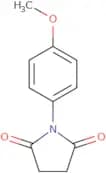
CAS:1-(4-Methoxyphenyl)pyrrolidine-2,5-dione is a potent inhibitor of p2y receptors. It has been shown to inhibit the generation of monoclonal antibodies and cytosolic Ca2+ in T cells, which are both important for the activation of immune cells. 1-(4-Methoxyphenyl)pyrrolidine-2,5-dione also inhibits the polymerase chain reaction (PCR), which is a DNA replication technique used in molecular biology. The molecule interacts with hydrogen bond and gamma-aminobutyric acid (GABA), but does not interact with glutamate or carbaryl. This drug may be useful for the treatment of bladder cancer due to its potent inhibitory activity against p2y receptors.Formula:C11H11NO3Purity:Min. 95%Molecular weight:205.21 g/mol1-(Thiophen-2-yl)ethan-1-ol
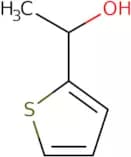
CAS:<p>1-(Thiophen-2-yl)ethan-1-ol is an enantiopure reactant that can be used to synthesize lipase substrates. The immobilized substrate is a polyvinyl polymer that has been functionalized with a primary alcohol and thiol groups. 1-(Thiophen-2-yl)ethan-1-ol is used in the synthesis of lipase substrates that are used to study the biotransformations of secondary alcohols. X-ray structures have been obtained for this compound, which contains a chiral center.</p>Formula:C6H8OSPurity:Min. 95%Molecular weight:128.19 g/mol4-Amino-N-methylphthalimide
CAS:<p>4-Amino-N-methylphthalimide (AMI) is a fluorescent dye that has been shown to be an effective proton sensor. It can be used as a transistor, and has the potential to be used in other applications such as photophysical studies, gas sensors, and quantum dots. 4-Amino-N-methylphthalimide has been shown to bind MgO with a binding constant of 9.3x10 M. It also has high kinetic data, which can be helpful for understanding the reaction mechanisms at work.</p>Formula:C9H8N2O2Purity:Min. 95%Molecular weight:176.17 g/mol5,6,7,8-Tetrahydroquinazolin-2-amine
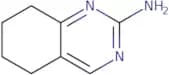
CAS:<p>5,6,7,8-Tetrahydroquinazolin-2-amine is a heterobicyclic drug that has antibacterial activity. It was synthesized in the multistep reaction of cyclic amines with 2-aminothiazole. This compound may be used as a diagnostic tool for serotonin because it activates 5-HT6 receptors and inhibits the binding of serotonin to its receptor. This drug also has an inhibitory effect on bacterial growth and is useful for treating bacterial infections. 5,6,7,8-Tetrahydroquinazolin-2-amine has antidepressive effects and may be used to treat depression by antagonizing the reuptake of serotonin at synapses in the brain and increasing synaptic concentrations of this neurotransmitter.</p>Formula:C8H11N3Purity:Min. 95%Molecular weight:149.19 g/mol3-Amino-5-methylbenzoic acid
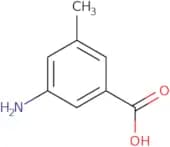
CAS:<p>3-Amino-5-methylbenzoic acid (3-AMBA) is a chemical compound that is used in the treatment of murine leukemia. It inhibits cell growth by binding to the DNA and inhibiting transcription and replication, as well as by inhibiting the biosynthesis of proteins and other cellular molecules. 3-AMBA has been shown to be active against Salmonella typhimurium, Staphylococcus aureus, Bacillus subtilis, Escherichia coli, Mycobacterium tuberculosis, and L1210 cells. This drug also has detoxification properties and can inhibit the production of cyclopentanoid compounds in plants.</p>Formula:C8H9NO2Purity:Min. 95%Molecular weight:151.16 g/mol5-Cyanopentanamide
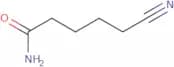
CAS:<p>5-Cyanopentanamide is a liquid phase catalyst that has been immobilized on Ru(III) oxide. 5-Cyanopentanamide shows good activity in the hydration of carbonyl compounds, such as triazolinones, to produce the corresponding amides. It also catalyzes the hydrogenation reaction of ammonium salts with adiponitrile and hydrogen. 5-Cyanopentanamide's biochemical properties are similar to those of other amides. The use of this immobilized catalyst allows for reactions to be carried out at lower temperatures and pressures than with traditional methods.</p>Formula:C6H10N2OPurity:Min. 95%Molecular weight:126.16 g/mol5-Chloro-1-ethyl-2-methyl-4-nitro-1H-imidazole
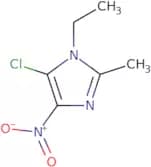
CAS:Versatile small molecule scaffoldFormula:C6H8ClN3O2Purity:Min. 95%Molecular weight:189.6 g/mol3-benzylimidazolidine-2,4-dione
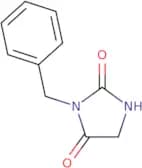
CAS:<p>3-benzylimidazolidine-2,4-dione is a synthetic molecule that can be used to inhibit the growth of cancer cells. It is classified as an alkylating agent and is structurally related to glyoxal. 3-benzylimidazolidine-2,4-dione has shown cytotoxic effects in vitro by inhibiting DNA replication and protein synthesis in a variety of cancer cell lines. It also has the ability to cross the blood brain barrier and has been shown to be effective against human glioblastoma cells. This compound may be useful in the treatment of brain tumours due to its ability to inhibit protein synthesis and DNA replication.</p>Formula:C10H10N2O2Purity:Min. 95%Molecular weight:190.2 g/mol3,6-Dinitrobenzene-1,2-dicarboxylic acid
CAS:Versatile small molecule scaffoldFormula:C8H4N2O8Purity:Min. 95%Molecular weight:256.13 g/molBicyclo[4.2.0]octa-1,3,5-trien-7-amine hydrochloride
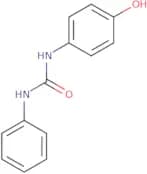
CAS:<p>Versatile small molecule scaffold</p>Formula:C8H10ClNPurity:Min. 95%Molecular weight:155.62 g/mol3-(4-Hydroxyphenyl)-1-phenylurea
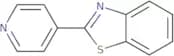
CAS:Versatile small molecule scaffoldFormula:C13H12N2O2Purity:Min. 95%Molecular weight:228.25 g/mol2-(4-Pyridyl)-1,3-benzothiazole
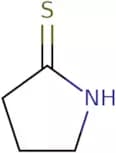
CAS:2-(4-Pyridyl)-1,3-benzothiazole is a pancreatic carcinogen. It has been shown to be an important factor in the development of pancreatic cancer. 2-(4-Pyridyl)-1,3-benzothiazole is a ligand for the nuclear receptor PPARγ and can activate this receptor by binding to it. Activated PPARγ then regulates gene expression and protein synthesis, leading to tumorigenesis. In addition, 2-(4-Pyridyl)-1,3-benzothiazole has been shown to inhibit the activity of methionine synthase and increase the amount of homocysteine in cells. This inhibition ultimately leads to cell death by increasing reactive oxygen species that can cause DNA damage or inhibit protein synthesis.Formula:C12H8N2SPurity:Min. 95%Molecular weight:212.27 g/molPyrrolidine-2-thione
CAS:<p>Pyrrolidine-2-thione is a molecule that is an organic compound consisting of two pyrrole rings linked by a sulfur atom. It has a molecular weight of 176.13 and a monosodium salt with the chemical formula C6H8N2S. Pyrrolidine-2-thione is soluble in water, alcohol, and ether. This compound reacts with hydrochloric acid to form hydrogen fluoride and pyrrole monosulfonic acid, which exhibits anti-inflammatory properties. The particle size distribution of this compound has been found to be between 1 and 10 micrometers in diameter and it is highly soluble in polycarboxylic acids like oxalic acid or maleic acid. Pyrrolidine-2-thione also has high reactivity with aromatic hydrocarbons such as benzene, toluene, and xylene.</p>Formula:C4H7NSPurity:Min. 95%Molecular weight:101.17 g/molEthyl 3-hydroxy-3-phenylbutanoate
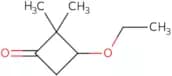
CAS:<p>Versatile small molecule scaffold</p>Formula:C12H16O3Purity:Min. 95%Molecular weight:208.25 g/mol3-Ethoxy-2,2-dimethylcyclobutanone
CAS:<p>3-Ethoxy-2,2-dimethylcyclobutanone is a cycloadduct that is produced by the reaction of an enol ether with dichloride. It is a nonpolar solvent used in chemistry and solvents. 3-Ethoxy-2,2-dimethylcyclobutanone is also an oxygenated compound and can be used as a nucleophile in reactions. The regioselectivity of 3-ethoxy-2,2-dimethylcyclobutanone depends on the type of reaction that it is involved in; however, it has been shown to preferentially form the cyclohexanone product in most cases.</p>Formula:C8H14O2Purity:Min. 95%Molecular weight:142.2 g/mol3-Butoxy-2,2-dimethylcyclobutan-1-one
CAS:<p>Versatile small molecule scaffold</p>Formula:C10H18O2Purity:Min. 95%Molecular weight:170.25 g/molSilane, isothiocyanatotrimethyl-
CAS:<p>Trifluoroacetic acid is a reactive compound that can be used to produce amines by activation with trimethylsilyl. It is also used in the synthesis of other compounds, such as silanes and thiocyanates. Trifluoroacetic acid has been shown to be an effective treatment for autoimmune diseases, such as inflammatory bowel disease, alopecia areata, and rheumatoid arthritis. It has also been shown to inhibit the production of pro-inflammatory cytokines in human monocytes. Trifluoroacetic acid has chemical stability in organic solvents and does not react with water or alcohols.</p>Formula:C4H9NSSiPurity:Min. 95%Molecular weight:131.27 g/mol(2R)-2-Amino-3-(prop-2-en-1-yldisulfanyl)propanoic acid
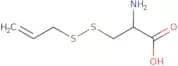
CAS:<p>(2R)-2-Amino-3-(prop-2-en-1-yldisulfanyl)propanoic acid is an anti-cancer drug that inhibits the enzyme activity of histone deacetylase (HDAC). This drug has been shown to induce apoptosis in colorectal adenocarcinoma cells by inhibiting HDAC. It also induces autophagy and apoptosis in cancer cell lines with different genetic backgrounds. The reaction solution for this compound is a mixture of water, methanol, and hydrochloric acid. The product is soluble in water and methanol, but not in hydrochloric acid.</p>Formula:C6H11NO2S2Purity:Min. 95%Molecular weight:193.3 g/molBicyclo[2.2.2]octane-1,4-diamine dihydrochloride
CAS:Versatile small molecule scaffoldFormula:C8H16N2•(HCl)2Purity:Min. 95%Molecular weight:213.15 g/molcis-6-Nonenal
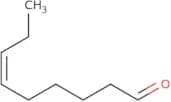
CAS:cis-6-Nonenal is a short-chain fatty acid that has been identified in cantaloupe. It is an ester compound and one of the many byproducts of lipid oxidation. cis-6-Nonenal has high values in basic structures, such as ethyl esters, caproic acid, and deionized water. cis-6-Nonenal has been found to have high levels of toxicity to plants when used as a test compound. It also exhibits strong inhibitory activity against dehydrogenase enzymes in rootstocks.Formula:C9H16OPurity:Min. 95%Molecular weight:140.22 g/mol



![Bicyclo[4.2.0]octa-1,3,5-trien-7-amine hydrochloride](/_next/image/?url=https%3A%2Fstatic.cymitquimica.com%2Fproducts%2F3D%2Fthumb-webp%2FCAA29900.webp&w=3840&q=75)



![Bicyclo[2.2.2]octane-1,4-diamine dihydrochloride](/_next/image/?url=https%3A%2Fstatic.cymitquimica.com%2Fproducts%2F3D%2Fthumb-webp%2FCAA27793.webp&w=3840&q=75)