


Building Blocks
This section contains fundamental products for the synthesis of organic and biological compounds. Building blocks are the essential starting materials used to construct complex molecules through various chemical reactions. They play a critical role in drug discovery, material science, and chemical research. At CymitQuimica, we offer a diverse range of high-quality building blocks to support your innovative research and industrial projects, ensuring you have the essential components for successful synthesis.
Subcategories of "Building Blocks"
- Boronic Acids & Boronic Acid Derivatives(5,778 products)
- Chiral Building Blocks(1,242 products)
- Hydrocarbon Building Blocks(6,098 products)
- Organic Building Blocks(61,063 products)
Found 197855 products of "Building Blocks"
Sort by
Purity (%)
0
100
|
0
|
50
|
90
|
95
|
100
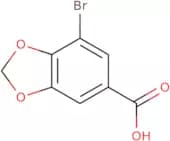
7-bromo-1,3-dioxaindane-5-carboxylic acid
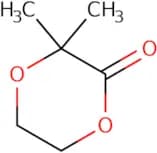
CAS:Versatile small molecule scaffoldFormula:C8H5BrO4Purity:Min. 95%Molecular weight:245 g/mol3,3-Dimethyl-1,4-dioxan-2-one
CAS:<p>3,3-Dimethyl-1,4-dioxan-2-one (DMDO) is a chiral compound that is used in organic synthesis as a chiral auxiliary. This molecule has been shown to be useful for the stereoselective polymerization of lactones, enolates, amides and aldehydes. DMDO has also been investigated for its ability to form spindle-like polymers with glycolide and optical activity. 3,3-Dimethyl-1,4-dioxan-2-one is soluble in common organic solvents such as chloroform and dichloromethane at room temperature and can be used for the preparation of microparticles with a diameter up to 50 µm. The high yield of this compound makes it an attractive alternative to other synthetic methods.</p>Formula:C6H10O3Purity:Min. 95%Molecular weight:130.14 g/mol2-[(2-Bromoethoxy)methyl]oxirane
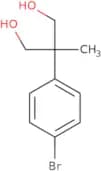
CAS:<p>Versatile small molecule scaffold</p>Formula:C5H9BrO2Purity:Min. 95%Molecular weight:181.03 g/mol2-(4-Bromophenyl)-2-methylpropane-1,3-diol
CAS:<p>Versatile small molecule scaffold</p>Formula:C10H13BrO2Purity:Min. 95%Molecular weight:245.11 g/mol2-[(6-Amino-1H-purin-8-yl)amino]ethan-1-ol
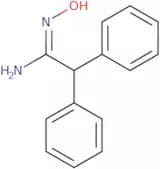
CAS:2-[(6-Amino-1H-purin-8-yl)amino]ethan-1-ol (6APA) is a prodrug that is metabolized by the liver to 6-mercaptopurine (6MP). It is an antiinflammatory drug that has been shown to suppress collagen synthesis and inhibit the activity of proteases. 6APA is also used as a diagnostic agent for systemic diseases, such as reactive arthritis and systemic lupus erythematosus. This compound can be used in the treatment of inflammatory diseases, such as rheumatoid arthritis and Crohn's disease, due to its ability to inhibit the production of inflammatory compounds. The drug binds to affinity ligands which are associated with various proteins, including collagen. This binding prevents the formation of new proteins, which leads to cell death by inhibiting protein synthesis.Formula:C7H10N6OPurity:Min. 95%Molecular weight:194.19 g/mol(1Z)-N'-Hydroxy-2,2-diphenylethanimidamide
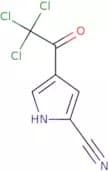
CAS:Versatile small molecule scaffoldFormula:C14H14N2OPurity:Min. 95%Molecular weight:226.27 g/mol4-(Trichloroacetyl)-1H-pyrrole-2-carbonitrile
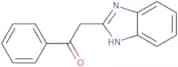
CAS:<p>Versatile small molecule scaffold</p>Formula:C7H3Cl3N2OPurity:Min. 95%Molecular weight:237.5 g/mol2-(1H-1,3-Benzodiazol-2-yl)-1-phenylethan-1-one
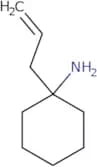
CAS:<p>2-(1H-1,3-Benzodiazol-2-yl)-1-phenylethanone is an unsymmetrical phenacyl chloride that is used in the synthesis of drugs. The generation of acidolysis products and the formation of active methylene compounds are catalyzed by 2-(1H-1,3-benzodiazol-2-yl)-1-phenylethanone. This compound is also used for the preparation of chlorides and methylhydrazones. Preparative methods for this compound involve thionyl chloride, hydrochloric acid, and phenylhydrazone.</p>Formula:C15H12N2OPurity:Min. 95%Molecular weight:236.27 g/mol1-(Prop-2-en-1-yl)cyclohexan-1-amine
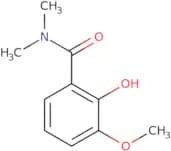
CAS:<p>Versatile small molecule scaffold</p>Formula:C9H17NPurity:Min. 95%Molecular weight:139.24 g/mol2-Hydroxy-3-methoxy-N,N-dimethylbenzamide
CAS:<p>Versatile small molecule scaffold</p>Formula:C10H13NO3Purity:Min. 95%Molecular weight:195.21 g/mol2-[[(1S)-1-Phenylethyl]amino]ethanol
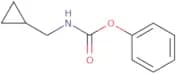
CAS:Versatile small molecule scaffoldFormula:C10H15NOPurity:Min. 95%Molecular weight:165.23 g/molPhenyl N-(cyclopropylmethyl)carbamate
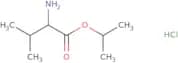
CAS:<p>Versatile small molecule scaffold</p>Formula:C11H13NO2Purity:Min. 95%Molecular weight:191.23 g/molPropan-2-yl (2S)-2-amino-3-methylbutanoate hydrochloride
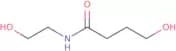
CAS:<p>Versatile small molecule scaffold</p>Formula:C8H18ClNO2Purity:Min. 95%Molecular weight:195.69 g/mol4-Hydroxy-N-(2-hydroxyethyl)butanamide
CAS:<p>Versatile small molecule scaffold</p>Formula:C6H13NO3Purity:Min. 95%Molecular weight:147.17 g/mol4-(Prop-2-yn-1-yloxy)butan-1-ol
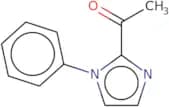
CAS:Controlled Product<p>Versatile small molecule scaffold</p>Formula:C7H12O2Purity:Min. 95%Molecular weight:128.17 g/mol1-(1-Phenyl-1H-imidazol-2-yl)ethan-1-one
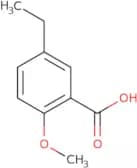
CAS:<p>Versatile small molecule scaffold</p>Formula:C11H10N2OPurity:Min. 95%Molecular weight:186.2 g/mol5-Ethyl-2-methoxybenzoic acid
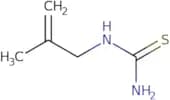
CAS:Versatile small molecule scaffoldFormula:C10H12O3Purity:Min. 95%Molecular weight:180.2 g/mol(2-Methylprop-2-en-1-yl)thiourea
CAS:<p>(2-Methylprop-2-en-1-yl)thiourea is a lead compound that has been shown to have acetylcholinesterase and butyrylcholinesterase inhibitory activity. It has been shown to have antioxidant properties and may be used as an antiinflammatory agent. This drug has also been shown to have neuroprotective effects in animals with Alzheimer's disease by inhibiting the progression of the disease. The biological activity of (2-Methylprop-2-en-1-yl)thiourea is not limited to mammals, as it has also been shown to protect against oxidative damage in cells from pigs, horses, and chickens.</p>Formula:C5H10N2SPurity:Min. 95%Molecular weight:130.21 g/mol[(Tetrahydrofuran-2-yl)methyl]thiourea
CAS:<p>[(Tetrahydrofuran-2-yl)methyl]thiourea is a thiourea that functions as an antimicrobial agent. It has been shown to be effective against fungal strains, including Candida albicans, Cryptococcus neoformans, and Aspergillus fumigatus. [(Tetrahydrofuran-2-yl)methyl]thiourea has also been shown to inhibit the growth of biofilms and human cell lines. The antimicrobial activity of thiourea can be attributed to its ability to form reactive oxygen species that cause oxidative stress in microbial cells. Thiourea disrupts the cell membrane and causes leakage of cellular contents such as proteins and nucleic acids. This disruption results in cell death by apoptosis or necrosis.</p>Formula:C6H12N2OSPurity:Min. 95%Molecular weight:160.24 g/mol[2-(Diethylamino)ethyl]thiourea
CAS:<p>Versatile small molecule scaffold</p>Formula:C7H17N3SPurity:Min. 95%Molecular weight:175.3 g/mol

![2-[(2-Bromoethoxy)methyl]oxirane](/_next/image/?url=https%3A%2Fstatic.cymitquimica.com%2Fproducts%2F3D%2Fthumb-webp%2FRCA80359.webp&w=3840&q=75)
![2-[(6-Amino-1H-purin-8-yl)amino]ethan-1-ol](/_next/image/?url=https%3A%2Fstatic.cymitquimica.com%2Fproducts%2F3D%2Fthumb-webp%2FRCA81329.webp&w=3840&q=75)
![2-[[(1S)-1-Phenylethyl]amino]ethanol](/_next/image/?url=https%3A%2Fstatic.cymitquimica.com%2Fproducts%2F3D%2Fthumb-webp%2FRCA84929.webp&w=3840&q=75)

![[(Tetrahydrofuran-2-yl)methyl]thiourea](/_next/image/?url=https%3A%2Fstatic.cymitquimica.com%2Fproducts%2F3D%2Fthumb-webp%2FRCA89225.webp&w=3840&q=75)
![[2-(Diethylamino)ethyl]thiourea](/_next/image/?url=https%3A%2Fstatic.cymitquimica.com%2Fproducts%2F3D%2Fthumb-webp%2FRCA89226.webp&w=3840&q=75)