


Building Blocks
This section contains fundamental products for the synthesis of organic and biological compounds. Building blocks are the essential starting materials used to construct complex molecules through various chemical reactions. They play a critical role in drug discovery, material science, and chemical research. At CymitQuimica, we offer a diverse range of high-quality building blocks to support your innovative research and industrial projects, ensuring you have the essential components for successful synthesis.
Subcategories of "Building Blocks"
- Boronic Acids & Boronic Acid Derivatives(5,756 products)
- Chiral Building Blocks(1,242 products)
- Hydrocarbon Building Blocks(6,093 products)
- Organic Building Blocks(60,519 products)
Found 195533 products of "Building Blocks"
Sort by
Purity (%)
0
100
|
0
|
50
|
90
|
95
|
100
4,5-Diodoveratrole
CAS:<p>4,5-Diodoveratrole is a ligand that binds to tylophorine. It has been shown to be an interlinked molecule in electrochemical methods and can be detected by voltammetry. 4,5-Diodoveratrole has been used as a fluorescent sensor for methyl groups and is also able to cross-couple with methoxy groups. This molecule also forms functional groups on the devices of electrochemical biosensors.</p>Formula:C8H8I2O2Purity:Min. 95%Molecular weight:389.96 g/mol1,2,3,4-Tetrahydroisoquinolin-8-ol hydrobromide
CAS:<p>Versatile small molecule scaffold</p>Formula:C9H12BrNOPurity:Min. 95%Molecular weight:230.1 g/mol2-[1-(4-Chlorophenyl)-1-phenylethoxy]-N,N-dimethylethanamine oxide
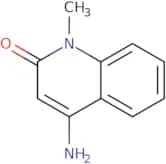
CAS:<p>Versatile small molecule scaffold</p>Formula:C18H22ClNO2Purity:Min. 95%Molecular weight:319.8 g/mol4-Amino-1-methyl-1,2-dihydroquinolin-2-one
CAS:<p>Versatile small molecule scaffold</p>Formula:C10H10N2OPurity:Min. 95%Molecular weight:174.2 g/mol(1S)-2-Fluoro-1-phenylethan-1-ol
CAS:<p>Versatile small molecule scaffold</p>Formula:C8H9FOPurity:Min. 95%Molecular weight:140.15 g/molN-[3-(Trifluoromethyl)-1,2-oxazol-5-yl]acetamide
CAS:<p>N-[3-(Trifluoromethyl)-1,2-oxazol-5-yl]acetamide is a fluorescence resonance energy transfer inhibitor that has been shown to be effective against the papillary muscle in rats. This drug has also been shown to inhibit the production of growth factors and cell proliferation in prostate cancer cells. N-[3-(Trifluoromethyl)-1,2-oxazol-5-yl]acetamide inhibits the enzyme kinase activity of protein tyrosine kinases, which are responsible for cell proliferation and differentiation. This drug is also an organometallic compound with low light fluorescence properties. It has been used as a radiation sensitizer to increase the effectiveness of radiation treatments for cancer.</p>Formula:C6H5F3N2O2Purity:Min. 95%Molecular weight:194.11 g/mol[4-(2-Methylpropyl)phenyl]methanol
CAS:<p>Versatile small molecule scaffold</p>Formula:C11H16OPurity:Min. 95%Molecular weight:164.24 g/mol2,2-Dimethyl-1,2,3,4-tetrahydronaphthalen-1-amine
CAS:<p>Versatile small molecule scaffold</p>Formula:C12H17NPurity:Min. 95%Molecular weight:175.27 g/mol5-Ethyl-4-phenyl-2H-pyrazol-3-ylamine
CAS:<p>Versatile small molecule scaffold</p>Formula:C11H13N3Purity:Min. 95%Molecular weight:187.25 g/mol1-Iodo-2-propylbenzene
CAS:<p>Versatile small molecule scaffold</p>Formula:C9H11IPurity:Min. 95%Molecular weight:246.09 g/molt-Butyl 2-iodobenzoate
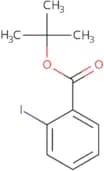
CAS:<p>t-Butyl 2-iodobenzoate is a reagent that can be used to access cyclopentenes. The reaction begins with the lithiation of an alkoxycarbonyl group and the subsequent attachment of an electrophilic cyclopentene. The reaction is completed by adding a tertiary amine, which causes carbopalladation of the alkyl lithium intermediate, forming a new carbon-carbon bond. Cyclopentenes can also be accessed by intramolecular reactions using a palladium catalyst and alkoxycarbonyl groups as substrates. Camptothecin moieties are often functionalized with t-butyl 2-iodobenzoate in order to access camptothecin analogs.</p>Formula:C11H13IO2Purity:Min. 95%Molecular weight:304.12 g/mol2-Furan-2-yl-2-piperidin-1-yl-ethylamine
CAS:<p>Versatile small molecule scaffold</p>Formula:C11H18N2OPurity:Min. 95%Molecular weight:194.28 g/mol1,6,11,16-Tetraoxacycloicosane-2,5,12,15-tetrone
CAS:<p>Versatile small molecule scaffold</p>Formula:C16H24O8Purity:Min. 95%Molecular weight:344.36 g/mol5-(Methoxycarbonyl)bicyclo[3.2.1]octane-1-carboxylic acid
CAS:<p>Versatile small molecule scaffold</p>Formula:C11H16O4Purity:Min. 95%Molecular weight:212.24 g/mol5-(Methoxycarbonyl)bicyclo[3.1.1]heptane-1-carboxylic acid
CAS:<p>Versatile small molecule scaffold</p>Formula:C10H14O4Purity:Min. 95%Molecular weight:198.22 g/mol2-(Chloromethyl)-4-methoxy-6-methylpyridine hydrochloride
CAS:<p>Versatile small molecule scaffold</p>Formula:C8H11Cl2NOPurity:Min. 95%Molecular weight:208.08 g/molN-(2-Iodoethyl)methanesulfonamide
CAS:<p>Versatile small molecule scaffold</p>Formula:C3H8INO2SPurity:Min. 95%Molecular weight:249.07 g/mol1-[2-(Chloromethyl)phenyl]pyrrolidine hydrochloride
CAS:<p>Versatile small molecule scaffold</p>Formula:C11H15Cl2NPurity:Min. 95%Molecular weight:232.15 g/mol2-Chloro-6-(pyrrolidin-1-yl)benzaldehyde
CAS:<p>Versatile small molecule scaffold</p>Formula:C11H12ClNOPurity:Min. 95%Molecular weight:209.67 g/mol3-Hydrazinyl-8-methyl-8-azabicyclo[3.2.1]octane dihydrochloride
CAS:<p>Versatile small molecule scaffold</p>Formula:C8H19Cl2N3Purity:Min. 95%Molecular weight:228.16 g/mol


![2-[1-(4-Chlorophenyl)-1-phenylethoxy]-N,N-dimethylethanamine oxide](/_next/image/?url=https%3A%2Fstatic.cymitquimica.com%2Fproducts%2F3D%2Fthumb-webp%2FKEA20391.webp&w=3840&q=75)

![N-[3-(Trifluoromethyl)-1,2-oxazol-5-yl]acetamide](/_next/image/?url=https%3A%2Fstatic.cymitquimica.com%2Fproducts%2F3D%2Fthumb-webp%2FKEA23522.webp&w=3840&q=75)
![[4-(2-Methylpropyl)phenyl]methanol](/_next/image/?url=https%3A%2Fstatic.cymitquimica.com%2Fproducts%2F3D%2Fthumb-webp%2FKEA31985.webp&w=3840&q=75)




![5-(Methoxycarbonyl)bicyclo[3.2.1]octane-1-carboxylic acid](/_next/image/?url=https%3A%2Fstatic.cymitquimica.com%2Fproducts%2F3D%2Fthumb-webp%2FKEA37127.webp&w=3840&q=75)
![5-(Methoxycarbonyl)bicyclo[3.1.1]heptane-1-carboxylic acid](/_next/image/?url=https%3A%2Fstatic.cymitquimica.com%2Fproducts%2F3D%2Fthumb-webp%2FKEA37128.webp&w=3840&q=75)


![1-[2-(Chloromethyl)phenyl]pyrrolidine hydrochloride](/_next/image/?url=https%3A%2Fstatic.cymitquimica.com%2Fproducts%2F3D%2Fthumb-webp%2FKEA40582.webp&w=3840&q=75)

![3-Hydrazinyl-8-methyl-8-azabicyclo[3.2.1]octane dihydrochloride](/_next/image/?url=https%3A%2Fstatic.cymitquimica.com%2Fproducts%2F3D%2Fthumb-webp%2FKEA40691.webp&w=3840&q=75)