Building Blocks
This section contains fundamental products for the synthesis of organic and biological compounds. Building blocks are the essential starting materials used to construct complex molecules through various chemical reactions. They play a critical role in drug discovery, material science, and chemical research. At CymitQuimica, we offer a diverse range of high-quality building blocks to support your innovative research and industrial projects, ensuring you have the essential components for successful synthesis.
Subcategories of "Building Blocks"
- Boronic Acids & Boronic Acid Derivatives(5,756 products)
- Chiral Building Blocks(1,242 products)
- Hydrocarbon Building Blocks(6,093 products)
- Organic Building Blocks(60,522 products)
Found 195533 products of "Building Blocks"
Sort by
Purity (%)
0
100
|
0
|
50
|
90
|
95
|
100
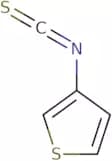
3-Isothiocyanatothiophene
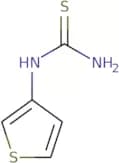
CAS:<p>Versatile small molecule scaffold</p>Formula:C5H3NS2Purity:Min. 95%Molecular weight:141.2 g/mol(Thiophen-3-yl)thiourea
CAS:<p>Versatile small molecule scaffold</p>Formula:C5H6N2S2Purity:Min. 95%Molecular weight:158.2 g/mol3-Phenyl-3H-imidazo[4,5-b]pyridine
CAS:<p>3-Phenyl-3H-imidazo[4,5-b]pyridine is a ligand that binds with high affinity to the GABA receptor. It has an aromatic ring and two phenyl groups. 3-Phenyl-3H-imidazo[4,5-b]pyridine is a member of the class of pyridine derivatives. This compound has been shown to have nervous system effects in animals and humans, including sedative and hypnotic effects.</p>Formula:C12H9N3Purity:Min. 95%Molecular weight:195.22 g/mol1-Phenyl-1H-imidazo[4,5-c]pyridine
CAS:<p>Merocyanine is a polymethine dye that has been shown to have antimicrobial activity. It binds to DNA by intercalating between the base pairs, and it has been reported to inhibit the growth of Gram-positive bacteria. Merocyanine may be used for the treatment of Gram-positive bacterial infections such as staphylococcus aureus, streptococcus pyogenes, and enterobacteriaceae. This molecule also exhibits quaternary salt properties and can be used as an antiseptic.</p>Formula:C12H9N3Purity:Min. 95%Molecular weight:195.22 g/mol3-Methyl-1,3-dihydro-2H-imidazo[4,5-c]pyridin-2-one
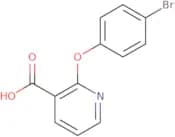
CAS:<p>Versatile small molecule scaffold</p>Formula:C7H7N3OPurity:Min. 95%Molecular weight:149.15 g/mol2-(4-Bromophenoxy)nicotinic acid
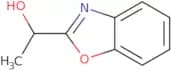
CAS:<p>Versatile small molecule scaffold</p>Formula:C12H8BrNO3Purity:Min. 95%Molecular weight:294.1 g/mol1-(1,3-Benzoxazol-2-yl)ethan-1-ol
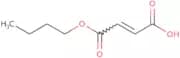
CAS:<p>Versatile small molecule scaffold</p>Formula:C9H9NO2Purity:Min. 95%Molecular weight:163.17 g/mol4-Butoxy-4-oxobut-2-enoic acid
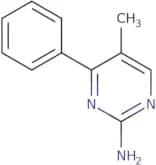
CAS:<p>4-Butoxy-4-oxobutanoic acid (BABA) is an anti-inflammatory agent that belongs to the class of prodrugs. It is a monomer that is polymerized in vivo to form polycarboxylic acids which are then metabolized by hydrogenase. BABA has been shown to be useful for treating inflammatory bowel disease, as well as other autoimmune diseases. The chemical stability of BABA has also been demonstrated in microcapsules and it can be used for the treatment of bowel disease, such as ulcerative colitis and Crohn's disease.</p>Formula:C8H12O4Purity:Min. 95%Molecular weight:172.18 g/mol5-Methyl-4-phenylpyrimidin-2-amine
CAS:<p>Versatile small molecule scaffold</p>Formula:C11H11N3Purity:Min. 95%Molecular weight:185.22 g/mol1-Iodo-3-methoxypropane
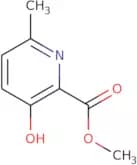
CAS:<p>1-Iodo-3-methoxypropane is a ligand that belongs to the polyhedron class. The crystal structure of this compound has been determined by x-ray and thermal analysis. It is stable at room temperature, but decomposes at higher temperatures. 1-Iodo-3-methoxypropane can be used as a ligand in coordination chemistry, or as an intermediate in organic synthesis. It has been shown to form stable complexes with metal ions such as copper(II) and silver(I). The 1-iodo-3-methoxypropane molecule contains two oxygen atoms that are bonded to each other through a triple bond. These atoms are part of the ligand’s backbone and allow it to coordinate well with metal ions.</p>Formula:C4H9IOPurity:Min. 95%Molecular weight:200.01 g/molMethyl 3-hydroxy-6-methylpicolinate
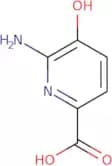
CAS:<p>Versatile small molecule scaffold</p>Formula:C8H9NO3Purity:Min. 95%Molecular weight:167.16 g/mol6-Amino-5-hydroxypyridine-2-carboxylic acid
CAS:<p>Versatile small molecule scaffold</p>Formula:C6H6N2O3Purity:Min. 95%Molecular weight:154.12 g/mol2-Oxo-2H,3H-[1,3]oxazolo[4,5-b]pyridine-5-carboxylic acid
CAS:<p>Versatile small molecule scaffold</p>Formula:C7H4N2O4Purity:Min. 95%Molecular weight:180.12 g/molN'-Hydroxy-5,7-dimethylpyrazolo[1,5-a]pyrimidine-3-carboximidamide
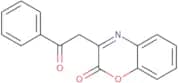
CAS:Controlled Product<p>N'-Hydroxy-5,7-dimethylpyrazolo[1,5-a]pyrimidine-3-carboximidamide is a potent and selective inhibitor of the ion channel TRPM8. It has been shown to inhibit TRPM8 by binding to the extracellular domain of the receptor. This inhibition leads to an increase in intracellular calcium levels and activation of downstream signaling pathways that are responsible for pain perception. N'-Hydroxy-5,7-dimethylpyrazolo[1,5-a]pyrimidine-3-carboximidamide is a potent and selective inhibitor of the ion channel TRPM8. It has been shown to inhibit TRPM8 by binding to the extracellular domain of the receptor. This inhibition leads to an increase in intracellular calcium levels and activation of downstream signaling pathways that are responsible for pain perception.</p>Formula:C9H11N5OPurity:Min. 95%Molecular weight:205.22 g/mol3-(2-Oxo-2-phenylethyl)-2H-1,4-benzoxazin-2-one
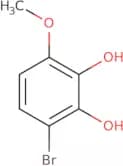
CAS:<p>Versatile small molecule scaffold</p>Formula:C16H11NO3Purity:Min. 95%Molecular weight:265.26 g/mol3-Bromo-6-methoxy-1,2-benzenediol
CAS:<p>Versatile small molecule scaffold</p>Formula:C7H7BrO3Purity:Min. 95%Molecular weight:219.03 g/mol2-(3-Methylphenyl)-2-oxoacetic acid
CAS:<p>Versatile small molecule scaffold</p>Formula:C9H8O3Purity:Min. 95%Molecular weight:164.16 g/mol7,8-Dichloro-1,2,3,4-tetrahydroisoquinoline
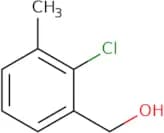
CAS:<p>7,8-Dichloro-1,2,3,4-tetrahydroisoquinoline (7,8-DCT) is a natural compound that can be found in the leaves of the plant "Erythroxylum coca". It has been studied for its potential use as an anticancer drug. 7,8-DCT inhibits the growth of prostate cancer cells and has shown inhibitory properties on α2-adrenergic receptors. This compound also inhibits bacterial growth by disrupting fatty acid biosynthesis and reducing its uptake by mitochondria. 7,8-DCT has also been shown to have antimicrobial resistance. 7,8-DCT is a structural analog of cocaine and acts as a competitive inhibitor to inhibit the enzyme fatty acid amide hydrolase (FAAH). The inhibition of FAAH leads to increased levels of anandamide which is known to modulate pain perception.<br>!-- <br>--></p>Formula:C9H9Cl2NPurity:Min. 95%Molecular weight:202.08 g/mol2-Chloro-3-methylbenzyl alcohol
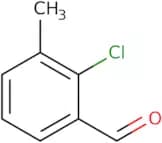
CAS:<p>Versatile small molecule scaffold</p>Formula:C8H9ClOPurity:Min. 95%Molecular weight:156.61 g/mol2-Chloro-3-methylbenzaldehyde
CAS:<p>2-Chloro-3-methylbenzaldehyde is a reagent that is used in organic synthesis. It is an isomeric form of 2-chlorobenzaldehyde. 2-Chloro-3-methylbenzaldehyde can be prepared by the reaction of benzaldehyde with magnesium, which produces chloral and methyl alcohol. The chloride ion then reacts with the methyl alcohol to produce 2-chloro-3-methylbenzaldehyde. It has been shown that it can be used as a grignard reagent to make substituted ketones or esters. This compound also exhibits dihedral symmetry and has two planar forms, one of which is more stable than the other in solution.</p>Formula:C8H7ClOPurity:Min. 95%Molecular weight:154.6 g/mol

![3-Phenyl-3H-imidazo[4,5-b]pyridine](/_next/image/?url=https%3A%2Fstatic.cymitquimica.com%2Fproducts%2F3D%2Fthumb-webp%2FLCA53233.webp&w=3840&q=75)
![1-Phenyl-1H-imidazo[4,5-c]pyridine](/_next/image/?url=https%3A%2Fstatic.cymitquimica.com%2Fproducts%2F3D%2Fthumb-webp%2FLCA53235.webp&w=3840&q=75)
![3-Methyl-1,3-dihydro-2H-imidazo[4,5-c]pyridin-2-one](/_next/image/?url=https%3A%2Fstatic.cymitquimica.com%2Fproducts%2F3D%2Fthumb-webp%2FLCA53236.webp&w=3840&q=75)

![2-Oxo-2H,3H-[1,3]oxazolo[4,5-b]pyridine-5-carboxylic acid](/_next/image/?url=https%3A%2Fstatic.cymitquimica.com%2Fproducts%2F3D%2Fthumb-webp%2FLCA54855.webp&w=3840&q=75)
![N'-Hydroxy-5,7-dimethylpyrazolo[1,5-a]pyrimidine-3-carboximidamide](/_next/image/?url=https%3A%2Fstatic.cymitquimica.com%2Fproducts%2F3D%2Fthumb-webp%2FLCA55251.webp&w=3840&q=75)