Building Blocks
This section contains fundamental products for the synthesis of organic and biological compounds. Building blocks are the essential starting materials used to construct complex molecules through various chemical reactions. They play a critical role in drug discovery, material science, and chemical research. At CymitQuimica, we offer a diverse range of high-quality building blocks to support your innovative research and industrial projects, ensuring you have the essential components for successful synthesis.
Subcategories of "Building Blocks"
- Boronic Acids & Boronic Acid Derivatives(5,778 products)
- Chiral Building Blocks(1,242 products)
- Hydrocarbon Building Blocks(6,098 products)
- Organic Building Blocks(61,092 products)
Found 199296 products of "Building Blocks"
Sort by
Purity (%)
0
100
|
0
|
50
|
90
|
95
|
100
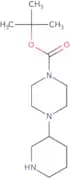
tert-Butyl 4-(piperidin-3-yl)piperazine-1-carboxylate
CAS:<p>Versatile small molecule scaffold</p>Formula:C14H27N3O2Purity:Min. 95%Molecular weight:269.38 g/molEthyl 2-(trifluoromethyl)but-2-enoate
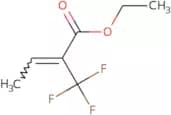
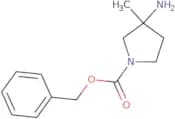
CAS:<p>Ethyl 2-(trifluoromethyl)but-2-enoate is a radiosensitizer that has been shown to be an effective treatment for cancer. It has the ability to modify the sensitivity of cells to ionizing radiation by binding to DNA and altering its structure. This allows for greater damage to occur, which can lead to cell death. Ethyl 2-(trifluoromethyl)but-2-enoate binds to DNA in the imidazole ring and also interacts with electrons, which are transferred from one molecule of this drug to another molecule of DNA. The compound also contains fluorine atoms that are responsible for its high electron affinity, as well as a carbon atom that is bonded with two fluorine atoms and an organic group.</p>Formula:C7H9F3O2Purity:Min. 95%Molecular weight:182.14 g/molBenzyl 3-amino-3-methylpyrrolidine-1-carboxylate
CAS:<p>Versatile small molecule scaffold</p>Formula:C13H18N2O2Purity:Min. 95%Molecular weight:234.29 g/mol4-[2-({[(tert-Butoxy)carbonyl]amino}methyl)phenyl]benzoic acid
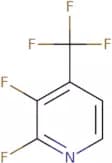
CAS:Versatile small molecule scaffoldFormula:C19H21NO4Purity:Min. 95%Molecular weight:327.4 g/mol2,3-Difluoro-4-(trifluoromethyl)pyridine
CAS:<p>Versatile small molecule scaffold</p>Formula:C6H2F5NPurity:Min. 95%Molecular weight:183.08 g/mol6,6-difluoro-3-azabicyclo[3.1.0]hexane hydrochloride
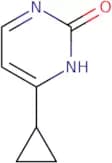
CAS:<p>Versatile small molecule scaffold</p>Formula:C5H8ClF2NPurity:Min. 95%Molecular weight:155.6 g/mol4-Cyclopropylpyrimidin-2(1H)-one
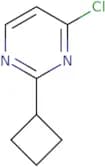
CAS:<p>Versatile small molecule scaffold</p>Formula:C7H8N2OPurity:Min. 95%Molecular weight:136.15 g/mol4-Chloro-2-cyclobutylpyrimidine
CAS:<p>Versatile small molecule scaffold</p>Formula:C8H9ClN2Purity:Min. 95%Molecular weight:168.62 g/mol2-Amino-4-(cyclobutyl)pyrimidine
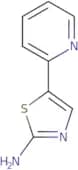
CAS:<p>Versatile small molecule scaffold</p>Formula:C8H11N3Purity:Min. 95%Molecular weight:149.19 g/mol5-(Pyridin-2-yl)-1,3-thiazol-2-amine
CAS:<p>Versatile small molecule scaffold</p>Formula:C8H7N3SPurity:Min. 95%Molecular weight:177.23 g/mol7-Bromopyrido[3,2-d]pyrimidine-2,4(1H,3H)-dione
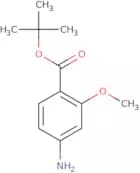
CAS:<p>Versatile small molecule scaffold</p>Formula:C7H4BrN3O2Purity:Min. 95%Molecular weight:242.03 g/moltert-Butyl 4-amino-2-methoxybenzoate
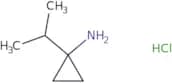
CAS:<p>Tert-butyl 4-amino-2-methoxybenzoate (TBAMB) is a retinoid that is commonly used in medicinal chemistry as an analog of retinoic acid. TBAMB has been shown to be a specific agonist of the retinoic acid receptor and can bind to the template with high affinity, which may be due to its lipophilicity and hydrophobicity. TBAMB also has good oral bioavailability, which makes it a promising candidate for new drugs to treat various diseases.</p>Formula:C12H17NO3Purity:Min. 95%Molecular weight:223.27 g/mol1-(Propan-2-yl)cyclopropan-1-amine hydrochloride
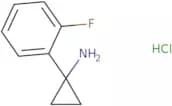
CAS:<p>Versatile small molecule scaffold</p>Formula:C6H14ClNPurity:Min. 95%Molecular weight:135.63 g/mol1-(2-Fluorophenyl)cyclopropan-1-amine hydrochloride
CAS:<p>Versatile small molecule scaffold</p>Formula:C9H11ClFNPurity:Min. 95%Molecular weight:187.64 g/mol1-Methyl-3-nitro-1H-pyrazole-5-carbaldehyde
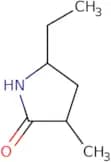
CAS:Versatile small molecule scaffoldFormula:C5H5N3O3Purity:Min. 95%Molecular weight:155.11 g/mol5-Ethyl-3-methylpyrrolidin-2-one
CAS:<p>Versatile small molecule scaffold</p>Formula:C7H13NOPurity:Min. 95%Molecular weight:127.18 g/mol4-(6-Amino-1,2-dihydroquinoxalin-2-ylidene)cyclohexa-2,5-dien-1-one
CAS:<p>Versatile small molecule scaffold</p>Formula:C14H11N3OPurity:Min. 95%Molecular weight:237.26 g/mol3,6-Dibromopyridine-2-carbaldehyde
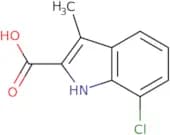
CAS:<p>Versatile small molecule scaffold</p>Formula:C6H3Br2NOPurity:Min. 95%Molecular weight:264.9 g/mol7-Chloro-3-methyl-1H-indole-2-carboxylic acid
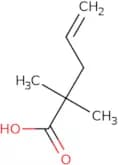
CAS:<p>Versatile small molecule scaffold</p>Formula:C10H8ClNO2Purity:Min. 95%Molecular weight:209.63 g/mol2,2-Dimethyl-4-pentenoic Acid
CAS:<p>2,2-Dimethyl-4-pentenoic acid is a decarboxylating agent that converts the carboxylic acid group to an aldehyde. It is commonly used as a reducing agent in organic synthesis, especially for the conversion of esters and nitriles to alcohols and amines respectively. The synthesis of 2,2-dimethyl-4-pentenoic acid is achieved by reacting piperidine with propylene oxide. This reaction proceeds via a six-membered ring intermediate that decomposes to form the final product. The reaction can be catalyzed with peroxide or hydrogen peroxide, which leads to a high yield. 2,2-Dimethyl-4-pentenoic acid has been shown to be effective against hyperproteinemia and lipogenous disorders such as steatosis and cholestasis.</p>Formula:C7H12O2Purity:Min. 95%Molecular weight:128.17 g/mol

![4-[2-({[(tert-Butoxy)carbonyl]amino}methyl)phenyl]benzoic acid](/_next/image/?url=https%3A%2Fstatic.cymitquimica.com%2Fproducts%2F3D%2Fthumb-webp%2FQYB03462.webp&w=3840&q=75)
![6,6-difluoro-3-azabicyclo[3.1.0]hexane hydrochloride](/_next/image/?url=https%3A%2Fstatic.cymitquimica.com%2Fproducts%2F3D%2Fthumb-webp%2FQYB07113.webp&w=3840&q=75)

![7-Bromopyrido[3,2-d]pyrimidine-2,4(1H,3H)-dione](/_next/image/?url=https%3A%2Fstatic.cymitquimica.com%2Fproducts%2F3D%2Fthumb-webp%2FQYB07437.webp&w=3840&q=75)