Building Blocks
This section contains fundamental products for the synthesis of organic and biological compounds. Building blocks are the essential starting materials used to construct complex molecules through various chemical reactions. They play a critical role in drug discovery, material science, and chemical research. At CymitQuimica, we offer a diverse range of high-quality building blocks to support your innovative research and industrial projects, ensuring you have the essential components for successful synthesis.
Subcategories of "Building Blocks"
- Boronic Acids & Boronic Acid Derivatives(5,778 products)
- Chiral Building Blocks(1,242 products)
- Hydrocarbon Building Blocks(6,098 products)
- Organic Building Blocks(61,098 products)
Found 199594 products of "Building Blocks"
Sort by
Purity (%)
0
100
|
0
|
50
|
90
|
95
|
100
6-Benzyl-6-azabicyclo[3.2.1]octan-3-one
CAS:<p>Versatile small molecule scaffold</p>Formula:C14H17NOPurity:Min. 95%Molecular weight:215.29 g/mol(1R,3S,5S)-6,6-Dimethylbicyclo[3.1.0]hexan-3-ol
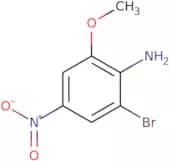
CAS:<p>Versatile small molecule scaffold</p>Formula:C8H14OPurity:Min. 95%Molecular weight:126.2 g/mol2-bromo-6-methoxy-4-nitroaniline
CAS:<p>Versatile small molecule scaffold</p>Formula:C7H7BrN2O3Purity:Min. 95%Molecular weight:247 g/molOctahydropyrrolo[1,2-a]piperazin-1-one
CAS:<p>Versatile small molecule scaffold</p>Formula:C7H12N2OPurity:Min. 95%Molecular weight:140.18 g/molOctahydropyrrolo[1,2-a]piperazin-3-one
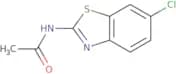
CAS:<p>Versatile small molecule scaffold</p>Formula:C7H12N2OPurity:Min. 95%Molecular weight:140.18 g/molN-(6-Chloro-1,3-benzothiazol-2-yl)acetamide
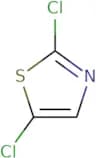
CAS:<p>Versatile small molecule scaffold</p>Formula:C9H7ClN2OSPurity:Min. 95%Molecular weight:226.68 g/mol2,5-dichlorothiazole
CAS:<p>2,5-Dichlorothiazole is a nitroaromatic compound with a six-membered ring. It is an anionic molecule that has been shown to be a good nucleophile in the presence of a transition metal. 2,5-Dichlorothiazole interacts with piperidine to form a 1:1 adduct. This reaction proceeds through the formation of an intermediate nitroso species, which undergoes nucleophilic attack by piperidine. The kinetic data for this reaction have been found to be dependent on the concentration of piperidine and temperature.</p>Formula:C3HCl2NSPurity:Min. 95%Molecular weight:154.01 g/mol4-(2-Methylphenyl)-5-(pyridin-4-yl)-4H-1,2,4-triazole-3-thiol
CAS:<p>Versatile small molecule scaffold</p>Formula:C14H12N4SPurity:Min. 95%Molecular weight:268.34 g/mol4-(4-Methylphenyl)-5-(pyridin-4-yl)-4H-1,2,4-triazole-3-thiol
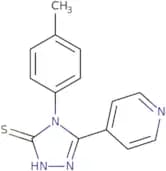
CAS:<p>Versatile small molecule scaffold</p>Formula:C14H12N4SPurity:Min. 95%Molecular weight:268.34 g/mol3-(Methylsulfanyl)butanoic acid
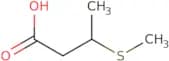
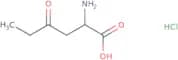
CAS:<p>Versatile small molecule scaffold</p>Formula:C5H10O2SPurity:Min. 95%Molecular weight:134.2 g/mol2-Amino-4-oxohexanoic acid hydrochloride
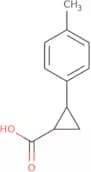
CAS:<p>Versatile small molecule scaffold</p>Formula:C6H12ClNO3Purity:Min. 95%Molecular weight:181.62 g/molrac-(1R,2R)-2-(4-Methylphenyl)cyclopropane-1-carboxylic acid
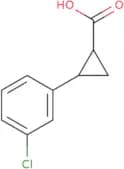
CAS:Versatile small molecule scaffoldFormula:C11H12O2Purity:Min. 95%Molecular weight:176.21 g/molrac-(1R,2R)-2-(3-Chlorophenyl)cyclopropane-1-carboxylic acid
CAS:<p>Versatile small molecule scaffold</p>Formula:C10H9ClO2Purity:Min. 95%Molecular weight:196.63 g/molrac-(1R,2R)-2-(4-Nitrophenyl)cyclopropane-1-carboxylic acid
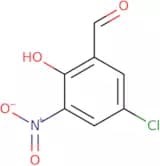
CAS:<p>Versatile small molecule scaffold</p>Formula:C10H9NO4Purity:Min. 95%Molecular weight:207.18 g/mol5-Chloro-3-nitrosalicylaldehyde
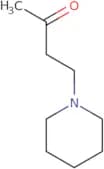
CAS:<p>5-Chloro-3-nitrosalicylaldehyde is a cyclohexanol with catalytic properties. It has been shown to have high activity in the transfer and selectivity of cyclohexanone from cyclohexane. 5-Chloro-3-nitrosalicylaldehyde has also been used as a ligand in the preparation of catalysts for electrochemical reactions. 5-Chloro-3-nitrosalicylaldehyde is used in spectroscopic studies and elemental analysis, which includes elemental analysis by gas chromatography, atomic absorption spectroscopy, inductively coupled plasma mass spectrometry, and X ray powder diffraction.</p>Formula:C7H4ClNO4Purity:Min. 95%Molecular weight:201.56 g/mol4-(Piperidin-1-yl)butan-2-one
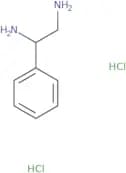
CAS:<p>Versatile small molecule scaffold</p>Formula:C9H17NOPurity:Min. 95%Molecular weight:155.24 g/mol1-Phenylethane-1,2-diamine dihydrochloride
CAS:<p>Versatile small molecule scaffold</p>Formula:C8H14Cl2N2Purity:Min. 95%Molecular weight:209.12 g/mol2-Propenoic acid, 3-(4-cyanophenyl)-, (E)-
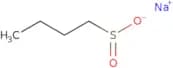
CAS:<p>2-Propenoic acid, 3-(4-cyanophenyl)-, (E)- is a fatty acid that is used in the production of biodiesel. This reaction is catalyzed by an acid methyl ester, which can be either reactive or unreactive. The product of this reaction - fatty acid methyl esters - has significant activity as an anion and has a high boiling point. It also has the potential to be used as a fuel in the future.</p>Formula:C10H7NO2Purity:Min. 95%Molecular weight:173.17 g/molSodium butane-1-sulfinate
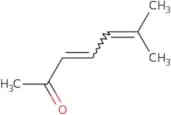
CAS:<p>Sodium butane-1-sulfinate is a reagent that can be used to synthesize sulfoxides, pyrrole derivatives, and other organic compounds. It is also used as a salt form for pharmaceuticals. Sodium butane-1-sulfinate may be used to produce sulfoxides, which are often used in organic synthesis because they are both reactive and unreactive. This compound has been found to be an antagonist of the CRTH2 receptor, which is involved in the production of prostaglandins that regulate inflammation.</p>Formula:C4H9NaO2SPurity:Min. 95%Molecular weight:144.17 g/mol6-Methyl-3,5-heptadien-2-one
CAS:<p>This product is a mixture of 6-methyl-3,5-heptadien-2-one and 2,6-dimethyloctane. It has a pleasant, fruity odor. It is used as an additive for perfumes and other products to improve the smell. This product can be found in foods such as meat, cheese, chocolate, and coffee. The minutiflora plant contains this compound. It is also present in propolis and chitosan nanoparticles (as an antioxidant). The maltol content of this product is about 95% with yields ranging from 10% to 50%.</p>Formula:C8H12OPurity:Min. 95%Molecular weight:124.18 g/mol
![6-Benzyl-6-azabicyclo[3.2.1]octan-3-one](/_next/image/?url=https%3A%2Fstatic.cymitquimica.com%2Fproducts%2F3D%2Fthumb-webp%2FRAA60747.webp&w=3840&q=75)

![(1R,3S,5S)-6,6-Dimethylbicyclo[3.1.0]hexan-3-ol](/_next/image/?url=https%3A%2Fstatic.cymitquimica.com%2Fproducts%2F3D%2Fthumb-webp%2FRAA61381.webp&w=3840&q=75)
![Octahydropyrrolo[1,2-a]piperazin-1-one](/_next/image/?url=https%3A%2Fstatic.cymitquimica.com%2Fproducts%2F3D%2Fthumb-webp%2FRAA62061.webp&w=3840&q=75)
![Octahydropyrrolo[1,2-a]piperazin-3-one](/_next/image/?url=https%3A%2Fstatic.cymitquimica.com%2Fproducts%2F3D%2Fthumb-webp%2FRAA62083.webp&w=3840&q=75)