Building Blocks
This section contains fundamental products for the synthesis of organic and biological compounds. Building blocks are the essential starting materials used to construct complex molecules through various chemical reactions. They play a critical role in drug discovery, material science, and chemical research. At CymitQuimica, we offer a diverse range of high-quality building blocks to support your innovative research and industrial projects, ensuring you have the essential components for successful synthesis.
Subcategories of "Building Blocks"
- Boronic Acids & Boronic Acid Derivatives(5,778 products)
- Chiral Building Blocks(1,242 products)
- Hydrocarbon Building Blocks(6,098 products)
- Organic Building Blocks(61,092 products)
Found 199296 products of "Building Blocks"
Sort by
Purity (%)
0
100
|
0
|
50
|
90
|
95
|
100
3-Chloro-6,7,8,9-tetrahydro-5H-benzo[7]annulen-5-one
CAS:Versatile small molecule scaffoldFormula:C11H11ClOPurity:Min. 95%Molecular weight:194.66 g/mol(S)-Willardiine
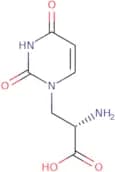
CAS:<p>(S)-Willardiine is a sodium salt that belongs to the group of pharmacological agents. It is used as a chemical intermediate, but has been found to have some biological properties. In vivo studies in rats have shown that (S)-willardiine inhibits the release of glutamate and GABA in the cortex and hippocampus, which may be related to its ability to increase locomotor activity. Disulfide bond formation is required for biological activity, which has been observed using human serum. The structure of (S)-willardiine was determined by x-ray crystallography at 1.5 Å resolution, revealing that it contains an asymmetric unit consisting of one molecule each of (S)-willardiine and sodium chloride.</p>Formula:C7H9N3O4Purity:Min. 95%Molecular weight:199.17 g/mol5-Phenyl-4-pyrimidinamine
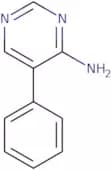
CAS:<p>Versatile small molecule scaffold</p>Formula:C10H9N3Purity:Min. 95%Molecular weight:171.2 g/mol4-Aminobutan-2-one hydrochloride
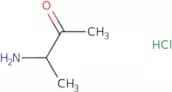
CAS:<p>4-Aminobutan-2-one hydrochloride is a reagent that is used in organic synthesis. It can be used as an electrophile to form β-unsaturated sulfides and sulfones. 4-Aminobutan-2-one hydrochloride reacts with sodium sulfide to form 2,4-dichlorophenylsulfane, which is a precursor for the synthesis of phenyldiazonium salts. The nucleophilicity of 4-aminobutan-2-one hydrochloride is due to its sulfur atom, which can act as a nucleophile in the presence of chloride ion. This reaction leads to the formation of methylketones from nitriles and condensation products from methyl groups and chlorides.</p>Formula:C4H10ClNOPurity:Min. 95%Molecular weight:123.58 g/mol1-Amino-3-methylbutan-2-one hydrochloride
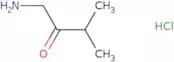
CAS:<p>Phenyl 1-amino-3-methylbutan-2-one hydrochloride is a phenyl compound that has been shown to be an efficient hypolipidemic agent. It has been shown to reduce lipid levels in the blood and can be used as a drug discovery tool for the creation of new drugs. Phenyl 1-amino-3-methylbutan-2-one hydrochloride mediates advances in drug discovery by promoting the formation of carbon atoms, which are necessary for the synthesis of many drugs.</p>Formula:C5H12ClNOPurity:Min. 95%Molecular weight:137.61 g/mol1-Amino-4-methyl-2-pentanone hydrochloride
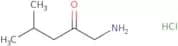
CAS:<p>1-Amino-4-methyl-2-pentanone hydrochloride is a phenyl derivative that is used as an antihyperlipidemic agent. It has been shown to reduce the concentration of cholesterol, triglycerides, phospholipids, and free fatty acids in the blood by inhibiting the synthesis of these lipids in the liver. This drug may be useful for the treatment of patients with type II diabetes mellitus or other types of hyperlipidemia.</p>Formula:C6H14ClNOPurity:Min. 95%Molecular weight:151.63 g/mol3-(Carbamoylamino)-3-phenylpropanoic acid
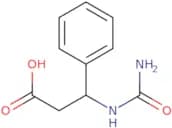
CAS:<p>Versatile small molecule scaffold</p>Formula:C10H12N2O3Purity:Min. 95%Molecular weight:208.21 g/mol6-Bromo-1,3-dimethyl-1,2,3,4-tetrahydropyrimidine-2,4-dione
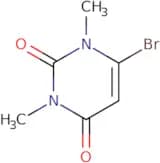
CAS:Versatile small molecule scaffoldFormula:C6H7BrN2O2Purity:Min. 95%Molecular weight:219.04 g/mol4-Thiomorpholinecarbothioamide 1,1-dioxide
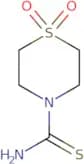
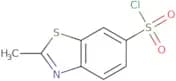
CAS:<p>Versatile small molecule scaffold</p>Formula:C5H10N2O2S2Purity:Min. 95%Molecular weight:194.3 g/mol2-Methyl-benzothiazole-6-sulfonyl chloride
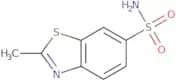
CAS:<p>Versatile small molecule scaffold</p>Formula:C8H6ClNO2S2Purity:Min. 95%Molecular weight:247.72 g/mol2-Methyl-1,3-benzothiazole-6-sulfonamide
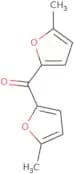
CAS:Versatile small molecule scaffoldFormula:C8H8N2O2S2Purity:Min. 95%Molecular weight:228.3 g/molBis-(5-methyl-furan-2-yl)-methanone
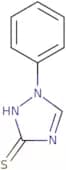
CAS:<p>Versatile small molecule scaffold</p>Formula:C11H10O3Purity:Min. 95%Molecular weight:190.2 g/mol1-Phenyl-1H-1,2,4-triazole-3-thiol
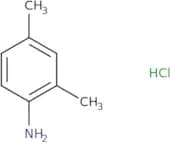
CAS:Versatile small molecule scaffoldFormula:C8H7N3SPurity:Min. 95%Molecular weight:177.23 g/mol2,4-Dimethylaniline Hydrochloride
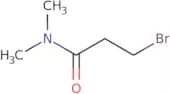
CAS:<p>2,4-Dimethylaniline hydrochloride is a nitrogen containing compound that can be found in the environment. It has been shown to have antimicrobial activity against gram-positive bacteria and fungi. The mechanism of 2,4-dimethylaniline hydrochloride is through the transfer of electrons from cytochrome c oxidase to molecular oxygen (O2). This electron transfer results in the oxidation of 2,4-dimethylaniline hydrochloride and the reduction of molecular oxygen (O2) to water (H2O). 2,4-Dimethylaniline hydrochloride also has a basic structure with two nitrogen atoms that are able to form intermolecular hydrogen bonding interactions. The matrix effect may have an impact on the analytical method used for this compound. The kinetic studies were done at low temperature and high concentrations. Solid phase microextraction was used as an analytical method for this compound. Coordination geometry was not discussed in this article</p>Formula:C8H11N·HClPurity:Min. 95%Molecular weight:157.64 g/mol3-Bromo-N,N-dimethylpropanamide
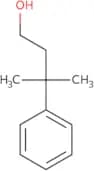
CAS:<p>Versatile small molecule scaffold</p>Formula:C5H10BrNOPurity:Min. 95%Molecular weight:180.04 g/mol3-Methyl-3-phenylbutan-1-ol
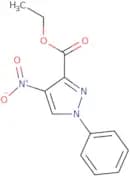
CAS:<p>3-Methyl-3-phenylbutan-1-ol is an intramolecular compound that has a cationic center. It is the result of cycloalkylation of phenyl group with a deuterium atom at the 3 position of the molecule. The cationic center can be substituted with other alkyl groups to form isomeric compounds. 3-Methyl-3-phenylbutan-1-ol can also be synthesized using deuterated cations in place of hydrogen ions, which are called deuterated compounds.</p>Formula:C11H16OPurity:Min. 95%Molecular weight:164.24 g/molEthyl 4-nitro-1-phenyl-1H-pyrazole-3-carboxylate
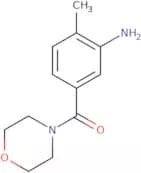
CAS:<p>Ethyl 4-nitro-1-phenyl-1H-pyrazole-3-carboxylate (NPC) is a potent and selective antagonist of the a3 adenosine receptor. It binds to the receptor with high affinity and has been shown to inhibit adenosine-mediated activation of the phosphoinositide 3 (PI3) kinase pathway. NPC is in preclinical development for use as an antihypertensive agent, and has also been investigated as a potential treatment for asthma.</p>Formula:C12H11N3O4Purity:Min. 95%Molecular weight:261.23 g/mol2-Methyl-5-(morpholine-4-carbonyl)aniline
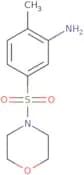
CAS:<p>Versatile small molecule scaffold</p>Formula:C12H16N2O2Purity:Min. 95%Molecular weight:220.27 g/mol2-Methyl-5-(morpholine-4-sulfonyl)-phenylamine
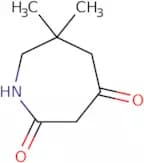
CAS:<p>Versatile small molecule scaffold</p>Formula:C11H16N2O3SPurity:Min. 95%Molecular weight:256.32 g/mol6,6-Dimethylazepane-2,4-dione
CAS:<p>Versatile small molecule scaffold</p>Formula:C8H13NO2Purity:Min. 95%Molecular weight:155.19 g/mol
![3-Chloro-6,7,8,9-tetrahydro-5H-benzo[7]annulen-5-one](/_next/image/?url=https%3A%2Fstatic.cymitquimica.com%2Fproducts%2F3D%2Fthumb-webp%2FWAA41377.webp&w=3840&q=75)