


Building Blocks
This section contains fundamental products for the synthesis of organic and biological compounds. Building blocks are the essential starting materials used to construct complex molecules through various chemical reactions. They play a critical role in drug discovery, material science, and chemical research. At CymitQuimica, we offer a diverse range of high-quality building blocks to support your innovative research and industrial projects, ensuring you have the essential components for successful synthesis.
Subcategories of "Building Blocks"
- Boronic Acids & Boronic Acid Derivatives(5,756 products)
- Chiral Building Blocks(1,242 products)
- Hydrocarbon Building Blocks(6,095 products)
- Organic Building Blocks(61,037 products)
Found 196200 products of "Building Blocks"
Sort by
Purity (%)
0
100
|
0
|
50
|
90
|
95
|
100
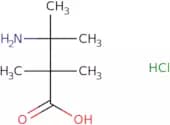
3-Amino-2,2,3-trimethylbutanoic acid hydrochloride
CAS:<p>Versatile small molecule scaffold</p>Formula:C7H16ClNO2Purity:Min. 95%Molecular weight:181.66 g/mol4-(Methylsulfonyl)pyridine
CAS:<p>4-(Methylsulfonyl)pyridine is a pyridine compound that is a receptor antagonist. It has neuropeptide activity, and it can be used in biological research. 4-(Methylsulfonyl)pyridine has been shown to have inhibitory activity on the release of acetylcholine from rat cerebral cortex slices, as well as on the release of norepinephrine from rat brain synaptosomes. The inhibition was reversible and the potency was similar to that of atropine and scopolamine. 4-(Methylsulfonyl)pyridine also inhibited the binding of [3H]quinuclidinyl benzilate (QNB) to muscarinic receptors in rat ileum membranes with an IC50 value of 1 microM.</p>Formula:C6H7NO2SPurity:Min. 95%Molecular weight:157.19 g/mol4-(4-Nitrophenoxy)benzonitrile
CAS:<p>Versatile small molecule scaffold</p>Formula:C13H8N2O3Purity:Min. 95%Molecular weight:240.21 g/mol4-(4-Aminophenoxy)benzonitrile
CAS:<p>4-(4-Aminophenoxy)benzonitrile is a cell death inhibitor that inhibits the activity of kinases by binding to ATP. It has been shown to inhibit the transcription factor FOXO1, which regulates the expression of genes involved in apoptosis and cell growth. 4-(4-Aminophenoxy)benzonitrile has been shown to inhibit human cancer cells, including those with mutated p53 and Rb proteins. This drug also modulates other drugs, such as sorafenib, which is an inhibitor of angiogenesis.</p>Formula:C13H10N2OPurity:Min. 95%Molecular weight:210.23 g/mol1-(Propylthio)propan-2-one
CAS:<p>Versatile small molecule scaffold</p>Formula:C6H12OSPurity:Min. 95%Molecular weight:132.23 g/molTetrakis(dimethylsilyloxy)silane
CAS:<p>Tetrakis(dimethylsilyloxy)silane is a reactive molecule that is used in surface science as a monomer. It has been shown to be an effective catalyst for ring-opening polymerization of phenyl groups and other functional groups, with the production of polymers with high molecular weight. Tetrakis(dimethylsilyloxy)silane has also been shown to have chemical stability and good surface properties. This molecule is used for detection sensitivity in electrochemical impedance spectroscopy, which allows it to be used as a probe molecule. It can also be used for microscopy techniques such as electron microscopy and scanning electron microscopy. Tetrakis(dimethylsilyloxy)silane does not react with acids or bases, so it can be used for equilibration reactions and gel permeation chromatography.</p>Formula:C8H28O4Si5Purity:Min. 95%Molecular weight:328.73 g/mol2-(2-Fluoro-phenoxy)-propionic acid
CAS:<p>Versatile small molecule scaffold</p>Formula:C9H9FO3Purity:Min. 95%Molecular weight:184.16 g/molN-(2-Methylphenyl)prop-2-enamide
CAS:<p>Versatile small molecule scaffold</p>Formula:C10H11NOPurity:Min. 95%Molecular weight:161.2 g/mol3-(Prop-2-enamido)benzoic acid
CAS:<p>Versatile small molecule scaffold</p>Formula:C10H9NO3Purity:Min. 95%Molecular weight:191.18 g/molMethyl 2-methyl-3-oxobutanoate
CAS:<p>Methyl 2-methyl-3-oxobutanoate (MMOB) is a chemical compound that is the ester of methyl butanoate and methanol. MMOB can be prepared by allylation of molybdenum, forming a Grignard reagent. This reaction produces an enolate, which reacts with the diastereomer to form the product. The stereochemical sequence for this reaction is anti. The optical rotation for MMOB can be either dextrorotatory or levorotatory, depending on the configuration of the product's chiral center.<br>Methyl 2-methyl-3-oxobutanoate has been used as an attractant in insect studies and as a precursor to nonactin, a herbicide that inhibits plant growth by interfering with photosynthesis.</p>Formula:C6H10O3Purity:Min. 95%Molecular weight:130.14 g/mol2-Trifluoromethanesulfonylaniline
CAS:<p>Versatile small molecule scaffold</p>Formula:C7H6F3NO2SPurity:Min. 95%Molecular weight:225.19 g/mol3-Ethoxy-3-oxo-2-phenylpropanoic acid
CAS:<p>3-Ethoxy-3-oxo-2-phenylpropanoic acid is a ligand that has been used to study the protonation of acidic molecules. It binds to an anion and forms a cyclic structure. 3-Ethoxy-3-oxo-2-phenylpropanoic acid is metabolized by the liver, and excreted in urine. The reaction mechanism for 3-ethoxy-3-oxo-2-phenylpropanoic acid is currently unknown, but it may be similar to that of atropine or other quaternary ammonium salts.</p>Formula:C11H12O4Purity:Min. 95%Molecular weight:208.21 g/mol(4-Bromo-2,6-dimethylphenyl)methanol
CAS:<p>Versatile small molecule scaffold</p>Formula:C9H11BrOPurity:Min. 95%Molecular weight:215.09 g/molMethyl (2S)-2-[(furan-2-yl)formamido]propanoate
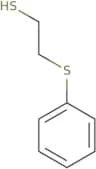
CAS:<p>Versatile small molecule scaffold</p>Formula:C9H11NO4Purity:Min. 95%Molecular weight:197.19 g/mol2-(Phenylsulfanyl)ethane-1-thiol
CAS:<p>Versatile small molecule scaffold</p>Formula:C8H10S2Purity:Min. 95%Molecular weight:170.3 g/mol5-Hydroxy-2-methyl-naphtho[1,2-b]furan-3-carboxylic acid
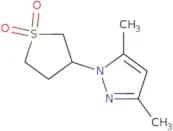
CAS:<p>Versatile small molecule scaffold</p>Formula:C14H10O4Purity:Min. 95%Molecular weight:242.23 g/mol3-(3,5-Dimethyl-1H-pyrazol-1-yl)tetrahydro-1H-thiophene-1,1-dione
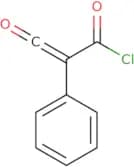
CAS:<p>Versatile small molecule scaffold</p>Formula:C9H14N2O2SPurity:Min. 95%Molecular weight:214.29 g/mol3-Oxo-2-phenylprop-2-enoyl chloride
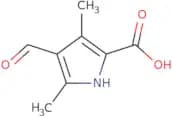
CAS:<p>The molecule 3-oxo-2-phenylprop-2-enoyl chloride is a diazirine, which is an organic compound that consists of two fused rings. It has two possible isomers, the cis and trans forms. The cis form has a molecular ion with a m/z of 170 while the trans form has a molecular ion with a m/z of 172. These molecules are synthesized by reacting phenyl groups with magnesium oxide in dimethyl acetylenedicarboxylate. The cis form can be synthesized using UV irradiation while the trans form cannot.</p>Formula:C9H5ClO2Purity:Min. 95%Molecular weight:180.59 g/mol4-Formyl-3,5-dimethyl-1H-pyrrole-2-carboxylic acid
CAS:<p>Versatile small molecule scaffold</p>Formula:C8H9NO3Purity:Min. 95%Molecular weight:167.16 g/mol4-{[(2E)-2-(Hydroxyimino)ethanoyl]amino}benzoic acid
CAS:<p>Versatile small molecule scaffold</p>Formula:C9H8N2O4Purity:Min. 95%Molecular weight:208.17 g/mol




![Methyl (2S)-2-[(furan-2-yl)formamido]propanoate](/_next/image/?url=https%3A%2Fstatic.cymitquimica.com%2Fproducts%2F3D%2Fthumb-webp%2FSAA10727.webp&w=3840&q=75)
![5-Hydroxy-2-methyl-naphtho[1,2-b]furan-3-carboxylic acid](/_next/image/?url=https%3A%2Fstatic.cymitquimica.com%2Fproducts%2F3D%2Fthumb-webp%2FSAA11291.webp&w=3840&q=75)
![4-{[(2E)-2-(Hydroxyimino)ethanoyl]amino}benzoic acid](/_next/image/?url=https%3A%2Fstatic.cymitquimica.com%2Fproducts%2F3D%2Fthumb-webp%2FSAA12278.webp&w=3840&q=75)