Building Blocks
This section contains fundamental products for the synthesis of organic and biological compounds. Building blocks are the essential starting materials used to construct complex molecules through various chemical reactions. They play a critical role in drug discovery, material science, and chemical research. At CymitQuimica, we offer a diverse range of high-quality building blocks to support your innovative research and industrial projects, ensuring you have the essential components for successful synthesis.
Subcategories of "Building Blocks"
- Boronic Acids & Boronic Acid Derivatives(5,778 products)
- Chiral Building Blocks(1,242 products)
- Hydrocarbon Building Blocks(6,098 products)
- Organic Building Blocks(61,092 products)
Found 199297 products of "Building Blocks"
Sort by
Purity (%)
0
100
|
0
|
50
|
90
|
95
|
100
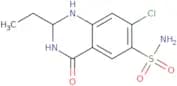
Quinethazone
CAS:<p>Quinethazone is a drug that belongs to the class of angiotensin II receptor antagonists. It is used for the treatment of hypertension and congestive heart failure. Quinethazone inhibits angiotensin II, which causes vasoconstriction, increases blood pressure, and decreases sodium excretion. The drug is also an effective inhibitor of the cardiac enzyme carbonic anhydrase and has been shown to be useful in treating diabetic neuropathy. Quinethazone has been found to have inhibitory properties against complex enzymes involved in infectious diseases such as tuberculosis and hepatitis C. This drug also regulates cardiac tissue growth by inhibiting protein genes, thereby preventing the development of cardiac hypertrophy.</p>Formula:C10H12ClN3O3SPurity:Min. 95%Molecular weight:289.74 g/mol4-Amino-5-formyl-2-methylpyrimidine
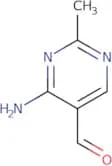
CAS:<p>4-Amino-5-formyl-2-methylpyrimidine is an intermediate in the metabolism of pargyline and is able to inhibit oxidative enzymes. It has also been shown to be a potent inhibitor of the oxidation of aldehydes, ketones, and alcohols to their corresponding carboxylic acids. 4-Amino-5-formyl-2-methylpyrimidine is capable of inhibiting the oxidation of acetonitrile to nitrile with an IC50 value of 3.6 mM. This compound has not been shown to be an inhibitor of cytochrome P450 or monoamine oxidase, but it inhibits pyridoxal phosphate (a cofactor for tyrosine hydroxylase) and can therefore inhibit dopamine synthesis. The postulated mechanism is that 4-amino-5 formyl 2MMP binds to the active site on pyridoxal phosphate, thereby preventing its conversion into</p>Formula:C6H7N3OPurity:Min. 95%Molecular weight:137.14 g/mol2,2-Dichloropropanoic Acid
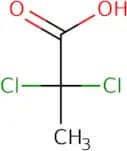
CAS:<p>2,2-Dichloropropanoic Acid is a metabolite of propionic acid that is used in the treatment of autoimmune diseases. It has been shown to inhibit the enzyme activities of calcium pantothenate, polymerase chain, and protease in vitro. 2,2-Dichloropropanoic Acid has also been shown to be effective against bacteria such as Escherichia coli and Klebsiella pneumoniae in animal studies. The optimum concentration for 2,2-dichloropropanoic acid is not yet determined but it has been shown to have no acute toxic effects in rats.</p>Formula:C3H4Cl2O2Purity:Min. 95%Color and Shape:Clear LiquidMolecular weight:142.97 g/mol3,3-Diethylpiperidine-2,4-dione
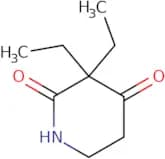
CAS:<p>3,3-Diethylpiperidine-2,4-dione is a film-forming polymer that has been shown to be effective in the treatment of infectious diseases. It is used in pharmaceutical preparations to treat symptoms of bowel disease, food composition to prevent inflammation, and as an analog to amphetamines. 3,3-Diethylpiperidine-2,4-dione binds to the hydroxyl group on human serum albumin, which prevents it from binding with sodium citrate and forming an insoluble salt. This prevents the release of calcium ions from the albumin and alleviates symptoms of infectious diseases.</p>Formula:C9H15NO2Purity:Min. 95%Molecular weight:169.22 g/mol1-Phenylcyclopentanecarbonitrile
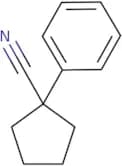
CAS:<p>1-Phenylcyclopentanecarbonitrile (PCN) is a chemical compound that has biological properties. It is used in the production of polyvinyl chloride, polyvinylidene chloride, and other plastics. PCN may also be used as an intermediate for the production of other chemicals such as diammonium cyanide, which is a raw material for the manufacture of fertilizers, and methoxyacetic acid, which is a precursor to pharmaceuticals. PCN has been shown to have neurotoxic effects on the nervous system in mice. It also causes atropine-like effects when administered to rats.</p>Formula:C12H13NPurity:Min. 95%Molecular weight:171.24 g/mol1,1,1-Tris(hydroxymethyl)propane
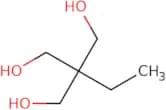
CAS:<p>Tris(hydroxymethyl)propane is a diphenyl ether that has been shown to have an electrochemical impedance spectroscopy (EIS) spectrum in the human serum that is similar to those of other known antioxidants. Tris(hydroxymethyl)propane has been shown to protect against light-induced damage in human skin cells, and it also has radiation protective effects. Tris(hydroxymethyl)propane has also been shown to interact with trimethylolpropane, which is another antioxidant, and this interaction may affect the effectiveness of each agent. Tris(hydroxymethyl)propane inhibits lipid peroxidation by inhibiting the oxidation of fatty acids and hydroxyl groups on proteins.</p>Formula:C6H14O3Purity:Min. 95%Molecular weight:134.17 g/mol3-Methylpentan-3-yl carbamate
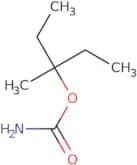
CAS:Controlled Product<p>3-Methylpentan-3-yl carbamate (MMPC) is a chemical compound that has been studied for its potential in the treatment of autoimmune and inflammatory diseases. It is an analog of 3-methylpentanoic acid, which has been shown to have anti-inflammatory activity. MMPC has also been shown to be effective against bowel disease, such as ulcerative colitis and Crohn's disease. MMPC acts by inhibiting the synthesis of proteins that are involved in inflammation and cell proliferation, such as cytokines and matrix metalloproteinases.</p>Formula:C7H15NO2Purity:Min. 95%Molecular weight:145.2 g/molTetrahydrolinalool
CAS:<p>Tetrahydrolinalool is a diphenyl ether that can be used to prepare a film-forming polymer. It is often used as a sample preparation agent for biological samples. Tetrahydrolinalool reacts with chlorine atoms in the presence of sodium carbonate and cationic surfactant to form a glycol ether, which then reacts with piperonal to form an ion channel. This reaction mechanism results in the formation of detergent compositions, which are often used to remove fatty acids and hydroxyl groups from biological samples.</p>Formula:C10H22OPurity:Min. 95%Molecular weight:158.29 g/mol1,1,2-Tribromoethane
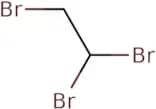
CAS:<p>1,1,2-Tribromoethane is a chemical compound that contains hydrogen and fluorine. It is a colorless liquid that has a boiling point of -114.4°C. 1,1,2-Tribromoethane has been shown to have biological properties as an inhibitor of the enzyme covid-19 pandemic. This compound also has photoelectron spectroscopy and quantum theory in its physical properties. It can be found in water vapor or thermodynamic reactions with carbon dioxide, sulfur dioxide, hydrogen chloride, chlorine atom or chloride ion at high temperatures and pressures. The section of 1,1,2-tribromoethane is covalent and it has a molecular weight of 132.3 g/mol.</p>Formula:C2H3Br3Purity:Min. 95%Molecular weight:266.76 g/mol1,2-Dibromopropane
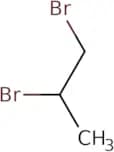
CAS:<p>1,2-Dibromopropane is a chemical that has been used as a solvent and refrigerant. It is also used to produce other chemicals such as ethylene oxide and 1,3-dichloropropane. 1,2-Dibromopropane can be metabolized by the liver or kidney into reactive intermediates that cause damage to DNA. This chemical has been shown to cause an antibody response in rats when orally administered at high doses. The mechanism of this chemical's toxicity is not known, but it may involve the formation of reactive intermediates with the release of glucuronide conjugate and kinetic energy.</p>Formula:C3H6Br2Purity:Min. 95%Molecular weight:201.89 g/molN-[(4-Aminophenyl)sulfonyl]-N-(3,4-dimethyl-5-isoxazolyl)acetamide
CAS:<p>N-(4-aminophenylsulfonyl)-N-(3,4-dimethyl-5-isoxazolyl)acetamide (CAS: 83833-30-1) is a small molecule antibiotic that inhibits bacterial fatty acid synthesis. It binds to the 3'-phosphoadenosine 5'-phosphosulfate (PAPS) synthetase enzyme, which is responsible for converting adenosine 5'-phosphosulfate (APS) to PAPS. This binding prevents the production of APS, blocking the synthesis of fatty acids. In addition, N-(4-aminophenylsulfonyl)-N-(3,4-dimethyl-5-isoxazolyl)acetamide is a potent inhibitor of microbial infection in vitro and in vivo. It has been shown to be effective against viruses and bacteria such as Escherichia coli and Staphylococcus aureus.</p>Formula:C13H15N3O4SPurity:Min. 95%Molecular weight:309.34 g/mol2-Nitrobenzenesulfonic Acid Hydrate
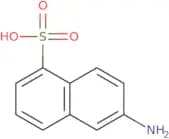
CAS:<p>2-Nitrobenzenesulfonic acid hydrate (2NBS) is a reactive, sulfonated organic compound that has been used for many years as a precursor for pharmaceuticals. 2NBS reacts with sodium carbonate to form a mixture of nitrobenzenesulfonic acids. This process is known as sulfonation and can be used for biological treatment, such as wastewater treatment. 2NBS is also known to react with styryl dye in an intramolecular hydrogen bond to form the corresponding hydroxyl group. 2NBS also has antiinflammatory activities and has been found to inhibit the inflammatory response in rat models of inflammatory bowel disease.</p>Formula:C6H5NO5S·xH2OPurity:Min. 95%Molecular weight:203.17 g/mol2-Aminonaphthalene-5-sulfonic acid
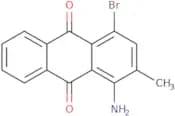
CAS:<p>2-Aminonaphthalene-5-sulfonic acid is a sulfonated aromatic amine that can be synthesized by reacting sodium salt of 2-naphthol with sulfur trioxide. It is a structural isomer of 1-aminoanthracene and has been used in the synthesis of other sulfonated compounds. 2-Aminonaphthalene-5-sulfonic acid has carcinogenic activity, and its use as an intermediate in chemical synthesis should be limited to short reaction times at low temperatures.</p>Formula:C10H9NO3SPurity:Min. 95%Molecular weight:223.25 g/mol1-Amino-4-bromo-2-methylanthraquinone
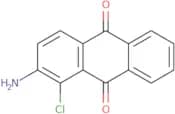
CAS:<p>1-Amino-4-bromo-2-methylanthraquinone is a hypervalent molecule that binds to the iron atom in human liver and human lymphocytes. It has been shown to have a protective effect against radiation, and also may have potential as an antiviral agent. 1-Amino-4-bromo-2-methylanthraquinone has been shown to inhibit the replication of retroviruses, such as HIV, by binding to the virus and preventing it from entering into host cells. The colorant properties of this compound are used in paints and dyes. 1-Amino-4-bromo-2-methylanthraquinone can be synthesized by reacting bromobenzene with ethyleneimine.</p>Formula:C15H10BrNO2Purity:Min. 95%Molecular weight:316.15 g/mol2-Amino-1-chloro-9,10-dihydroanthracene-9,10-dione
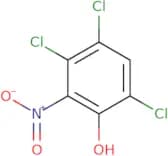
CAS:2-Amino-1-chloro-9,10-dihydroanthracene-9,10-dione is a naphthalene derivative that can be used as an intermediate in the synthesis of dyes. It has been shown to be an acid binder and can react with nitrotoluene, dimethylamide, and copper chloride to form 2-aminoantranilic acid. The nitrogen atom in this molecule is also reactive and can bind to chlorides, iodides, and chlorine molecules to form 2-aminobenzylidene, 4-chloroiodobenzene, or 4-(2'-nitrobenzylidene)phenol.Formula:C14H8ClNO2Purity:Min. 95%Molecular weight:257.67 g/mol6-Iodo-2,4,5-trichlorophenol
CAS:<p>6-Iodo-2,4,5-trichlorophenol is a fungicide that inhibits fungal growth by interfering with the synthesis of ergosterol, a component of the cell membrane. This chemical can be found as pale yellow or yellow crystals and has a volatile odor. It is used in pesticides and preservatives because it has fungicidal properties. 6-Iodo-2,4,5-trichlorophenol is effective against fungi such as Aspergillus niger and Penicillium chrysogenum.</p>Formula:C6H2Cl3NO3Purity:Min. 95%Molecular weight:242.4 g/mol8-Chloro-1-naphthalenesulfonyl chloride
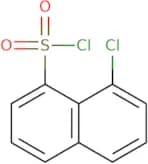
CAS:<p>Versatile small molecule scaffold</p>Formula:C10H6Cl2O2SPurity:Min. 95%Molecular weight:261.12 g/mol1-Methyl-1,4-dihydroquinolin-4-one
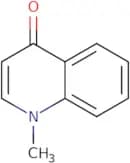
CAS:<p>1-Methyl-1,4-dihydroquinolin-4-one is a cholinergic agent that is used in medicines. It is a hydrochloric acid salt of quinoline derivatives and exhibits clinical use as an anticholinesterase. This drug has also been shown to have locomotor activity in animals. The effective dose of 1-methyl-1,4-dihydroquinolin-4-one is 0.3mg/kg body weight (bw). This chemical has been shown to be toxic when given with radiation or echinopsidine and can inhibit protein synthesis in the cell.</p>Formula:C10H9NOPurity:Min. 95%Molecular weight:159.18 g/mol8-Amino-1-naphthol-5-sulfonic acid
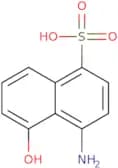
CAS:<p>8-Amino-1-naphthol-5-sulfonic acid is a fluorescent compound that reacts with phosphate groups of proteins and nucleic acids. The conjugate between 8-amino-1-naphthol and sulfonic acid, i.e., 8ANAS, is used as a probe to identify phosphatases and hydroxyproline in polyvinyl. The chromatographic separation of 8ANAS from the reaction mixture is accomplished by piperazine as an acidic mobile phase. The phosphorylation assay using 8ANAS can be used for the measurement of protein kinase activity in cells and tissues. In addition, it has been found that 8ANAS has anti-inflammatory properties against various inflammatory diseases such as neuro2a cells.</p>Formula:C10H9NO4SPurity:Min. 95%Molecular weight:239.25 g/mol2-Amino-3-chloro-9,10-dihydroanthracene-9,10-dione
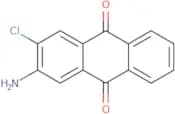
CAS:<p>Versatile small molecule scaffold</p>Formula:C14H8ClNO2Purity:Min. 95%Molecular weight:257.67 g/mol


![N-[(4-Aminophenyl)sulfonyl]-N-(3,4-dimethyl-5-isoxazolyl)acetamide](/_next/image/?url=https%3A%2Fstatic.cymitquimica.com%2Fproducts%2F3D%2Fthumb-webp%2FAAA08074.webp&w=3840&q=75)