Building Blocks
This section contains fundamental products for the synthesis of organic and biological compounds. Building blocks are the essential starting materials used to construct complex molecules through various chemical reactions. They play a critical role in drug discovery, material science, and chemical research. At CymitQuimica, we offer a diverse range of high-quality building blocks to support your innovative research and industrial projects, ensuring you have the essential components for successful synthesis.
Subcategories of "Building Blocks"
- Boronic Acids & Boronic Acid Derivatives(5,756 products)
- Chiral Building Blocks(1,242 products)
- Hydrocarbon Building Blocks(6,095 products)
- Organic Building Blocks(61,038 products)
Found 196817 products of "Building Blocks"
Sort by
Purity (%)
0
100
|
0
|
50
|
90
|
95
|
100
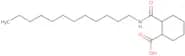
rac-(1R,2S)-2-(Dodecylcarbamoyl)cyclohexane-1-carboxylic acid
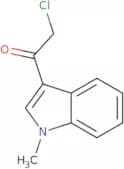
CAS:<p>Versatile small molecule scaffold</p>Formula:C20H37NO3Purity:Min. 95%Molecular weight:339.5 g/mol2-Chloro-1-(1-methyl-1H-indol-3-yl)-ethanone
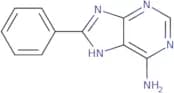
CAS:Controlled Product<p>Versatile small molecule scaffold</p>Formula:C11H10ClNOPurity:Min. 95%Molecular weight:207.66 g/mol8-Phenyl-9H-purin-6-amine
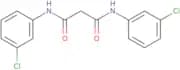
CAS:<p>8-Phenyl-9H-purin-6-amine is a purine nucleoside that has been shown to be an antagonist of the adenosine receptor. Purines are found in DNA and RNA, and they are used as a source of energy in cells. The purines can also act as signaling molecules in the body by binding to adenosine receptors. This drug inhibits these receptors, which may be useful for treating intestinal diseases (e.g., irritable bowel syndrome). 8-Phenyl-9H-purin-6-amine has also been shown to inhibit cancer cell growth and tumor formation. It interacts with the G protein coupled receptors, which may lead to its antihypertensive effect.</p>Formula:C11H9N5Purity:Min. 95%Molecular weight:211.22 g/molN,N'-Bis(3-chlorophenyl)propanediamide
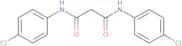
CAS:<p>Versatile small molecule scaffold</p>Formula:C15H12Cl2N2O2Purity:Min. 95%Molecular weight:323.2 g/molN,N'-Bis(4-chlorophenyl)propanediamide
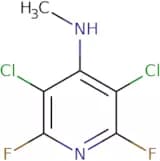
CAS:<p>Versatile small molecule scaffold</p>Formula:C15H12Cl2N2O2Purity:Min. 95%Molecular weight:323.2 g/mol3,5-Dichloro-2,6-difluoro-N-methyl-4-pyridinamine
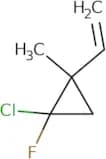
CAS:<p>Versatile small molecule scaffold</p>Formula:C6H4Cl2F2N2Purity:Min. 95%Molecular weight:213.01 g/mol1-Chloro-2-ethenyl-1-fluoro-2-methylcyclopropane
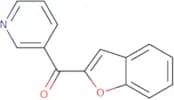
CAS:<p>Versatile small molecule scaffold</p>Formula:C6H8ClFPurity:Min. 95%Molecular weight:134.58 g/mol3-(1-Benzofuran-2-carbonyl)pyridine
CAS:<p>Versatile small molecule scaffold</p>Formula:C14H9NO2Purity:Min. 95%Molecular weight:223.23 g/mol7-Phenylheptan-1-amine
CAS:<p>Versatile small molecule scaffold</p>Formula:C13H21NPurity:Min. 95%Molecular weight:191.3 g/mol[(4-Chlorophenyl)amino](oxo)acetic acid
CAS:<p>Versatile small molecule scaffold</p>Formula:C8H6ClNO3Purity:Min. 95%Molecular weight:199.59 g/mol[(3-Methylphenyl)carbamoyl]formic acid
CAS:<p>Versatile small molecule scaffold</p>Formula:C9H9NO3Purity:Min. 95%Molecular weight:179.17 g/mol2-{[(4-Bromophenyl)methyl]sulfanyl}acetic acid
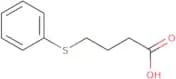
CAS:<p>Versatile small molecule scaffold</p>Formula:C9H9BrO2SPurity:Min. 95%Molecular weight:261.14 g/mol4-(Phenylsulfanyl)butanoic acid
CAS:<p>4-(Phenylsulfanyl)butanoic acid is an analog of retinoic acid, which is a metabolite of vitamin A. This drug has been shown to have both activating and inhibitory effects on the kidney cell, depending on the concentration. It has been shown to be effective in reducing acute kidney injury in rats by inhibiting the production of inflammatory cytokines. 4-(Phenylsulfanyl)butanoic acid has also been shown to activate N-acetylglucosamine kinase, which plays an important role in protein synthesis and cell division. The pharmacophore for this drug is a phenylsulfanyl group with a butanoyl chain. This drug binds to a protein target, which activates or inhibits various proteins that are involved in cellular processes such as protein synthesis, cell division, and activation of inflammatory cytokines.</p>Formula:C10H12O2SPurity:Min. 95%Molecular weight:196.26 g/mol2-{2-Methylimidazo[1,2-a]pyridin-3-yl}acetic acid
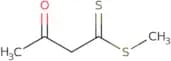
CAS:<p>Versatile small molecule scaffold</p>Formula:C10H10N2O2Purity:Min. 95%Molecular weight:190.2 g/molMethyl 3-oxobutanedithioate
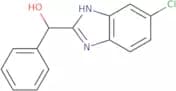
CAS:<p>Methyl 3-oxobutanedithioate is a lead compound that can be used to lower blood glucose levels. It is a ligand that binds to the peroxisome proliferator-activated receptor gamma (PPARγ) and activates it, causing insulin sensitivity. Methyl 3-oxobutanedithioate has been shown to have high lipophilicity, which is important for its activity as a PPARγ agonist. This drug also has a low toxicity profile and does not cause liver toxicity or damage when administered orally. Methyl 3-oxobutanedithioate has been shown to reduce blood glucose in mice by oral administration of a glucose load and improves glycemic control in diabetic rats with pancreatic beta cells. It is highly selective for PPARγ, but may also have some affinity for PPARα and PPARβ/δ.</p>Formula:C5H8OS2Purity:Min. 95%Molecular weight:148.3 g/mol(5-Chloro-1H-1,3-benzodiazol-2-yl)(phenyl)methanol
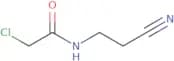
CAS:Versatile small molecule scaffoldFormula:C14H11ClN2OPurity:Min. 95%Molecular weight:258.7 g/mol2-Chloro-N-(2-cyanoethyl)acetamide
CAS:<p>2-Chloro-N-(2-cyanoethyl)acetamide is a potent and selective inhibitor of the protein kinase C (PKC). The PKC protein kinases are enzymes that regulate the activity of cells in response to stimuli. 2-Chloro-N-(2-cyanoethyl)acetamide has been shown to be effective against some viruses and tumor cells, but not against bacteria. It inhibits the growth of some cancer cells and has been shown to inhibit the replication of animal viruses such as influenza virus. This drug is also used for treatment of abdominal infections, hepatitis, pancreatitis, mesenteric adenitis, and animals with cancer. 2-Chloro-N-(2-cyanoethyl)acetamide can act as a noncompetitive inhibitor by binding to a site on the enzyme that is different from ATP binding site.</p>Formula:C5H7ClN2OPurity:Min. 95%Molecular weight:146.57 g/mol5-Bromo-2-ethoxypyrimidine
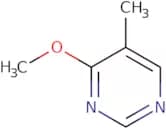
CAS:<p>5-Bromo-2-ethoxypyrimidine is a heterocyclic compound that can be synthesized from 2-ethoxy pyrimidine and bromine. It is a colorless to light yellowish liquid that has a boiling point of 150°C. 5-Bromo-2-ethoxypyrimidine is an alkoxide that can be prepared by the reaction of uracil and perfluoroalkyl acid. It undergoes hydrolysis when treated with acid, forming hydrogen bromide and ethyl cyanoacetate.</p>Formula:C6H7BrN2OPurity:Min. 95%Molecular weight:203.04 g/mol4-Methoxy-5-methylpyrimidine
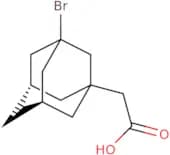
CAS:<p>4-Methoxy-5-methylpyrimidine is an amide that has been shown to be a potent antagonist of the histamine H1 receptor. It is a structural analogue of suvorexant, which is used as a sedative and hypnotic drug. 4-Methoxy-5-methylpyrimidine can be used in place of suvorexant, but with reduced side effects. This compound also has potential for use as a replacement for other drugs in the same class, such as zolpidem and eszopiclone, since it has similar profiles to these drugs. The chemical structure of 4-methoxy-5-methylpyrimidine is a monocyclic heterocycle that contains two amine groups on one ring and one amine group on the other ring. This compound belongs to the class of pyrimidines and has the chemical formula C6H4N2O3.</p>Formula:C6H8N2OPurity:Min. 95%Molecular weight:124.14 g/mol3-Bromoadamantane-1-acetic acid
CAS:<p>3-Bromoadamantane-1-acetic acid is a crystalline solid that has a molecular weight of 168.2 and a melting point of 202°C. It has three polymorphs, with the dihydrate being the most stable form at room temperature. 3-Bromoadamantane-1-acetic acid is an efficacious molecule that can be used to treat bacterial infections as well as fungal infections. This drug also has been shown to have low toxicity in animal studies, with no adverse effects on the liver or kidney observed after repeated administration.</p>Formula:C12H17BrO2Purity:Min. 95%Molecular weight:273.17 g/mol

acetic acid](/_next/image/?url=https%3A%2Fstatic.cymitquimica.com%2Fproducts%2F3D%2Fthumb-webp%2FSAA73871.webp&w=3840&q=75)
![[(3-Methylphenyl)carbamoyl]formic acid](/_next/image/?url=https%3A%2Fstatic.cymitquimica.com%2Fproducts%2F3D%2Fthumb-webp%2FSAA73878.webp&w=3840&q=75)
![2-{[(4-Bromophenyl)methyl]sulfanyl}acetic acid](/_next/image/?url=https%3A%2Fstatic.cymitquimica.com%2Fproducts%2F3D%2Fthumb-webp%2FSAA74250.webp&w=3840&q=75)
![2-{2-Methylimidazo[1,2-a]pyridin-3-yl}acetic acid](/_next/image/?url=https%3A%2Fstatic.cymitquimica.com%2Fproducts%2F3D%2Fthumb-webp%2FSAA74507.webp&w=3840&q=75)