Building Blocks
This section contains fundamental products for the synthesis of organic and biological compounds. Building blocks are the essential starting materials used to construct complex molecules through various chemical reactions. They play a critical role in drug discovery, material science, and chemical research. At CymitQuimica, we offer a diverse range of high-quality building blocks to support your innovative research and industrial projects, ensuring you have the essential components for successful synthesis.
Subcategories of "Building Blocks"
- Boronic Acids & Boronic Acid Derivatives(5,778 products)
- Chiral Building Blocks(1,243 products)
- Hydrocarbon Building Blocks(6,098 products)
- Organic Building Blocks(61,057 products)
Found 200716 products of "Building Blocks"
Sort by
Purity (%)
0
100
|
0
|
50
|
90
|
95
|
100
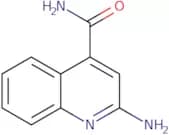
2-Aminoquinoline-4-carboxamide
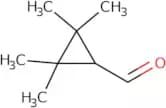
CAS:2-Aminoquinoline-4-carboxamide is a medicament that is used in the treatment of fibrosis and inflammatory disorders. It has been combined with other medicaments to treat fibrotic diseases and inflammatory disorders. 2-Aminoquinoline-4-carboxamide may be used for prophylaxis and/or treatment of fibrotic diseases and inflammatory disorders.Formula:C10H9N3OPurity:Min. 95%Molecular weight:187.2 g/mol2,2,3,3-Tetramethylcyclopropane-1-carbaldehyde
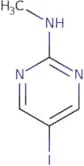
CAS:<p>Versatile small molecule scaffold</p>Formula:C8H14OPurity:Min. 95%Molecular weight:126.2 g/mol5-Iodo-N-methylpyrimidin-2-amine
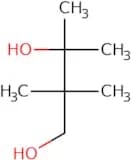
CAS:<p>Versatile small molecule scaffold</p>Formula:C5H6IN3Purity:Min. 95%Molecular weight:235.03 g/mol2,2,3-Trimethylbutane-1,3-diol
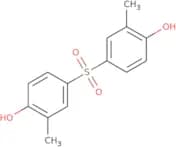
CAS:<p>Versatile small molecule scaffold</p>Formula:C7H16O2Purity:Min. 95%Molecular weight:132.2 g/mol4,4′-Sulfonylbis(2-methylphenol)
CAS:<p>4,4′-Sulfonylbis(2-methylphenol) is a synthetic estrogen analog that binds to the estrogen receptor. It has been shown to bind to the receptor with high affinity and act as an agonist. In addition, it can inhibit aromatase activity in vitro and in vivo. 4,4′-Sulfonylbis(2-methylphenol) has been used for the treatment of breast cancer in postmenopausal women with hormone receptors positive for estrogen. The drug also shows promise as an anti-inflammatory agent for autoimmune diseases such as systemic lupus erythematosus (SLE). It may be useful in treating various types of cancer, including prostate and colon cancer. 4,4′-Sulfonylbis(2-methylphenol) is not metabolized by humans but rather excreted unchanged in urine.</p>Formula:C14H14O4SPurity:Min. 95%Molecular weight:278.33 g/mol2-Aminobenzamidoxime
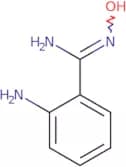
CAS:<p>2-Aminobenzamidoxime is a hydrogen bond donor that can regulate the interaction between two molecules, including proteins and nucleic acids. This chemical can also be used to boost the activity of an acceptor molecule. It is used in pharmacodynamics to introduce fluorescent groups into drugs or other compounds for detection. 2-Aminobenzamidoxime has been shown to possess fluorescence properties and cyclic behavior, which makes it useful for glycan studies. The affinity of 2-aminobenzamidoxime for glycans is due to its nature as a glycosylating agent.</p>Formula:C7H9N3OPurity:Min. 95%Molecular weight:151.17 g/mol2-Amino-3-hydroxybenzamide
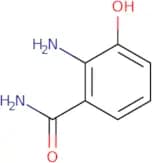
CAS:<p>2-Amino-3-hydroxybenzamide is a benzamide, which is a class of natural products. It has been shown to have anti-candida activity against Candida albicans and to inhibit the growth of methicillin-resistant Staphylococcus aureus and Escherichia coli. 2-Amino-3-hydroxybenzamide has been isolated from the marine sponge Eucheuma cottonii and has been shown to be active against glioma cells. The compound was found to bind with high affinity to DNA, which inhibits DNA synthesis by preventing the unwinding of DNA strands. This inhibition leads to cell death by inhibiting protein synthesis or affecting other cellular processes.</p>Formula:C7H8N2O2Purity:Min. 95%Molecular weight:152.15 g/mol1,10-Diiododecane
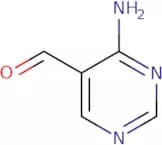
CAS:<p>1,10-Diiododecane is a chemical crosslinking agent that reacts with hydroxyl groups to form ether linkages. It has been shown to be effective in vitro and in vivo for treating hemicyanine-induced pulmonary fibrosis. 1,10-Diiododecane has also been used as a quaternization agent and as a monolayer on polymer films. The redox potential of the diiododecane molecule is high enough for it to react with electrophilic reagents such as hydrochloric acid. This property makes 1,10-diiododecane an excellent candidate for use as a crosslinking agent in polymer films.</p>Formula:C10H20I2Purity:Min. 95%Molecular weight:394.08 g/mol4-Aminopyrimidine-5-carboxaldehyde
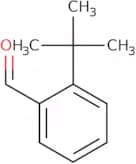
CAS:<p>4-Aminopyrimidine-5-carboxaldehyde is a molecule that has been found to cause regression of cancer. It targets the erbb-2 receptor, which is necessary for cell growth and survival in many types of cancer. This compound has been shown to inhibit the growth of cancer cells in vitro by downregulating the expression of erbb-2. The molecular descriptors have been calculated using an algorithm and are used to describe the physical properties of this molecule. It has been shown that it is effective at inhibiting tumor growth and inducing regression in mice bearing human breast tumors xenografted with human breast cancer cells. 4-Aminopyrimidine-5-carboxaldehyde has also been shown to inhibit colorectal cancer cell proliferation by reducing cellular protein synthesis.<br>br>br><br>This molecule's structure consists of a 4-amino group, a pyrimidine ring, and an aldehyde group. It contains functional groups such as carb</p>Formula:C5H5N3OPurity:Min. 95%Molecular weight:123.11 g/mol2-tert-Butylbenzaldehyde
CAS:2-tert-Butylbenzaldehyde is a reactive compound that can be used in the synthesis of complex molecules. It is a reagent for the production of unsymmetrical compounds and has been used in various methodologies, such as condensations, ionic reactions, and electrochemistry. 2-tert-Butylbenzaldehyde has also been shown to act as an intermediate for the production of other chemical compounds. This compound is often used as a substrate for enzymes such as aldolases and bifunctional enzymes. 2-tert-Butylbenzaldehyde is found naturally in plants and animals.Formula:C11H14OPurity:Min. 95%Molecular weight:162.23 g/mol5-Chloro-benzo[b]thiophene-3-carboxylic acid
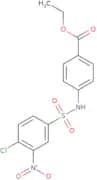
CAS:Versatile small molecule scaffoldFormula:C9H5ClO2SPurity:Min. 95%Molecular weight:212.65 g/molEthyl 4-(4-chloro-3-nitrobenzenesulfonamido)benzoate
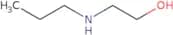
CAS:Versatile small molecule scaffoldFormula:C15H13ClN2O6SPurity:Min. 95%Molecular weight:384.8 g/mol2-(Propylamino)ethanol
CAS:<p>2-(Propylamino)ethanol (2-PAE) is a structural isomer of 2-aminoethanol. It has been shown to interact with polymer concentration and covid-19 pandemic. 2-PAE is an amine that can be used as a pharmaceutical solvent in the synthesis of polymers. This molecule also interacts with red blood cells and can be used in the study of these cells. Magnetic resonance spectroscopy (MRS) was used to measure the viscosity of 2-PAE, which was found to be lower than expected for this type of molecule. The decoupling effect between 2-PAE and water molecules was also studied using MRS, which showed that the interaction between 2-PAE and water molecules is stronger than that between water molecules themselves.<br>2-(Propylamino)ethanol has been shown to have a similar effect on chloride ion permeability as other alkanolamines, such as monoethanol</p>Purity:Min. 95%4-Chloro-5H,6H,7H,8H,9H-pyrimido[4,5-b]azepine
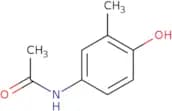
CAS:Versatile small molecule scaffoldFormula:C8H10ClN3Purity:Min. 95%Molecular weight:183.64 g/molN-(4-hydroxy-3-methylphenyl)acetamide
CAS:<p>N-(4-hydroxy-3-methylphenyl)acetamide (HMPAA) is a nitroaromatic compound that is used as a reagent in organic synthesis. It is also used as a chemical intermediate for the production of other compounds, such as pharmacological agents. HMPAA has been shown to inhibit the activity of 3-methylcholanthrene and some other carcinogens by reacting with them and preventing their binding to DNA. This drug also reacts with primary amino groups on proteins, which may be due to its ability to hydrolyze these compounds. HMPAA has also been used to detect aluminium ions in organic solvents.</p>Formula:C9H11NO2Purity:Min. 95%Molecular weight:165.19 g/molN-[3-(Hydroxymethyl)phenyl]acetamide
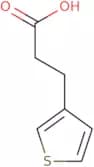
CAS:Versatile small molecule scaffoldFormula:C9H11NO2Purity:Min. 95%Molecular weight:165.19 g/mol3-(3-Thienyl)propanoic acid
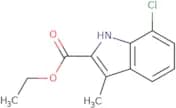
CAS:<p>3-(3-Thienyl)propanoic acid is a protonated form of 3-thienylacetic acid that is prepared by electropolymerization. This compound is a dipole with an enthalpic interaction, which has been shown to be thermodynamically favorable. The protonation of the 3-(3-thienyl)propanoic acid molecule takes place at the perovskite surface and leads to an exothermic reaction.</p>Formula:C7H8O2SPurity:Min. 95%Molecular weight:156.2 g/molEthyl 7-chloro-3-methyl-1H-indole-2-carboxylate
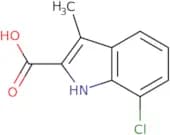
CAS:Versatile small molecule scaffoldFormula:C12H12ClNO2Purity:Min. 95%Molecular weight:237.68 g/mol7-Chloro-3-methyl-1H-indole-2-carboxylic acid
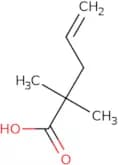
CAS:<p>Versatile small molecule scaffold</p>Formula:C10H8ClNO2Purity:Min. 95%Molecular weight:209.63 g/mol2,2-Dimethyl-4-pentenoic Acid
CAS:<p>2,2-Dimethyl-4-pentenoic acid is a decarboxylating agent that converts the carboxylic acid group to an aldehyde. It is commonly used as a reducing agent in organic synthesis, especially for the conversion of esters and nitriles to alcohols and amines respectively. The synthesis of 2,2-dimethyl-4-pentenoic acid is achieved by reacting piperidine with propylene oxide. This reaction proceeds via a six-membered ring intermediate that decomposes to form the final product. The reaction can be catalyzed with peroxide or hydrogen peroxide, which leads to a high yield. 2,2-Dimethyl-4-pentenoic acid has been shown to be effective against hyperproteinemia and lipogenous disorders such as steatosis and cholestasis.</p>Formula:C7H12O2Purity:Min. 95%Molecular weight:128.17 g/mol


![5-Chloro-benzo[b]thiophene-3-carboxylic acid](/_next/image/?url=https%3A%2Fstatic.cymitquimica.com%2Fproducts%2F3D%2Fthumb-webp%2FRAA36124.webp&w=3840&q=75)
![4-Chloro-5H,6H,7H,8H,9H-pyrimido[4,5-b]azepine](/_next/image/?url=https%3A%2Fstatic.cymitquimica.com%2Fproducts%2F3D%2Fthumb-webp%2FRAA37220.webp&w=3840&q=75)
![N-[3-(Hydroxymethyl)phenyl]acetamide](/_next/image/?url=https%3A%2Fstatic.cymitquimica.com%2Fproducts%2F3D%2Fthumb-webp%2FRAA37594.webp&w=3840&q=75)