Building Blocks
This section contains fundamental products for the synthesis of organic and biological compounds. Building blocks are the essential starting materials used to construct complex molecules through various chemical reactions. They play a critical role in drug discovery, material science, and chemical research. At CymitQuimica, we offer a diverse range of high-quality building blocks to support your innovative research and industrial projects, ensuring you have the essential components for successful synthesis.
Subcategories of "Building Blocks"
- Boronic Acids & Boronic Acid Derivatives(5,756 products)
- Chiral Building Blocks(1,242 products)
- Hydrocarbon Building Blocks(6,095 products)
- Organic Building Blocks(61,038 products)
Found 196817 products of "Building Blocks"
Sort by
Purity (%)
0
100
|
0
|
50
|
90
|
95
|
100
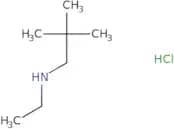
N-Ethyl-2,2-dimethyl-1-propanamine hydrochloride
CAS:<p>Versatile small molecule scaffold</p>Formula:C7H18ClNPurity:Min. 95%Molecular weight:151.68 g/mol2-(Prop-2-en-1-ylsulfanyl)benzoic acid
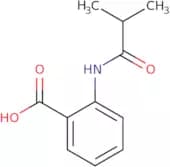
CAS:<p>2-(Prop-2-en-1-ylsulfanyl)benzoic acid is a phenyl group that has the ability to form a desorption molecule. It is light resistant and photopolymerizable, which means it can be used in the production of polymers. The alkylthio group on this molecule allows for transfer and gel permeation chromatography. 2-(Prop-2-en-1-ylsulfanyl)benzoic acid also has a vinylic group, which makes it hydrosilylation crosslinkable. This makes it an excellent candidate for copolymerization and hydrosilylation.</p>Formula:C10H10O2SPurity:Min. 95%Molecular weight:194.25 g/mol2-(Isobutyrylamino)benzoic acid
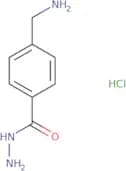
CAS:<p>Versatile small molecule scaffold</p>Formula:C11H13NO3Purity:Min. 95%Molecular weight:207.23 g/mol4-(Aminomethyl)benzohydrazide hydrochloride
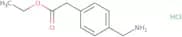
CAS:<p>Versatile small molecule scaffold</p>Formula:C8H12ClN3OPurity:Min. 95%Molecular weight:201.65 g/molEthyl 4-(aminomethyl)phenylacetate hydrochloride
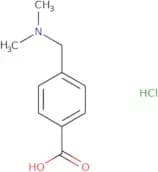
CAS:<p>Versatile small molecule scaffold</p>Formula:C11H16ClNO2Purity:Min. 95%Molecular weight:229.7 g/mol4-Dimethylaminomethyl-benzoic acid hydrochloride
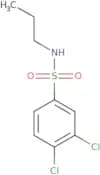
CAS:<p>4-Dimethylaminomethyl-benzoic acid hydrochloride (4DMABAH) is an antiviral agent that inhibits the replication of human immunodeficiency virus type 1 (HIV-1) by blocking the synthesis of viral DNA. 4DMABAH is a prodrug, which is metabolized to its active form, lamivudine, by esterases in the liver and other tissues. 4DMABAH has been shown to be effective against hepatitis B and C viruses in cell culture studies.</p>Formula:C10H14ClNO2Purity:Min. 95%Molecular weight:215.68 g/mol3,4-Dichloro-N-propylbenzene-1-sulfonamide
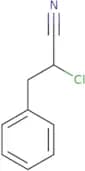
CAS:<p>Versatile small molecule scaffold</p>Formula:C9H11Cl2NO2SPurity:Min. 95%Molecular weight:268.16 g/mol2-Chloro-3-phenylpropanenitrile
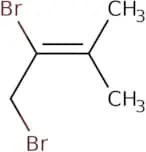
CAS:<p>Versatile small molecule scaffold</p>Formula:C9H8ClNPurity:Min. 95%Molecular weight:165.62 g/mol1,2-Dibromo-3-methylbut-2-ene
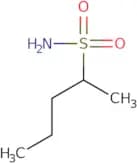
CAS:<p>Versatile small molecule scaffold</p>Formula:C5H8Br2Purity:Min. 95%Molecular weight:227.92 g/molPentane-2-sulfonamide
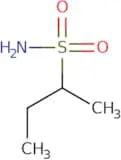
CAS:<p>Versatile small molecule scaffold</p>Formula:C5H13NO2SPurity:Min. 95%Molecular weight:151.23 g/molButane-2-sulfonamide
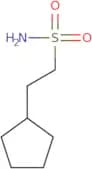
CAS:<p>Versatile small molecule scaffold</p>Formula:C4H11NO2SPurity:Min. 95%Molecular weight:137.2 g/mol2-Cyclopentylethane-1-sulfonamide
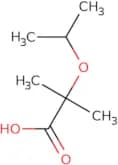
CAS:<p>Versatile small molecule scaffold</p>Formula:C7H15NO2SPurity:Min. 95%Molecular weight:177.27 g/mol2-Methyl-2-(propan-2-yloxy)propanoic acid
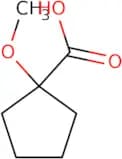
CAS:<p>Versatile small molecule scaffold</p>Formula:C7H14O3Purity:Min. 95%Molecular weight:146.18 g/mol1-Methoxycyclopentane-1-carboxylic acid
CAS:<p>Versatile small molecule scaffold</p>Formula:C7H12O3Purity:Min. 95%Molecular weight:144.17 g/mol[(1-Methoxycyclopentyl)methyl](methyl)amine
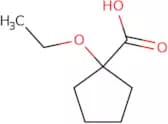
CAS:<p>Versatile small molecule scaffold</p>Formula:C8H17NOPurity:Min. 95%Molecular weight:143.23 g/mol1-Ethoxycyclopentane-1-carboxylic acid
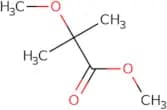
CAS:<p>Versatile small molecule scaffold</p>Formula:C8H14O3Purity:Min. 95%Molecular weight:158.19 g/molMethyl 2-methoxy-2-methylpropanoate
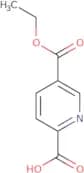
CAS:<p>Versatile small molecule scaffold</p>Formula:C6H12O3Purity:Min. 95%Molecular weight:132.16 g/mol5-(Ethoxycarbonyl)pyridine-2-carboxylic acid
CAS:<p>Versatile small molecule scaffold</p>Formula:C9H9NO4Purity:Min. 95%Molecular weight:195.17 g/mol5-ethynylpyridine-2-carboxylic acid
CAS:<p>5-Ethynylpyridine-2-carboxylic acid is a ligand with a pyridine ring. It binds to the pyridyl subunit of proteins, such as phosphoglycerate kinase and ATP synthase. This compound coordinates with metals to form complexes. It has been used to synthesize other compounds, including benzoate and nitrate salts, which have yielded luminescent frameworks.</p>Formula:C8H5NO2Purity:Min. 95%Molecular weight:147.1 g/molMethyl 5-ethynylpyridine-2-carboxylate
CAS:<p>Methyl 5-ethynylpyridine-2-carboxylate is a ligand that binds in the active site of many enzymes. It can enhance the activity of these enzymes and also change their conformations. Methyl 5-ethynylpyridine-2-carboxylate interacts with four subunits to form a tetradentate framework, which is responsible for this molecule's ability to bind to any type of ligand. This enhancement effect is reversible, and it can be reversed by oxidizing methyl 5-ethynylpyridine-2-carboxylate with nitric acid. The yield of methyl 5-ethynylpyridine-2-carboxylate depends on the reaction conditions and the type of arylacetylene used. Methyl 5-ethynylpyridine-2-carboxylate has been shown to be an effective ligand with a high emission yield when using 1,3</p>Formula:C9H7NO2Purity:Min. 95%Molecular weight:161.2 g/mol


amine](/_next/image/?url=https%3A%2Fstatic.cymitquimica.com%2Fproducts%2F3D%2Fthumb-webp%2FSAA86031.webp&w=3840&q=75)