


Building Blocks
This section contains fundamental products for the synthesis of organic and biological compounds. Building blocks are the essential starting materials used to construct complex molecules through various chemical reactions. They play a critical role in drug discovery, material science, and chemical research. At CymitQuimica, we offer a diverse range of high-quality building blocks to support your innovative research and industrial projects, ensuring you have the essential components for successful synthesis.
Subcategories of "Building Blocks"
- Boronic Acids & Boronic Acid Derivatives(5,756 products)
- Chiral Building Blocks(1,242 products)
- Hydrocarbon Building Blocks(6,095 products)
- Organic Building Blocks(61,038 products)
Found 196817 products of "Building Blocks"
Sort by
Purity (%)
0
100
|
0
|
50
|
90
|
95
|
100
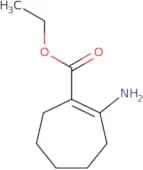
Ethyl 2-aminocyclohept-1-ene-1-carboxylate
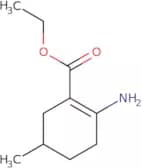
CAS:<p>Versatile small molecule scaffold</p>Formula:C10H17NO2Purity:Min. 95%Molecular weight:183.25 g/molEthyl 2-amino-5-methylcyclohex-1-ene-1-carboxylate
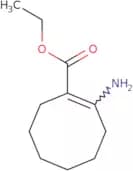
CAS:<p>Versatile small molecule scaffold</p>Formula:C10H17NO2Purity:Min. 95%Molecular weight:183.25 g/molEthyl 2-aminocyclooct-1-ene-1-carboxylate
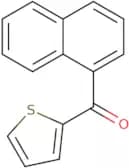
CAS:<p>Versatile small molecule scaffold</p>Formula:C11H19NO2Purity:Min. 95%Molecular weight:197.27 g/mol(Naphthalen-1-yl)(thiophen-2-yl)methanone
CAS:<p>Versatile small molecule scaffold</p>Formula:C15H10OSPurity:Min. 95%Molecular weight:238.31 g/mol2,2-Dimethylbut-3-ynoic acid
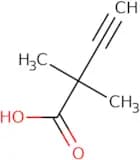
CAS:<p>2,2-Dimethylbut-3-ynoic acid is an organic compound that can be synthesized from acetone. The chemical formula of this compound is C6H12O2. 2,2-Dimethylbut-3-ynoic acid has a boiling point of 157 degrees Celsius and a melting point of -87 degrees Celsius. It has the molecular weight of 136.19 g/mol and its density is 1.07 g/cm^3 at 25 degrees Celsius. This compound can be used as a precursor to other chemicals, such as butanediol or butyraldehyde, which are used in production processes for plastics and synthetic rubber.</p>Formula:C6H8O2Purity:Min. 95%Molecular weight:112.13 g/mol3-(3-Methoxyphenyl)-2-thioxo-2,3-dihydro-4(1H)-quinazolinone
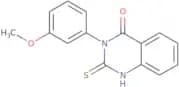
CAS:<p>Versatile small molecule scaffold</p>Formula:C15H12N2O2SPurity:Min. 95%Molecular weight:284.33 g/mol4-Oxo-4,5,6,7-tetrahydrobenzofuran-3-carboxylic acid
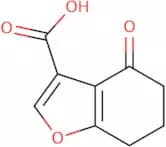
CAS:<p>Versatile small molecule scaffold</p>Formula:C9H8O4Purity:Min. 95%Molecular weight:180.16 g/mol1-Indolizinecarboxaldehyde
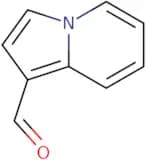
CAS:<p>Versatile small molecule scaffold</p>Formula:C9H7NOPurity:Min. 95%Molecular weight:145.16 g/molImidazo[1,5-a]pyridine-3-carboxaldehyde
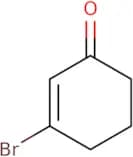
CAS:<p>Imidazo[1,5-a]pyridine-3-carboxaldehyde is a multicomponent molecule that has the potential to be used in biomolecular chemistry. It is a fluorescent compound that can be used to produce sustainable and environmentally friendly photophysical properties. Imidazo[1,5-a]pyridine-3-carboxaldehyde has been shown to have photophysical properties such as fluorescence, phosphorescence, and chemiluminescence. This molecule can also be used in the study of biomolecular chemistry and biomedical research.</p>Formula:C8H6N2OPurity:Min. 95%Molecular weight:146.15 g/mol3-Bromocyclohex-2-en-1-one
CAS:<p>3-Bromocyclohex-2-en-1-one is an organic compound that belongs to the group of halogenated cyclic ketones. It has industrial applications as a solvent and synthetic intermediate, and can be synthesized by the reaction of carbon tetrabromide with triphenylphosphine in ether. The filtration process is used to isolate 3-bromocyclohex-2-en-1-one from other products.</p>Formula:C6H7BrOPurity:Min. 95%Molecular weight:175.02 g/mol2-[(5-Methyl-1,2-oxazol-3-yl)oxy]acetic acid
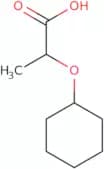
CAS:<p>Versatile small molecule scaffold</p>Formula:C6H7NO4Purity:Min. 95%Molecular weight:157.12 g/mol2-(Cyclohexyloxy)propanoic acid
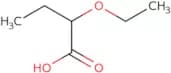
CAS:<p>Versatile small molecule scaffold</p>Formula:C9H16O3Purity:Min. 95%Molecular weight:172.22 g/mol2-Ethoxybutanoic acid
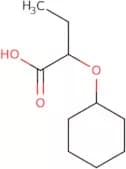
CAS:<p>Versatile small molecule scaffold</p>Formula:C6H12O3Purity:Min. 95%Molecular weight:132.16 g/mol2-(Cyclohexyloxy)butanoic acid
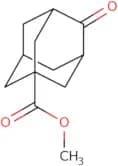
CAS:<p>Versatile small molecule scaffold</p>Formula:C10H18O3Purity:Min. 95%Molecular weight:186.25 g/mol4-Oxo-adamantane-1-carboxylic acid methyl ester
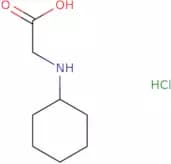
CAS:<p>4-Oxo-adamantane-1-carboxylic acid methyl ester is a carboxylic acid derivative with an inhibitory effect on the enzyme diacylglycerol acyltransferase (DGAT). This inhibition leads to reduced levels of triglycerides in the blood. The compound has been shown to be safe for use in humans, and does not affect bodyweight or plasma triglyceride levels. 4-Oxo-adamantane-1-carboxylic acid methyl ester has been shown to be effective at lowering plasma triglyceride levels in patients with diabetes. This compound is also druggable and can be used as a lead structure for drug development.br>br></p>Formula:C12H16O3Purity:Min. 95%Molecular weight:208.25 g/mol2-(Cyclohexylamino)acetic acid hydrochloride
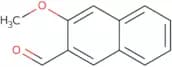
CAS:<p>2-(Cyclohexylamino)acetic acid hydrochloride is a chiral compound that has been shown to inhibit the activity of metalloproteinases, including matrix metalloproteinase (MMP) and peptidyl-arginine deiminases. It also inhibits the production of inflammatory cytokines in response to viral infection. 2-(Cyclohexylamino)acetic acid hydrochloride may be useful for the treatment of liver diseases such as hepatitis or cirrhosis due to its ability to inhibit MMP-2. It is also being investigated as a potential drug for traumatic brain injury because it has been shown to reduce oxidative stress and inflammation in animal models.</p>Formula:C8H16ClNO2Purity:Min. 95%Molecular weight:193.67 g/mol3-Methoxy-2-naphthaldehyde
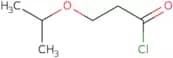
CAS:<p>3-Methoxy-2-naphthaldehyde is a molecule that belongs to the group of organic compounds called aldehydes. It is an oxidizing agent with molecular weight of 92.13 g/mol and chemical formula CH 3 COCH 2 OH. The oxidation of 3-methoxy-2-naphthaldehyde is catalyzed by the enzyme aldehyde oxidase, which converts it into 3-hydroxy-2-naphthaldehyde. This reaction requires NAD+ as cofactor and produces NADH, which can be used in other reactions such as glycolysis or the citric acid cycle. The intramolecular hydrogen bond between the carbon atom in carbonyl group and the oxygen atom in hydroxyl group stabilizes this molecule.<br>3-Methoxy-2-naphthaldehyde has low energy photophysical properties and can be used as a signal transducer for functional groups, such as phenols and am</p>Formula:C12H10O2Purity:Min. 95%Molecular weight:186.21 g/mol3-(Propan-2-yloxy)propanoyl chloride
CAS:<p>Versatile small molecule scaffold</p>Formula:C6H11ClO2Purity:Min. 95%Molecular weight:150.6 g/mol1,5-Dimethyl-7-methylidenebicyclo[3.3.1]nonan-3-one
CAS:<p>Versatile small molecule scaffold</p>Formula:C12H18OPurity:Min. 95%Molecular weight:178.27 g/mol1,2-Diazaspiro[4.5]decan-3-one
CAS:<p>Versatile small molecule scaffold</p>Formula:C8H14N2OPurity:Min. 95%Molecular weight:154.21 g/mol

![Imidazo[1,5-a]pyridine-3-carboxaldehyde](/_next/image/?url=https%3A%2Fstatic.cymitquimica.com%2Fproducts%2F3D%2Fthumb-webp%2FGCA67166.webp&w=3840&q=75)
![2-[(5-Methyl-1,2-oxazol-3-yl)oxy]acetic acid](/_next/image/?url=https%3A%2Fstatic.cymitquimica.com%2Fproducts%2F3D%2Fthumb-webp%2FGCA67448.webp&w=3840&q=75)
![1,5-Dimethyl-7-methylidenebicyclo[3.3.1]nonan-3-one](/_next/image/?url=https%3A%2Fstatic.cymitquimica.com%2Fproducts%2F3D%2Fthumb-webp%2FGCA69600.webp&w=3840&q=75)
![1,2-Diazaspiro[4.5]decan-3-one](/_next/image/?url=https%3A%2Fstatic.cymitquimica.com%2Fproducts%2F3D%2Fthumb-webp%2FGCA70030.webp&w=3840&q=75)